A tailored wedding suit raises more questions than most couples expect: when should you order it, what does it cost, which colour goes with the wedding dress and what happens to the suit after the celebration? In this article, we answer the questions grooms and couples ask us most often in our consultations.
The answers come from our daily work at Varazio, an owner-run tailoring business in Hamburg’s HafenCity. Unlike a chain, we put personal advice at the centre: we take time for the person, the wedding and the style that truly suits him. Varazio is still a young company, but it is backed by more than ten years of professional experience and the idea of making tailored clothing more personal, more modern and more individual again.
We advise couples on weddings in Hamburg as well as on summer weddings in Italy, Spain and other destinations. Each answer stands on its own, so you can jump straight to the question that’s on your mind.
If you’d first like to find out whether made-to-measure and Varazio are right for you, you can also book a free, no-obligation preliminary consultation – and especially before a wedding, we strongly recommend this first meeting: you can ask questions, get to know fabrics and options, and get a feel for whether the advice, the style and the personal chemistry are right.
Is a tailored suit worth it for a wedding?
Yes – it is especially worth it for a wedding when fit, personal style and individual advice matter to you. The groom spends many hours in his suit, and a precise fit is clearly noticeable, both when wearing it and in the photos.
Many men look for the fault in themselves when no off-the-peg suit fits properly. Usually, it’s simply that the standard size doesn’t match their proportions – for example broad shoulders with a narrow waist, or arms of different lengths. A suit that doesn’t pull anywhere or create unnecessary creases also changes your body language – and that shows on the wedding day.
Then there’s the long-term view: a suit like this is made specifically for one person and, with good planning, can be worn for many years. At Varazio, we therefore discuss not only what looks good on the wedding day, but also how the suit will be worn later on.
This is exactly where we see an advantage of personal tailoring advice over standardised concepts: the suit isn’t created according to a sales script, but from your proportions, your style and what you actually need.
You can read what else matters for your first suit in our guide to made-to-measure suits in Hamburg.
What is the difference between made-to-measure, full hand tailoring and ready-to-wear?
Ready-to-wear means finished suits in standard sizes, made-to-measure adapts an existing base pattern to your measurements, and full hand tailoring develops a completely new pattern by hand with several fittings. For many grooms, it is a sensible way into individually made clothing.
With ready-to-wear, an alterations tailor can adjust the sleeve and trouser length and sometimes the width, but the basic construction stays the same. After all, a size 40 represents a statistical average of chest, waist, arm length and shoulder width.
With this system, shoulder balance, arm length, waist height, the fall of the trousers and posture are among the factors that go into production. On top of that, you choose the fabric, lining, buttons, lapels and other details yourself.
Full hand tailoring is more elaborate and more expensive, and is above all worthwhile for very specific fit requirements or if you are deliberately seeking out this form of traditional craftsmanship.
At Varazio, we work with made-to-measure and combine the technical possibilities of the system with very personal advice. What matters to us is not listing as many options as possible, but working out together which of them make sense for you.
You can see what we make at Varazio on our page on Made-to-Measure.
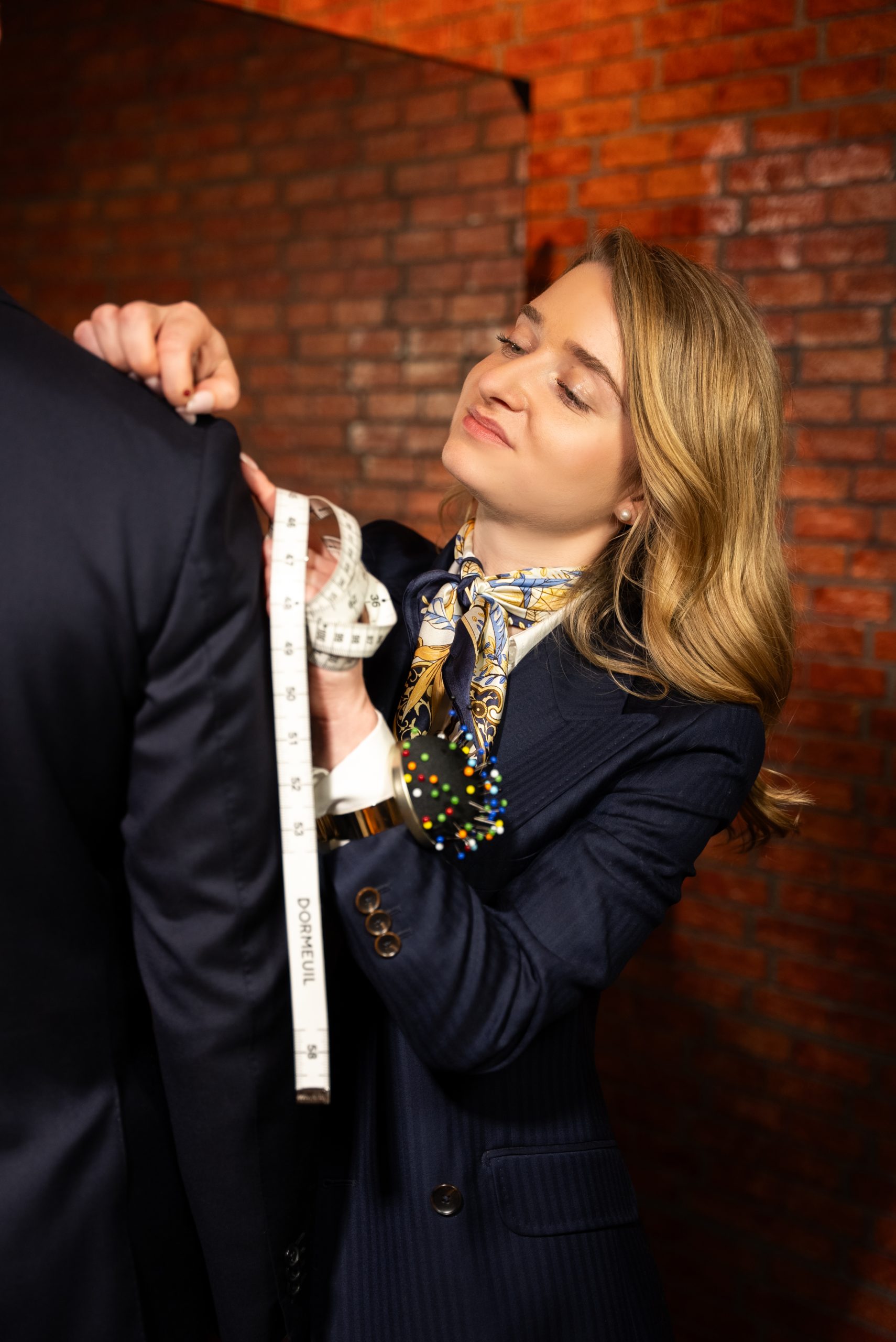
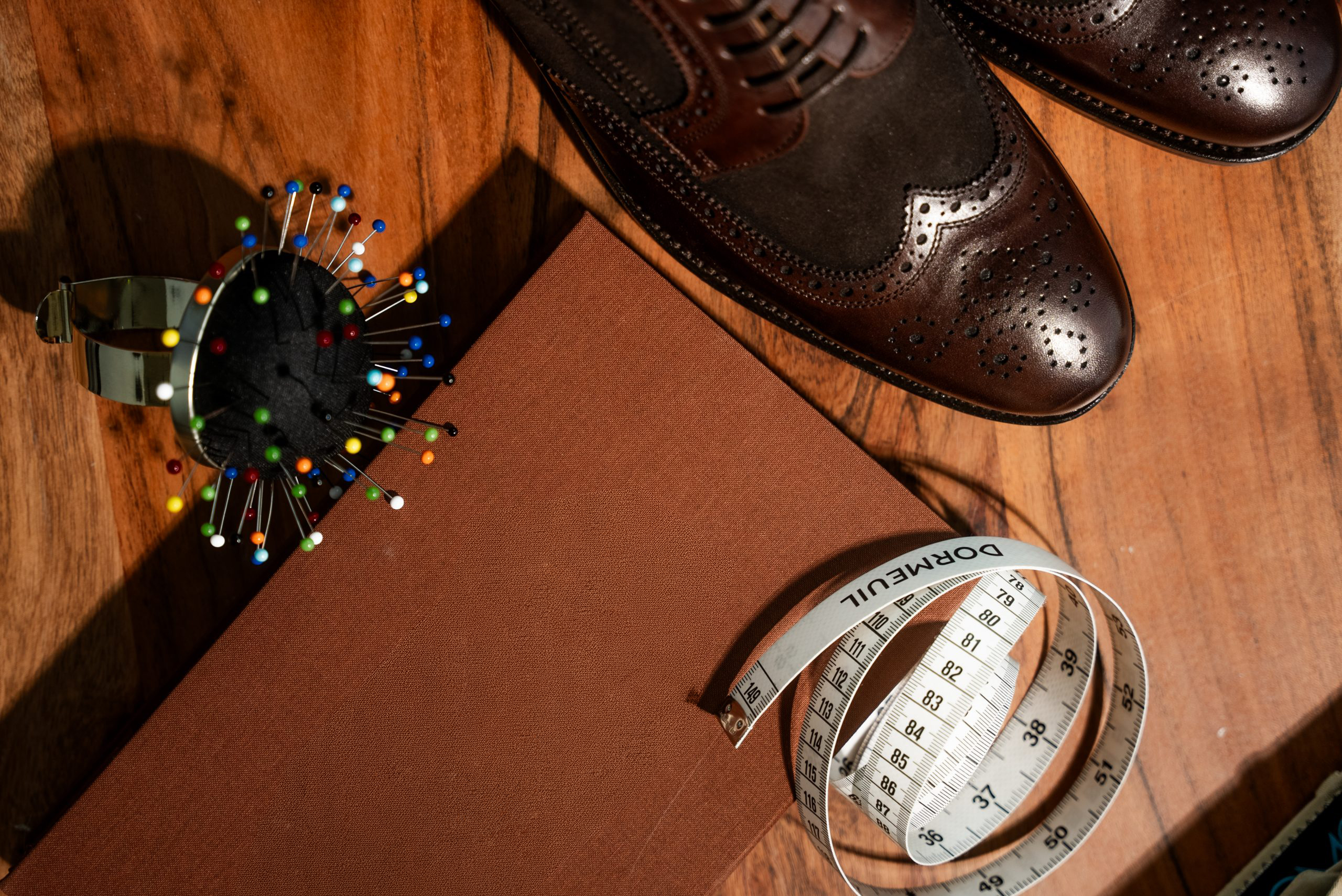
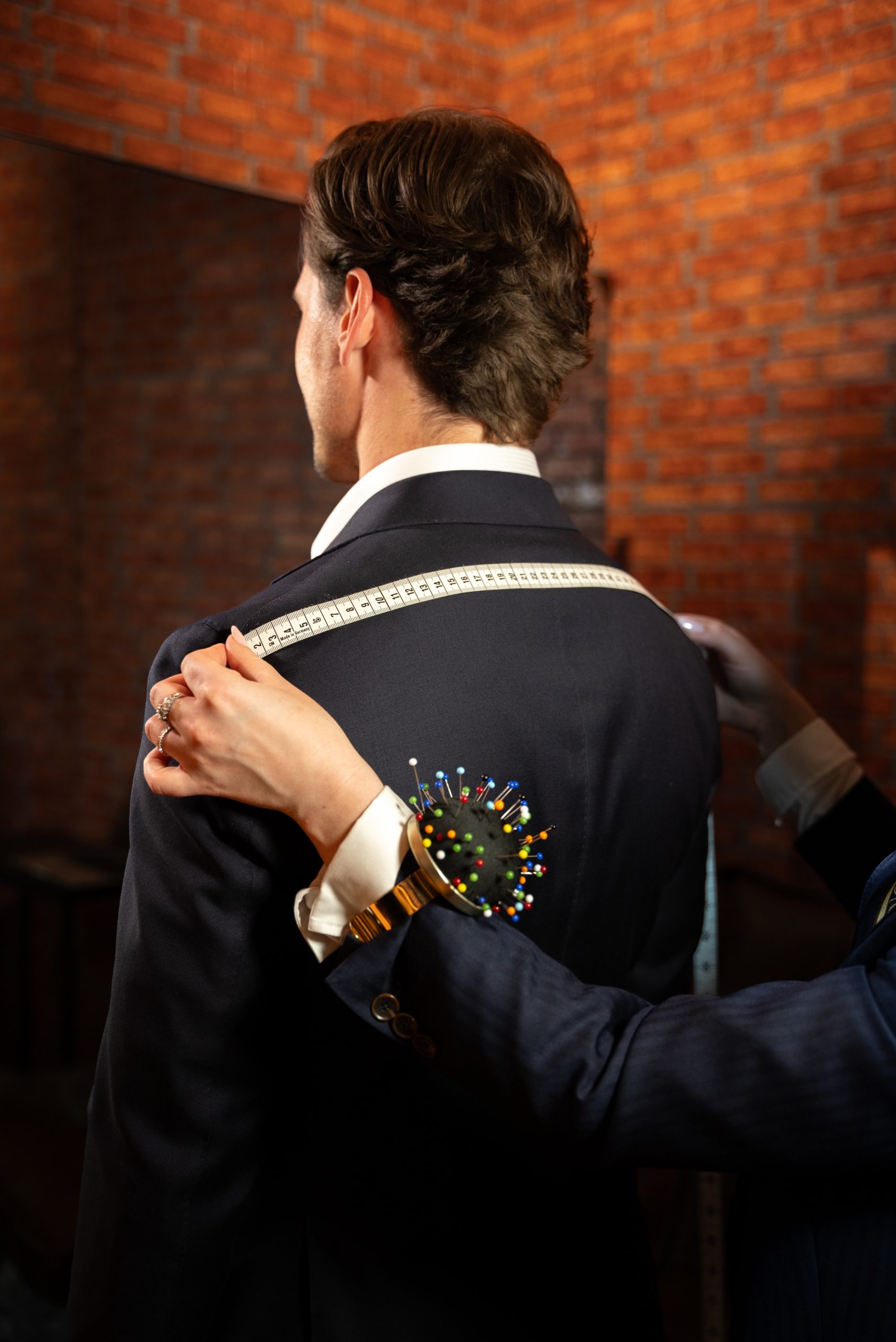
How do you recognise a good provider of tailored suits in Hamburg?
You can recognise a good provider by the fact that they ask about the occasion, your everyday life, your proportions and your personal ideas before taking measurements, explain their recommendations clearly and name transparent prices. After the appointment, you should know why a particular fabric and cut suit you.
The type of advice also plays a role. Some providers work with highly standardised processes or branch systems. Others are deliberately smaller and more personal.
Varazio is an owner-run, modern tailor’s, not a chain. Personal one-to-one advice and the individuality of each client are therefore at the heart of what we do. That is exactly what many clients appreciate: they don’t speak to a different person at every appointment and aren’t steered through a predefined sales script.
Varazio itself is a young company, but behind the advice there are more than ten years of professional experience. The company was founded out of a passion for good clothing and personal advice, and the conviction that tailoring doesn’t have to be distant or old-fashioned.
We see three mistakes again and again with a first custom suit: focusing purely on price, making hasty decisions without understanding why a fabric or cut is recommended, and following short-lived trends.
A reputable provider openly shows which fabrics are available, explains the differences and says what each option costs. Good advice takes time.
How early should you order your wedding suit?
For a custom wedding suit, you should book your first appointment around three to four months before the wedding. That leaves enough time for advice, production, the fitting and any corrections – and you still have a wide choice of fabrics.
If you come early, you can choose from the full range. As the wedding season progresses, individual fabrics or qualities may sell out.
If you count back from the wedding day, the schedule almost writes itself: first come the consultation, fabric selection and measuring, then around four to six weeks of production and finally the fitting, with extra buffer for any adjustments.
If you’re getting married in summer, you should therefore have your first appointment in spring at the latest.
You can book a no-obligation preliminary meeting even earlier. This is particularly useful if you don’t yet know which colour, style or price range is right for you. That way, you don’t have to start from scratch at the actual consultation.
How long does it take to make a suit at Varazio?
Making a suit at Varazio usually takes four to six weeks, depending on fabric availability and our order book. If a special fabric first has to be imported, delivery can take up to ten weeks.
The clock starts with the order after the consultation, once the fabric is reserved and production begins in our European workshop.
Once it’s finished, the personal fitting takes place in our showroom in HafenCity. There, we check the fit and make further adjustments if needed.
If you’re planning towards a fixed date such as your wedding, you should therefore allow not only for the production time itself, but also for the fitting and a buffer for alterations.
Can a wedding suit be made at short notice?
Yes, at Varazio a wedding suit is sometimes possible at short notice. With fabrics in stock, production usually takes around four to six weeks; on request, express production from around two weeks may be possible. The choice of fabrics is more limited, though.
In practice, short notice means you’ll mainly be choosing from fabrics that are immediately available. Which colours and qualities are available depends on the season.
Express production is therefore no substitute for starting early. It’s a solution for couples who turn to the wedding suit later than planned.
In that case, talk to us personally. Especially with tight schedules, an honest assessment is more important than a blanket promise.
How many appointments do you need for your wedding suit?
For a wedding suit from Varazio, you usually need two main appointments: the consultation with fabric selection and measuring, and the fitting after production. If adjustments are still needed afterwards, a short alterations appointment is added.
The number of fittings says nothing about quality. It depends on the tailoring system.
Full hand tailoring requires several fittings because a completely new pattern is created. Made-to-measure works with an individually adapted base pattern and therefore usually needs fewer appointments.
Above all, take your time for the first, in-depth appointment. That’s where the decisions on fabric, colour, cut, number of buttons, pockets, lapels and other details are made.
What does a tailored wedding suit cost in Hamburg?
At Varazio in Hamburg, a two-piece suit starts at around €1,150, with most orders between €1,200 and €1,800 (guide price 2026). The exact price depends in particular on the fabric, internal construction and extras.
Adjustments after the fitting are included in the price.
A tailored suit therefore costs more than many off-the-peg suits. In return, besides the individual fit, the quality of the fabric, the workmanship, personal advice and the chance to design the suit specifically for later use all play a part.
At Varazio, we value transparent advice. Before you order, you should know what is possible in which price range and how each decision affects the price.
Precisely because we are owner-run, it’s not about selling a particular package or the most expensive fabric possible. The starting point is the occasion, your budget and what makes sense for you.
You can find more answers about prices, fabrics and alterations on our FAQ page.
What determines the price of a custom suit?
The price depends above all on the fabric and the type of tailoring. Internal construction and chosen extras also play a part. Made-to-measure usually costs less than full hand tailoring, because it individualises an existing base pattern instead of developing a completely new one.
With the fabric, you pay for the quality of the material, its hand feel, drape and wearing properties, among other things. Good pure new wool is breathable, regulates temperature and feels comfortable even over many hours.
There are differences in workmanship too. Many off-the-peg suits use a fused interlining; at Varazio, we use a pick-stitched canvas, which makes the suit drape more naturally, adapt better to the body and keep its shape.
Our advice: don’t just look at the entry price – talk about what you want to wear the suit for later. In a personal consultation, it’s often easier to decide where an investment is worthwhile and where a more affordable option is perfectly sufficient.
How can you pay for your suit at Varazio?
At Varazio, you can pay for your suit by debit card, credit card or bank transfer. When you order, you pay a deposit; this reserves the chosen fabric and production can begin.
The deposit is due as soon as the fabric, cut and details are fixed and the suit goes into production.
For best men or family who would like to give a gift, there are also gift vouchers for fixed amounts or specific services, such as a custom shirt or a suit package. On request, we send them by post.
What is the best colour for a wedding suit?
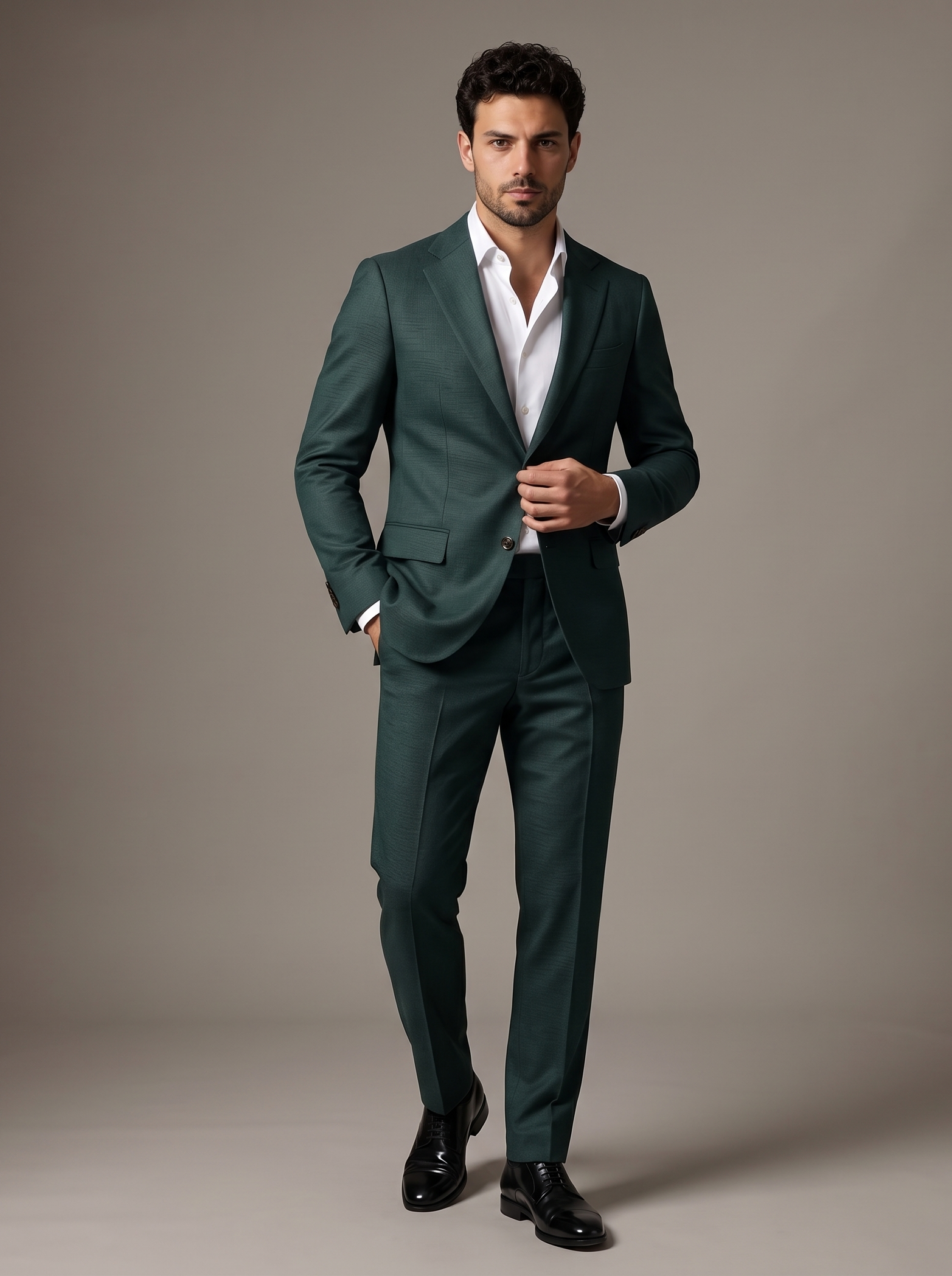
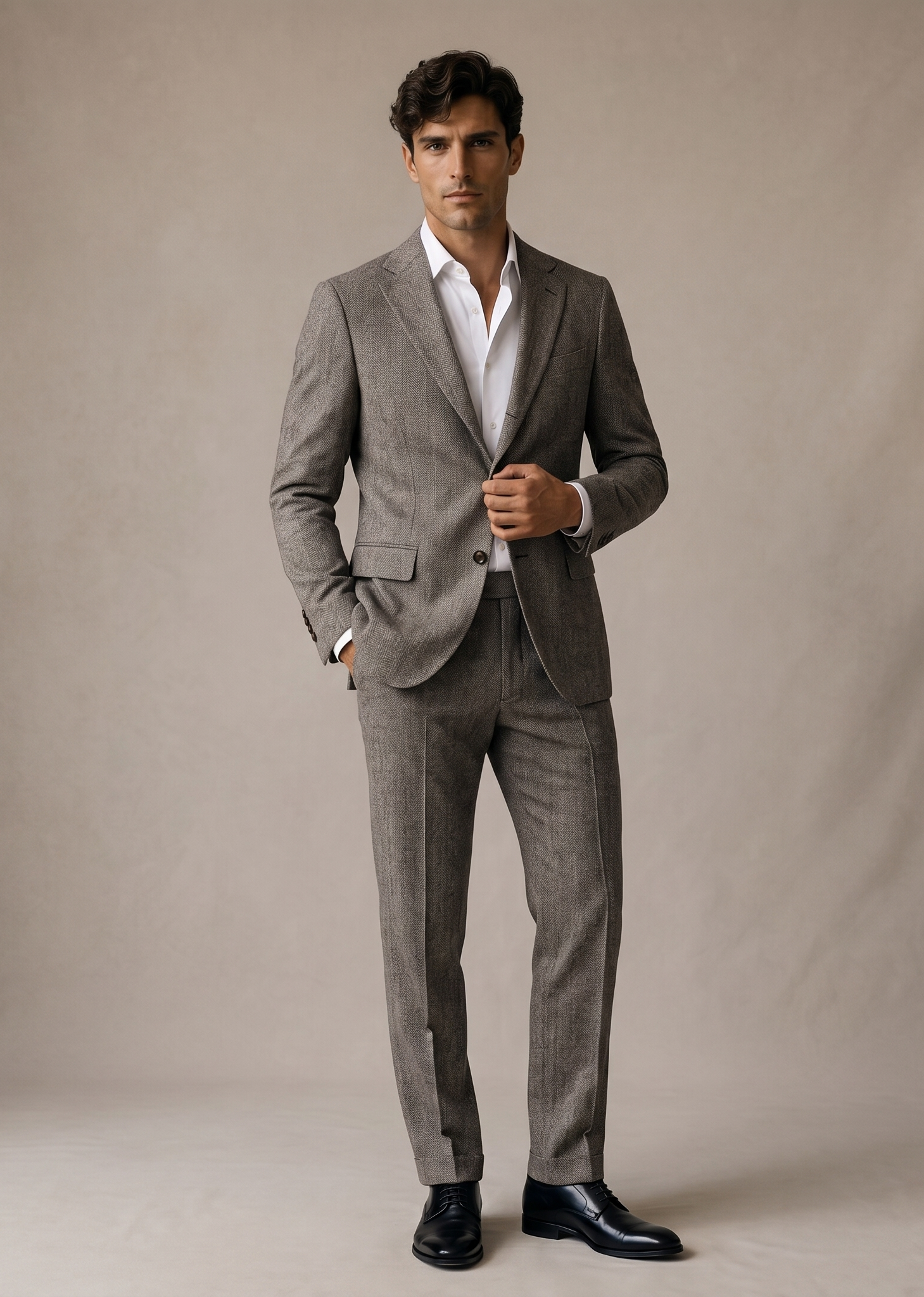
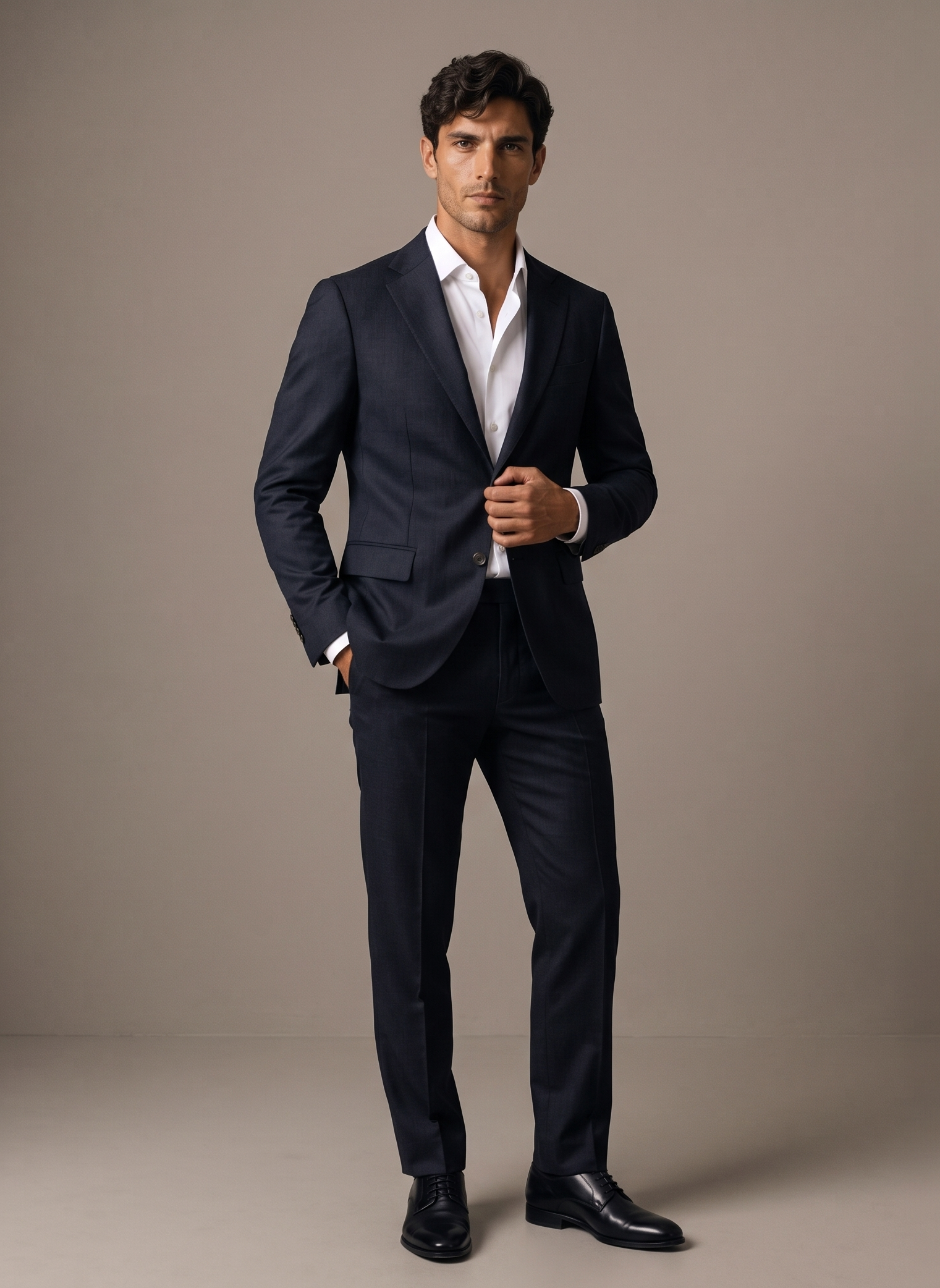
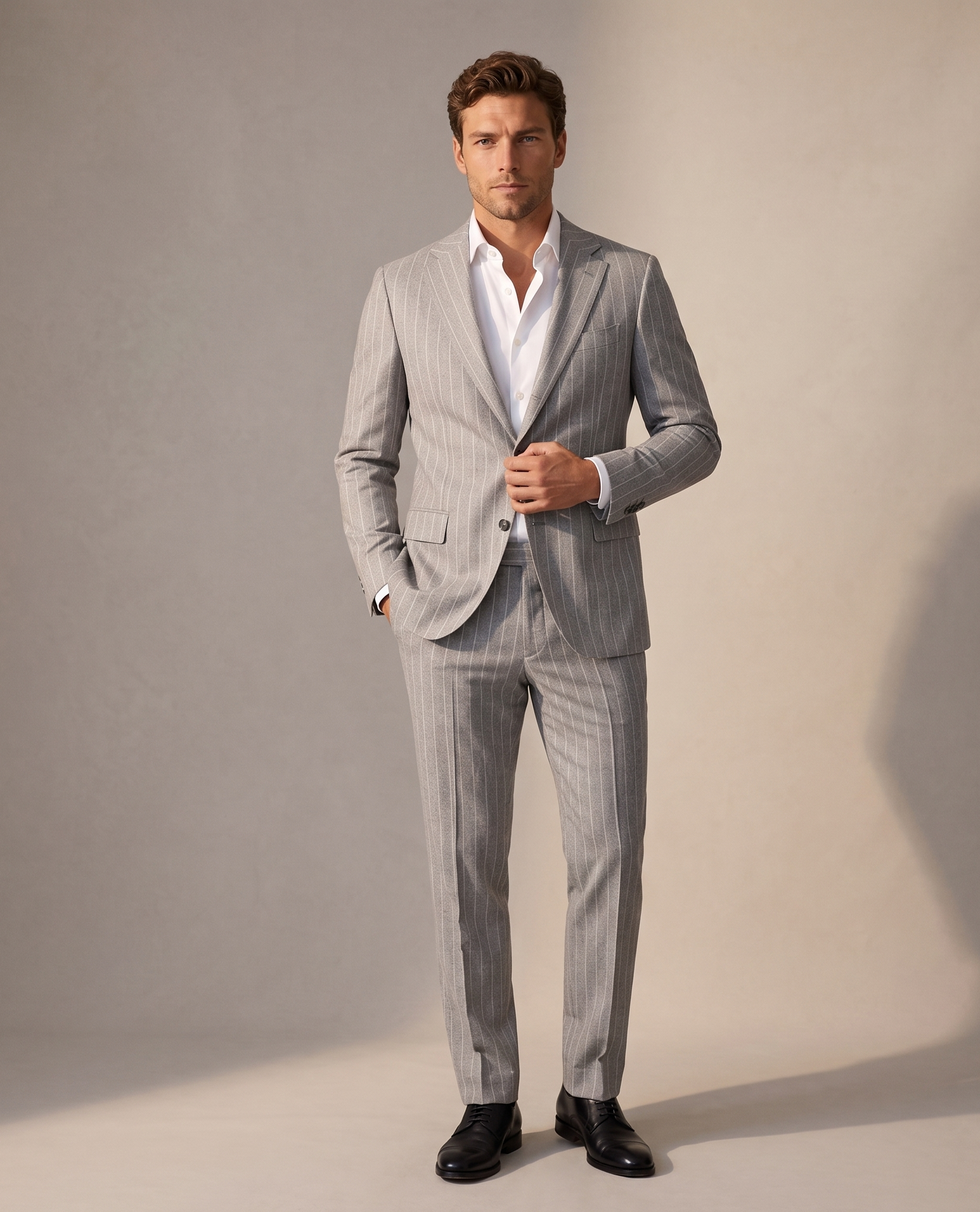
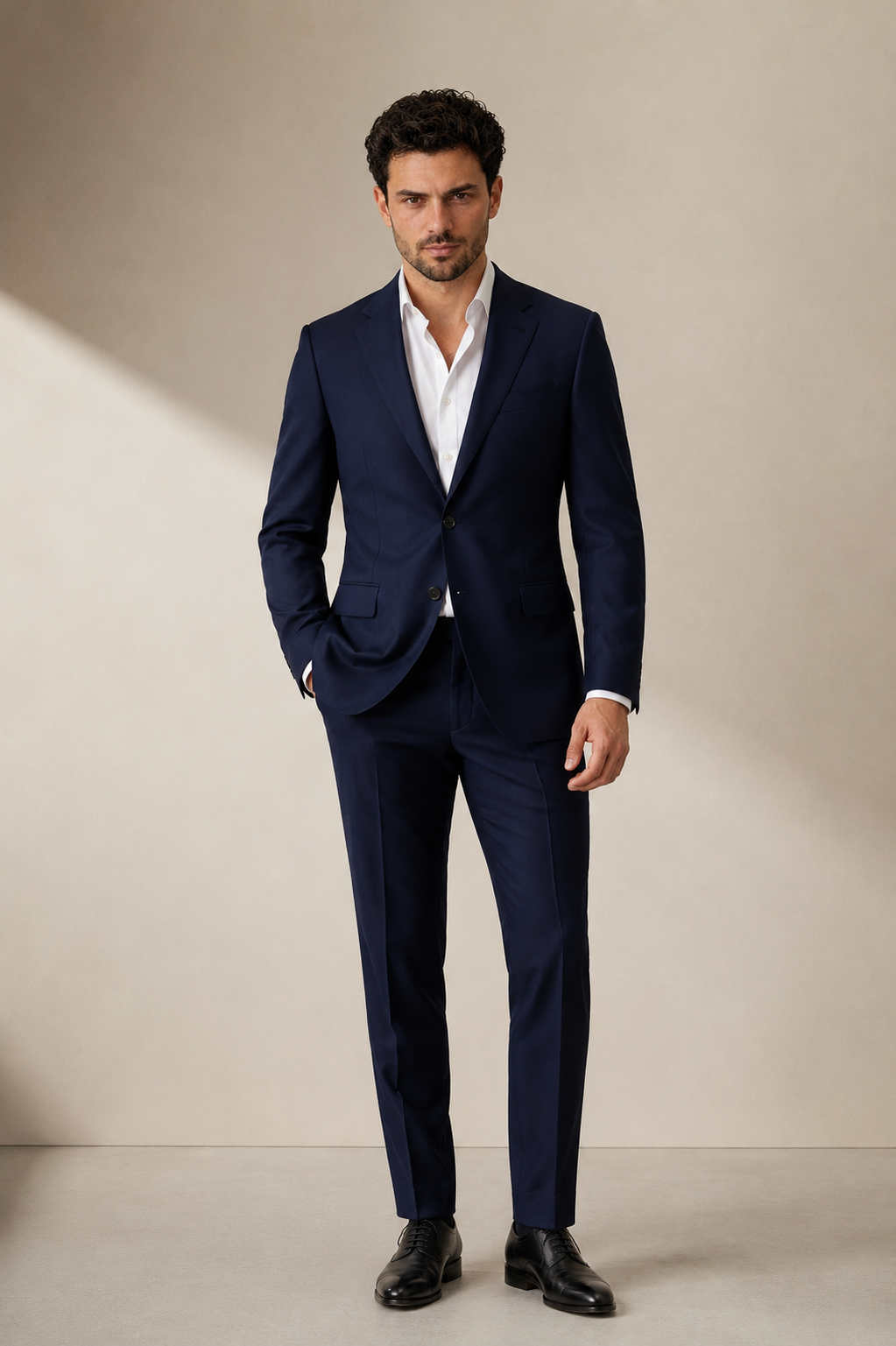
There is no single best colour for a wedding suit. What matters are the season, the time of day, the venue, the style of the wedding, the colour scheme, your skin tone and whether the suit is to be worn again afterwards. That’s exactly why personal colour advice is so important for a wedding suit.
A navy suit, for example, can be ideal for a classic or maritime wedding by the water. Shades of beige, sand, brown or green can look more harmonious at a garden, country or barn wedding. For a formal evening event in a ballroom, black, midnight blue or a dinner suit may be the right direction.
Light also changes colours considerably. A fabric that looks almost black in the showroom can appear clearly blue in daylight. Warm natural tones, in turn, come into their own at summer weddings and in southern light.
That’s why, at Varazio, we don’t start with the question “Which colour would you like?”, but with questions such as: When are you getting married? Where is the wedding taking place? How formal is it? What is your partner wearing? Which colours feature in the decorations? And should the suit still work for the office afterwards?
Only these answers lead to a sound recommendation.
This is exactly where the advantage of owner-run, one-to-one advice shows: there is no standard colour that is sold to every groom. The aim is a colour that suits you and your wedding day.
We show how the individual colours work in our article on suit colours and occasions.
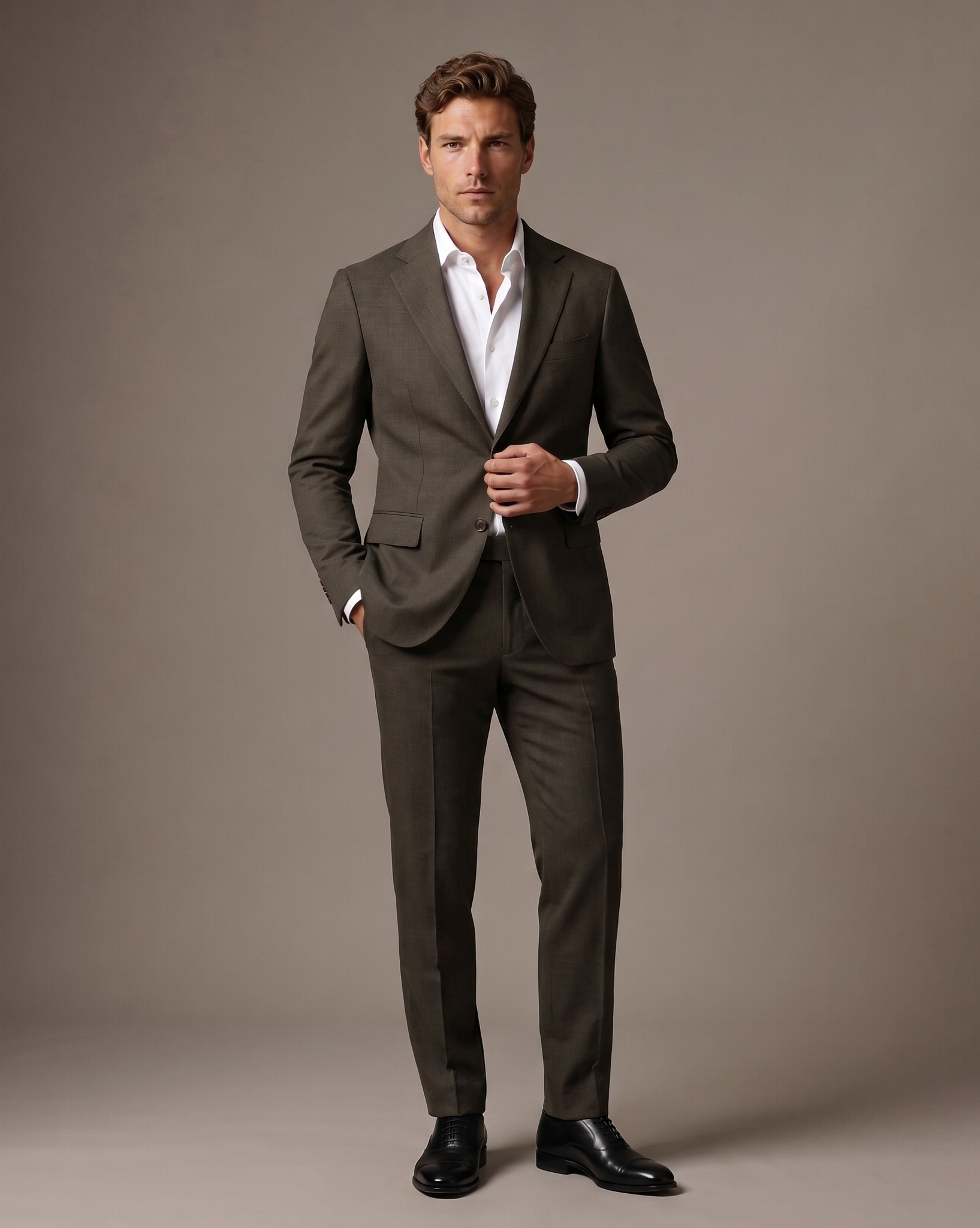
Can the groom wear a black suit?
Yes, the groom can wear a black suit. Black is particularly fitting for formal evening weddings, Black Tie or a very classic wedding concept. At a daytime wedding, midnight blue, navy or other shades can look softer.
Black is often automatically considered especially elegant, but it depends heavily on the setting. In bright daylight, the colour looks harsher than dark shades of blue or grey. Its strength lies above all in formal evening events.
What matters, then, is not the isolated rule “black or not”, but whether colour, fabric, time of day, venue and dress code work together.
Which suit colour suits a summer wedding?
Light natural tones such as beige, sand and taupe, as well as lighter shades of blue, brown or green, often suit a summer wedding. Which colour is right, however, also depends on the venue, the level of formality and the lighting.
Colour and material belong together. A light beige in airy fresco looks modern and summery, while the same shade in a heavy winter fabric would have a completely different effect.
At a destination wedding in Italy or Spain, light natural tones look particularly good in the intense daylight. At a more formal wedding in an elegant hotel, on the other hand, a lightweight navy suit may be more appropriate.
That’s why “summer wedding” should never be the only deciding factor.
Which suit colour suits a winter wedding?
Dark, deep colours such as navy, charcoal, dark brown or deep greens often suit winter weddings. Combined with flannel or a slightly heavier pure new wool, they create looks that go particularly well with soft lighting and evening events.
A heavier cloth gives colours more depth. Flannel is slightly brushed and matt, which makes colours appear calmer and warmer.
Light colours aren’t ruled out in winter, though. A light grey in flannel, for example, can look very wintry, while the same colour in linen would be clearly summery.
Here, too: colour, fabric, light and venue should be considered together.
Which suit colour suits a barn or garden wedding?
Natural shades such as olive, brown, beige or textured blues often suit a barn or garden wedding. They can look more relaxed and organic than classic dark business colours.
Textured fabrics such as hopsack reinforce this impression and make the suit look refined without becoming too formal.
Weddings like these show particularly well why the venue plays a role in choosing a colour: a suit that looks perfect in a ballroom can seem too severe against a rural backdrop – and vice versa.
Brown, beige and olive are also good examples of colours where trying them on in person makes more sense than a blanket recommendation from the internet.
Which suit colour suits my skin tone?
Which suit colour suits your skin tone can’t be determined reliably from a chart alone. Skin tone, hair colour, contrast, fabric texture, light, shirt and accessories all influence together how a colour looks.
With some fairer skin tones, light natural shades such as beige or sand need more contrast from the shirt and accessories. On others, these very colours look particularly harmonious.
It’s similar with black and very dark shades: they can look assured, but also unnecessarily harsh.
That’s why we don’t think much of simply assigning the groom to a colour-type category. At a personal appointment, we hold different fabrics up directly and judge how they work together.
Can the groom wear a dark suit if the wedding dress is light?
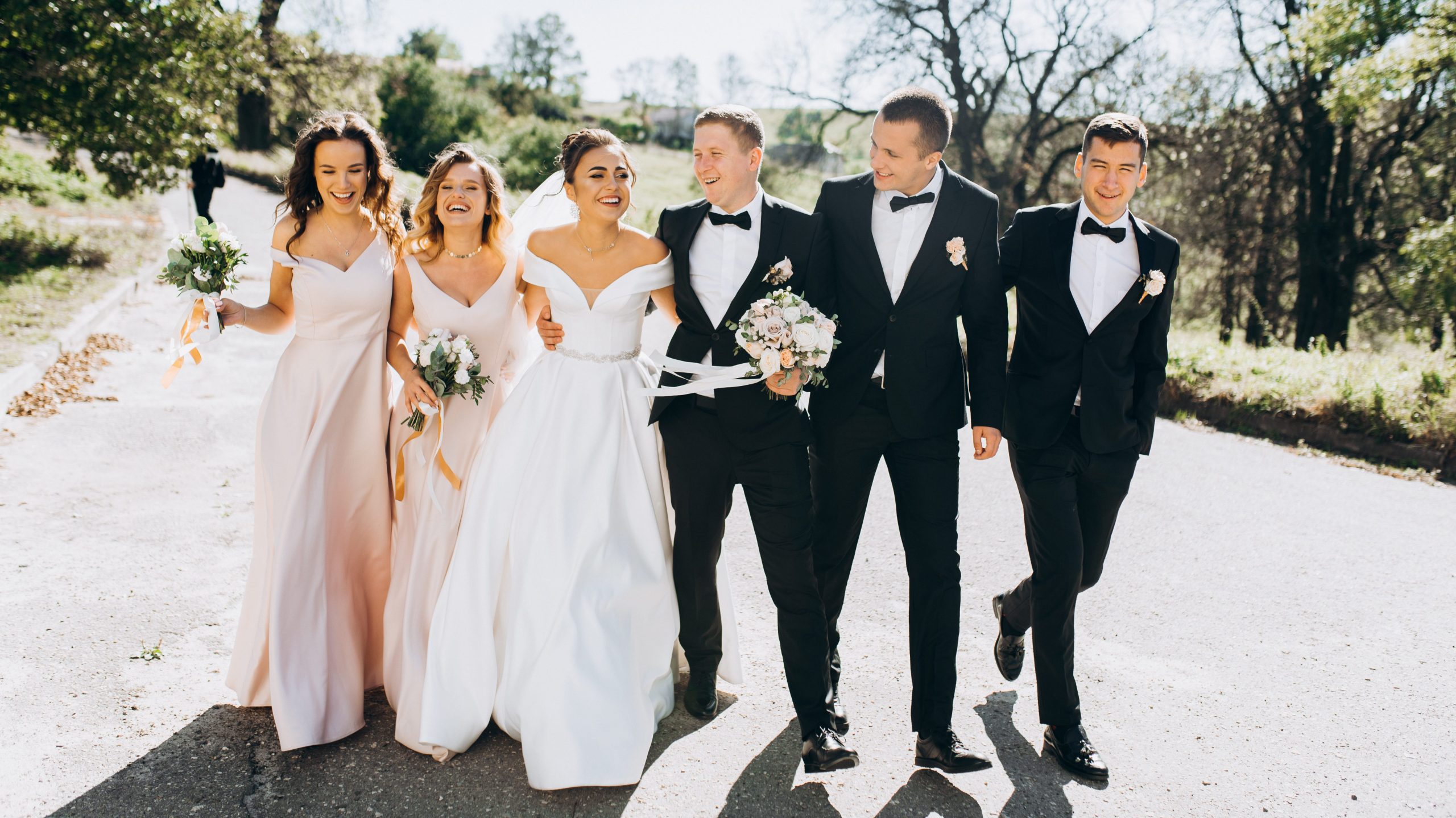
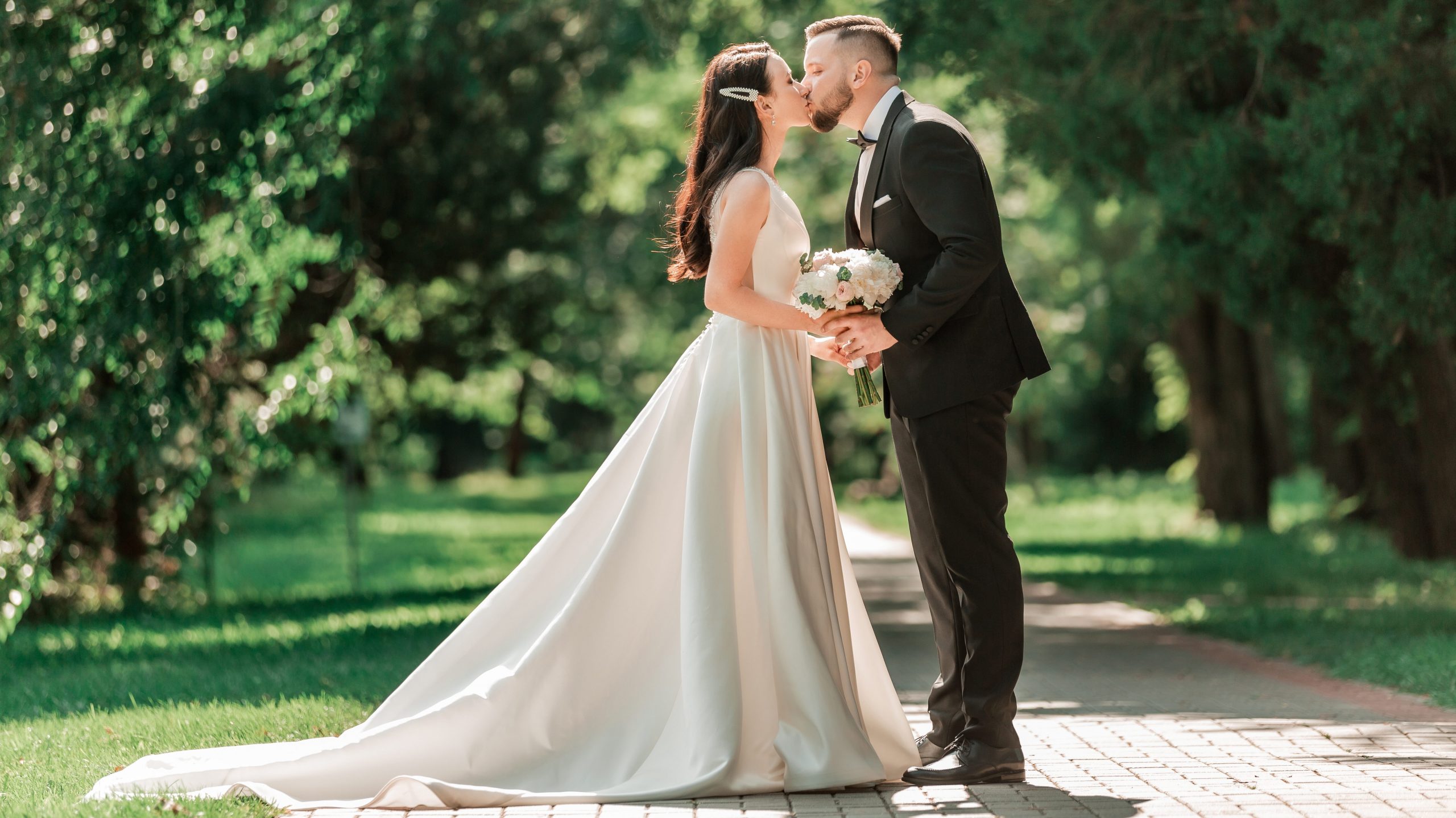
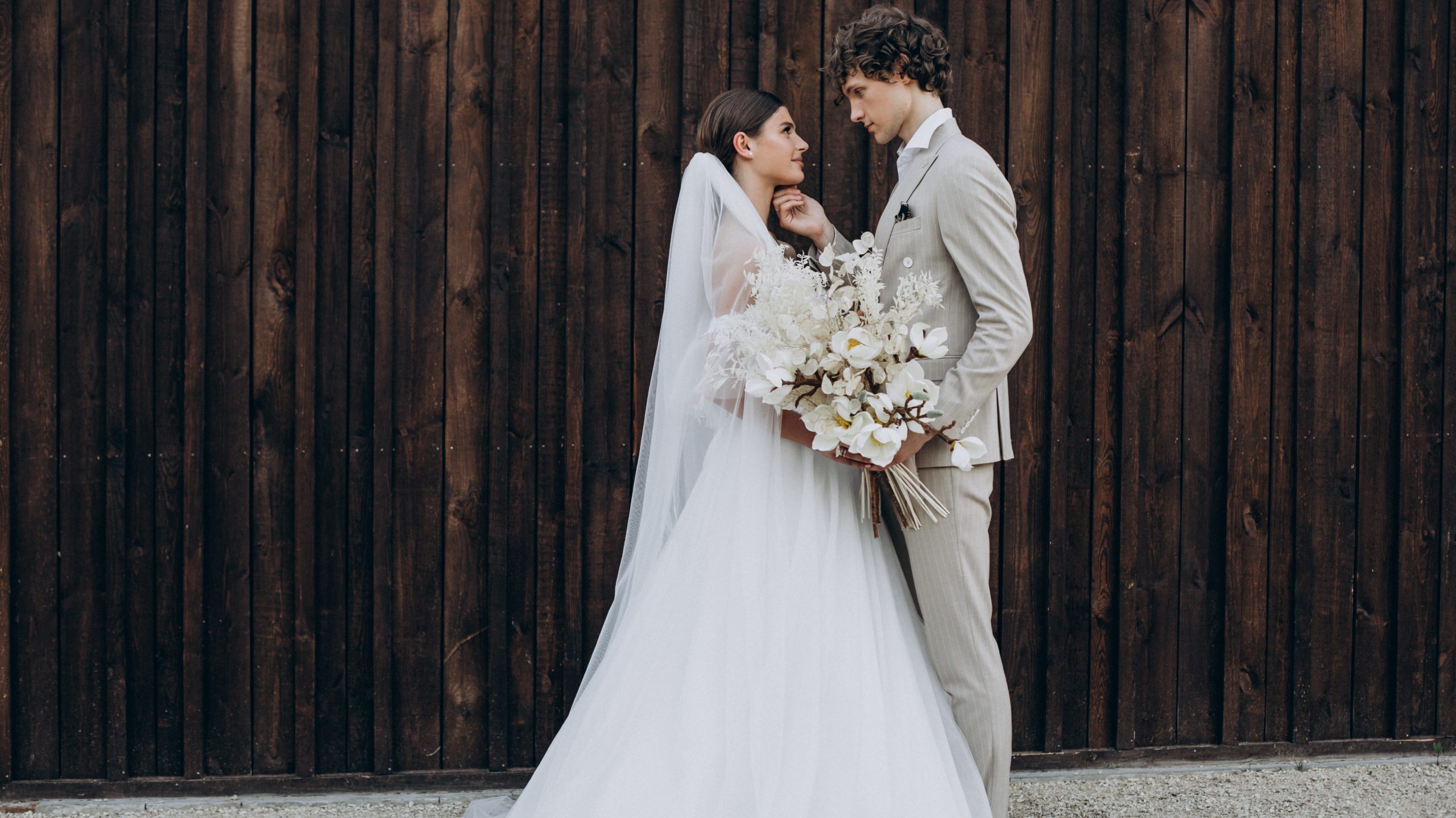
Yes. A dark suit next to a light wedding dress works very well and is often chosen deliberately, because the contrast looks elegant. What matters is that the shirt and accessories in particular are matched to the colour temperature of the dress.
As a couple, you don’t have to look identical in colour. Harmony comes far more from a shared style and deliberately coordinated nuances.
A navy three-piece, for example, can work beautifully next to an ivory dress, as long as the shirt and accessories aren’t chosen in an unsuitably cold white.
At the consultation, we therefore don’t look at the groom’s suit in isolation, but, where possible, also take the dress, venue and colour scheme into account.
Which fabric is suitable for a summer wedding suit?
Light, breathable fabrics are suitable for a summer wedding suit: lightweight pure new wool, open-weave fresco, linen-wool blends or fabrics with a share of silk. At very warm destination weddings, the construction and lining also play an important role.
Lightweight pure new wool regulates temperature and looks elegant. Thanks to its open weave, fresco lets air circulate and creases comparatively little. Linen blends add summery texture without creasing as much as pure linen.
At temperatures of 30 degrees or more, softer, less padded construction and a reduced lining can also make sense.
Which option is really comfortable is best judged when you hold the fabric in your own hands. That’s exactly why fabric advice plays such a big role at Varazio.
Read more in our article on choosing a suit fabric.
Which fabric is suitable for a winter wedding suit?
Flannel and slightly heavier pure new wool qualities are particularly well suited to a winter wedding suit. They give the suit structure, keep you warmer and have a calm, refined effect in winter light.
A fabric that is too light can be not only less comfortable in winter, but also look less fitting.
Flannel, for example, goes very well with candlelight and evening celebrations, because its matt surface reflects less light.
If you also want to wear the suit for work in autumn and winter later on, navy or charcoal in a suitable wool quality is a very versatile choice.
What does Super 150 mean, and do you need it for a wedding?
Super 150 describes the fineness of the wool fibre used, not automatically the overall quality of a suit fabric. The higher the number, the finer and softer the wool can be – but it often becomes more delicate at the same time.
The assumption “higher Super number = better fabric” therefore falls short.
If the suit is to be worn regularly after the wedding, more robust qualities such as Super 100 or Super 120 can make more sense. If a particularly fine and festive fabric is the priority, Super 150 may also be of interest.
Which quality is right therefore depends above all on how the suit will be used – a typical example of why we never give fabric recommendations in isolation from the client.
Does a linen suit crease too much for a wedding?
Pure linen creases considerably more than wool and many blends. At a relaxed summer wedding, that can look intentional; with a very formal wedding look, however, it can quickly appear untidy.
For weddings, we therefore often recommend blends of linen and pure new wool or linen and silk. They keep the airy character but usually hold their shape somewhat better.
If you want pure linen, you should consciously accept the typical creasing as part of the look.
Should the fabric for the wedding suit be smooth or textured?
Whether a smooth or a textured fabric suits you better depends on the style you want. Textured fabrics often look more modern and relaxed, smooth fabrics calmer and more formal.
Hopsack, birdseye and other textured weaves break up the light and give a colour more depth.
Smooth fabrics, on the other hand, look cleaner and are particularly suitable for very formal looks or a dinner suit.
Texture can also be interesting for wearing the suit after the wedding: a textured jacket is often easier to wear separately with chinos or other wool trousers.
Is pure new wool better than a polyester blend?
For a high-quality wedding suit, pure new wool is the more versatile choice in most cases. It is breathable, regulates temperature, holds its shape and has natural wearing properties.
Fabrics with a high polyester content can be easy-care, but are often less breathable and, depending on the quality, can have more of a sheen.
Besides pure new wool, our range of fabrics includes linen, cotton, mohair and silk blends from renowned mills in Italy and England.
The appointment is therefore not just about technical data. You touch the fabrics, see them in the light and we explain why we recommend a particular quality for your wedding.
For us, this in-depth fabric advice is part of the personal approach that sets an owner-run business like ours apart from a purely standardised ordering process.
What happens at a wedding suit appointment at Varazio?
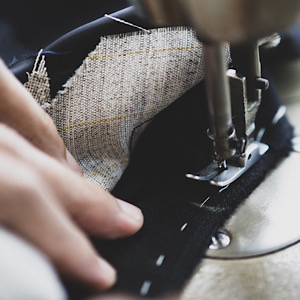
An in-depth wedding appointment at Varazio in Hamburg’s HafenCity takes about three hours. During this time, there are no other client appointments running in parallel: the consultation belongs to you and your wedding.
This personal one-to-one atmosphere is a central part of our concept. Varazio isn’t a chain with changing consultants, but an owner-run business where advice and personality are deliberately at the centre.
That’s why the appointment doesn’t begin with swatch books, but with a conversation: where and when are you getting married? What feel should the wedding have? What is your partner wearing? What do you like? What do you definitely not want? Should the suit be worn again after the wedding?
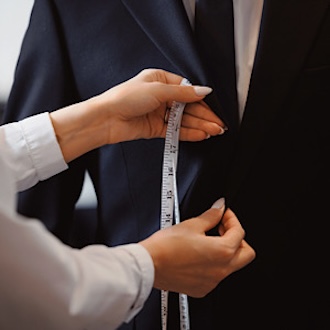
Only then do we look together at fabrics, colours, textures and details such as cut, number of buttons, pockets, lapels and lining. After that, we take your measurements.
For clients who don’t know us yet and don’t want to reserve three hours for a full wedding appointment straight away, we also offer a free, no-obligation preliminary consultation.
We particularly recommend this first meeting. You can see the showroom, get to know the first fabrics, ask questions about prices and the process, and see whether you feel comfortable with our way of advising. There is no obligation to order.
Is there a fit guarantee for your suit?
Yes, Varazio offers a fit guarantee: the suit is adjusted until it fits. Any adjustments needed at the fitting are made free of charge; they are included in the price.
Even with precise measuring, it can happen that the sleeve length or waist suppression, for example, still needs a little adjustment after production. This fine-tuning is simply part of tailoring.
Personal support after the order is also important to us. Contact doesn’t end the moment the order has been paid for.
Should a suit ever fundamentally not fit as it should, we’ll find a solution together.
Later alterations, for example after a change in weight, can be made for a fair flat fee.
Can the best men and family be outfitted too?
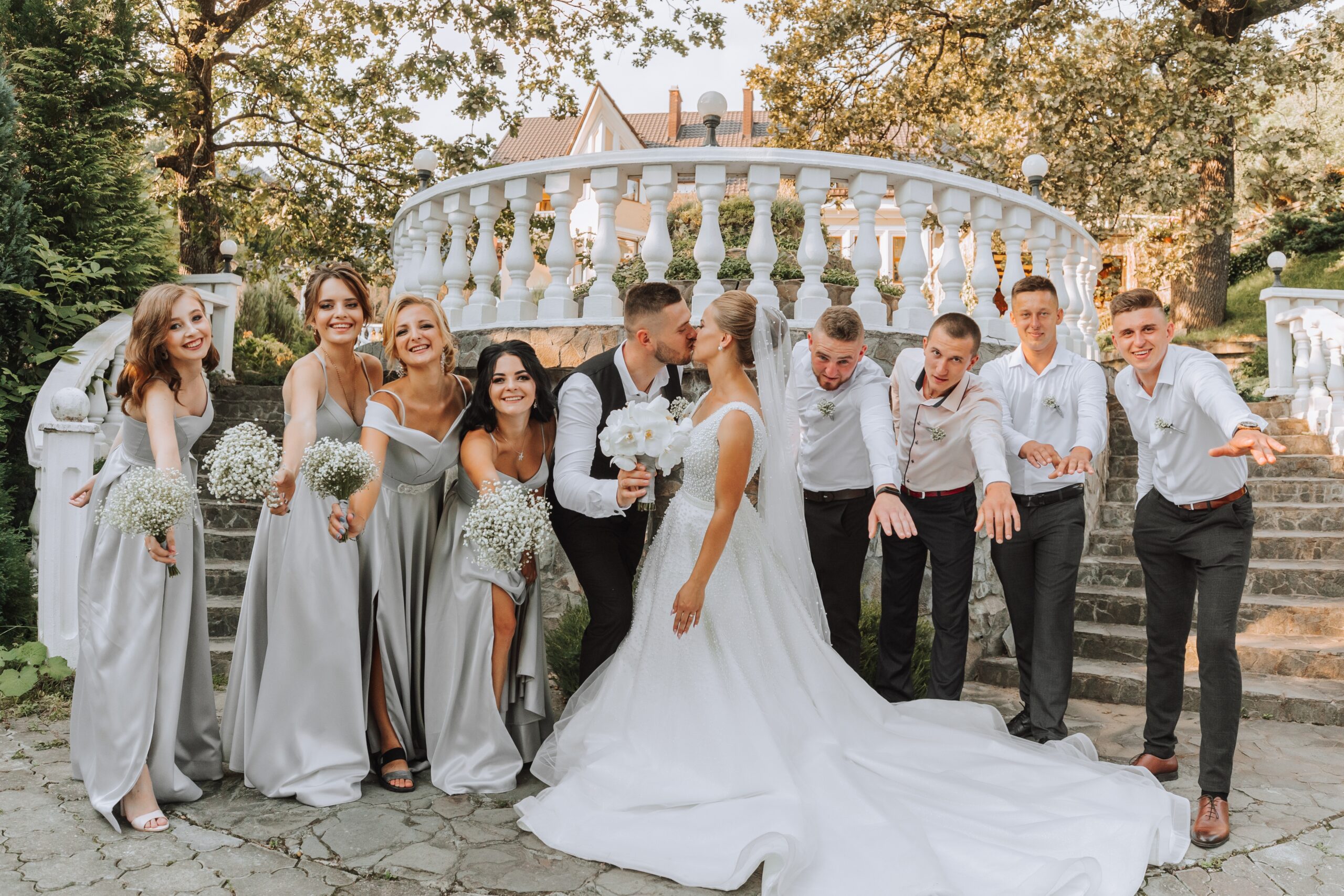
Yes, at Varazio you can also have the outfits of your best men and family members coordinated on request. The aim isn’t to dress everyone the same, but to create a harmonious overall picture.
In the consultation, we look, for example, at how the best men’s colours and fabrics can differ from the groom’s without the overall picture falling apart.
Especially at larger weddings, personal coordination is often more helpful than a rigid colour rule.
Custom shirts can also be ordered on their own.
You can find all our services around wedding appointments on our wedding suit page.
Does Varazio also offer tailored shirts to go with the wedding suit?
Yes, Varazio offers custom shirts to complement the wedding suit or on their own. We also make coats and casual pieces to your measurements, among other things.
In a wedding look, the shirt is particularly important, because it is seen right next to your partner’s dress or outfit.
That’s why we don’t automatically choose a pure white shirt, but look at the actual shade of the wedding dress and how it works together with the suit.
Measurements and configurations can then be used for later orders. That way, the wardrobe can be expanded piece by piece after the wedding.
Does the groom’s shirt have to match the wedding dress?
The shirt should be matched to the colour temperature of the wedding dress. Many wedding dresses aren’t cool white, but ivory, champagne or slightly blush. A very cool white can look quite different next to them.
Ivory is a warm white with a creamy undertone; champagne leans more towards beige-gold.
On their own, these differences often barely stand out. In direct comparison and in photos, however, they can become clearly visible.
We therefore recommend knowing the shade of the dress before making the final choice of shirt. A photo or a fabric sample can already help at the consultation.
We explain why the interplay matters so much in our article on the wedding suit and the wedding dress.
How do you match the wedding suit to the venue and style of the wedding?
The wedding suit should grow out of the overall concept of the wedding. Venue, season, time of day, formality and the groom’s personality together determine which colours, fabrics and cuts make sense.
A wedding on Lake Garda has different requirements from an urban industrial venue, a barn wedding or a festive ballroom.
That’s exactly why the wedding venue plays such an important role in our advice.
A maritime celebration by the water, for example, can harmonise with various shades of blue and natural tones. At a country wedding, green, beige, brown or textured fabrics can be interesting. For a formal evening wedding, the look can become considerably darker and more elegant.
We therefore don’t see advice as choosing from ready-made wedding looks. The aim is to develop a coherent overall picture together – from the place, the atmosphere, your partner’s outfit and your personal style.
Which suit suits an old-money-style wedding?
Classic, understated looks with clean lines and high-quality materials suit a wedding in the so-called old-money style. Navy, midnight blue and – at suitable evening events – black or a dinner suit can be the right direction.
Striking colours and strong fashion statements take more of a back seat in this style.
What matters is a calm overall effect: fine fabric, good proportions, classic details and accessories that don’t compete for attention.
Here too, however: the term “old money” alone is not enough for a specific suit recommendation. Whether a dinner suit, a classic two-piece or a three-piece is right only becomes clear with the venue and dress code.
When does a white dinner jacket suit a wedding?
A white or cream dinner jacket suits above all formal weddings with an evening character, especially elegant summer weddings in southern countries. Traditionally, it is combined with dark dinner suit trousers.
At daytime weddings or very rustic, informal celebrations, on the other hand, the look can seem too formal.
A dinner jacket works best when the rest of the wedding carries the same kind of elegance.
For a relaxed summer wedding, light natural tones can be an alternative, while midnight blue or black are the more obvious choice for classic Black Tie.
Should the wedding suit be a three-piece or a two-piece?
Whether a two-piece or a three-piece suits you better depends on formality, personal style and later use. A three-piece has the advantage that the waistcoat adds extra festiveness on the wedding day and can simply be left off afterwards.
That way, one suit gives you two different looks.
If you rarely wear a waistcoat anyway and are planning a particularly pared-back wedding, you can deliberately stick with a two-piece.
Personal details don’t have to be visible on the outside. Lining, embroidery or other small elements can make the suit individual without limiting how wearable it is later.
We discuss exactly these kinds of decisions individually at the appointment, rather than following a fixed wedding template.
Can you keep wearing your wedding suit after the wedding?
Yes. A wedding suit can be worn again very well if that later use is considered from the start in the colour, fabric, cut and details.
Many wedding suits end up staying in the wardrobe because they were designed solely for the effect on a single day.
That’s why, at Varazio, we ask early on: Where would you still like to be able to wear this suit in three years’ time?
If you’re thinking of business, family celebrations and other festive occasions, you can plan with navy, charcoal or other versatile colours, for example. Matt or textured fabrics are usually easier to recombine than very shiny wedding fabrics.
Timeless proportions are also helpful when it comes to the cut.
You can read how to choose colour, fabric and details for a suit with a future in our article on wearing your wedding suit after the wedding.
Can you wear your wedding suit at the office later on?
Yes, many wedding suits can be worn for work later on. It works particularly easily with versatile colours such as navy or charcoal and a rather timeless, matt fabric.
With a simple shirt, classic shoes and without festive accessories, the character of the suit changes considerably.
If you want to wear the suit often for work, you should mention this when choosing the fabric. A robust wool quality can then make more sense than a particularly delicate festive cloth.
Read more in our article on business suits.
How do you style your wedding suit differently after the wedding?
After the wedding, the suit can be transformed considerably with different shirts, shoes and accessories. Depending on the fabric, the jacket and trousers can also be worn separately.
For example, leave off the tie, open the top shirt button and wear loafers instead of classic wedding shoes.
A textured jacket can work with chinos or dark jeans. Depending on the colour, the suit trousers can be combined with a shirt, knitwear or a roll-neck.
That’s precisely why we bring up later use during the consultation. Some details are spectacular for one day, but make every later combination difficult.
How do you care for your wedding suit after the celebration?
After the wedding, the suit should first be aired and checked for stains or other traces of the celebration. Professional cleaning makes sense if it is genuinely necessary; high-quality wool suits, however, don’t need to be dry-cleaned after every wear.
Hang the suit on a good hanger after the celebration and let it air out completely.
For visible stains or heavier soiling, professional cleaning is recommended.
In everyday wear, the right care depends on the material. Pure new wool often benefits above all from air and rest. Linen and linen blends may need to be steamed or ironed. Fabrics containing silk need particularly careful handling.
That’s why, when you collect your suit, we also explain what makes sense for the specific fabric you’ve chosen.
Can you have your wedding suit altered later?
Yes. A made-to-measure wedding suit can often be adjusted later, for example in the trouser width, sleeves or waist suppression. How much room there is depends on the construction and the change you want.
Minor fluctuations in weight can therefore often be accommodated.
This room isn’t unlimited, however. With major changes to the body, even a tailored suit can’t be let out or taken in indefinitely.
At Varazio, we carry out later alterations for a fair flat fee. That way, the suit should remain a garment that truly fits for as long as possible.
Where can you find Varazio in Hamburg?
You’ll find Varazio in Hamburg’s HafenCity at Versmannstraße 2-4, 20457 Hamburg, just a few minutes’ walk from the HafenCity Universität U4 station.
The showroom is deliberately not set up as a classic branch. Varazio is an owner-run, independent business for tailored clothing, where personal appointments and calm one-to-one advice are at the heart of everything.
We’re open Monday to Friday from 12 pm to 8 pm and on Saturday from 11 am to 6 pm; the showroom is closed on Wednesdays. By arrangement, appointments outside regular opening hours are sometimes possible too.
Because we take plenty of time for consultations and don’t schedule parallel client appointments during a wedding appointment, we recommend booking in advance.
You can find all the ways to contact us, as well as directions, on our contact page.
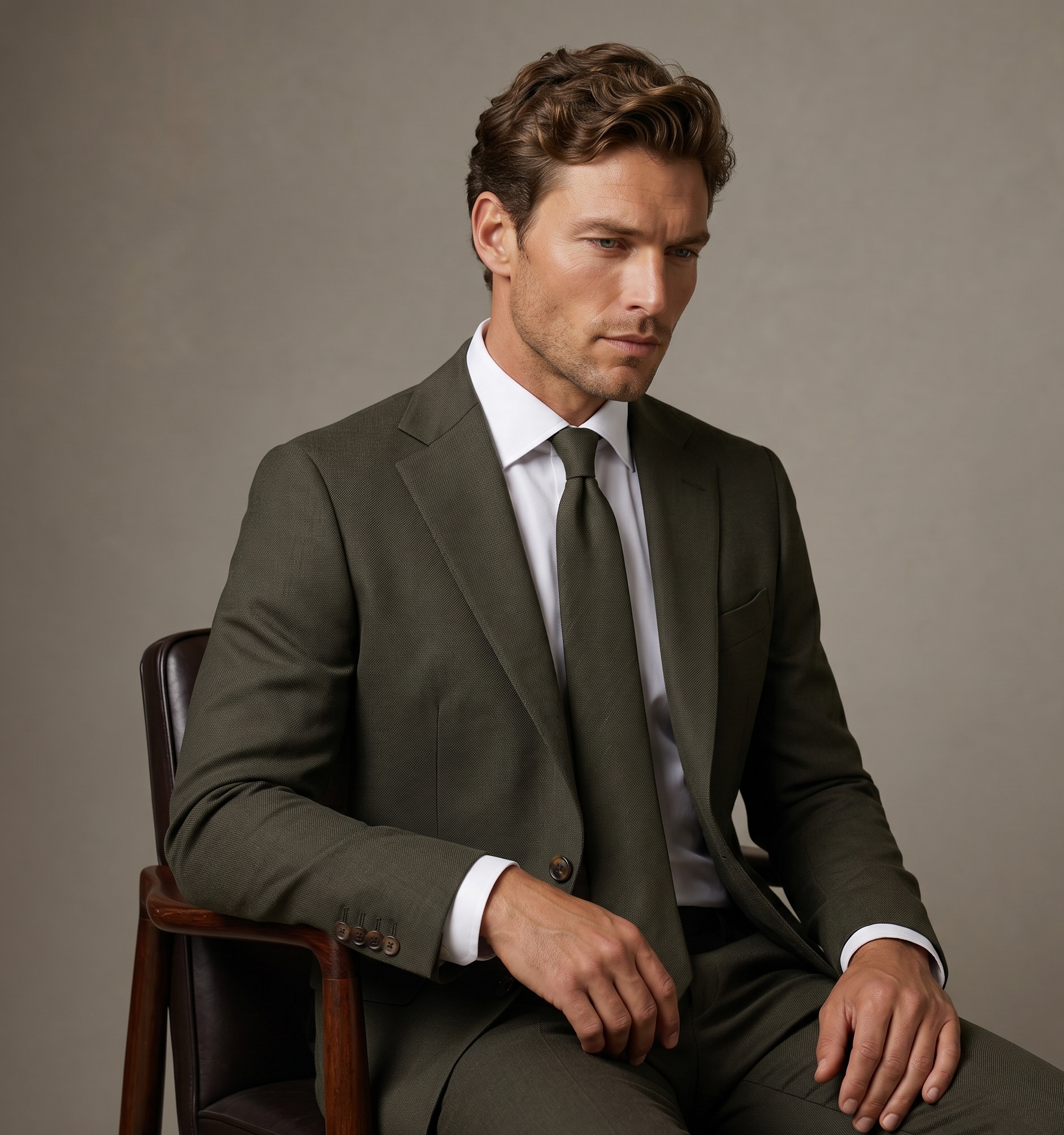
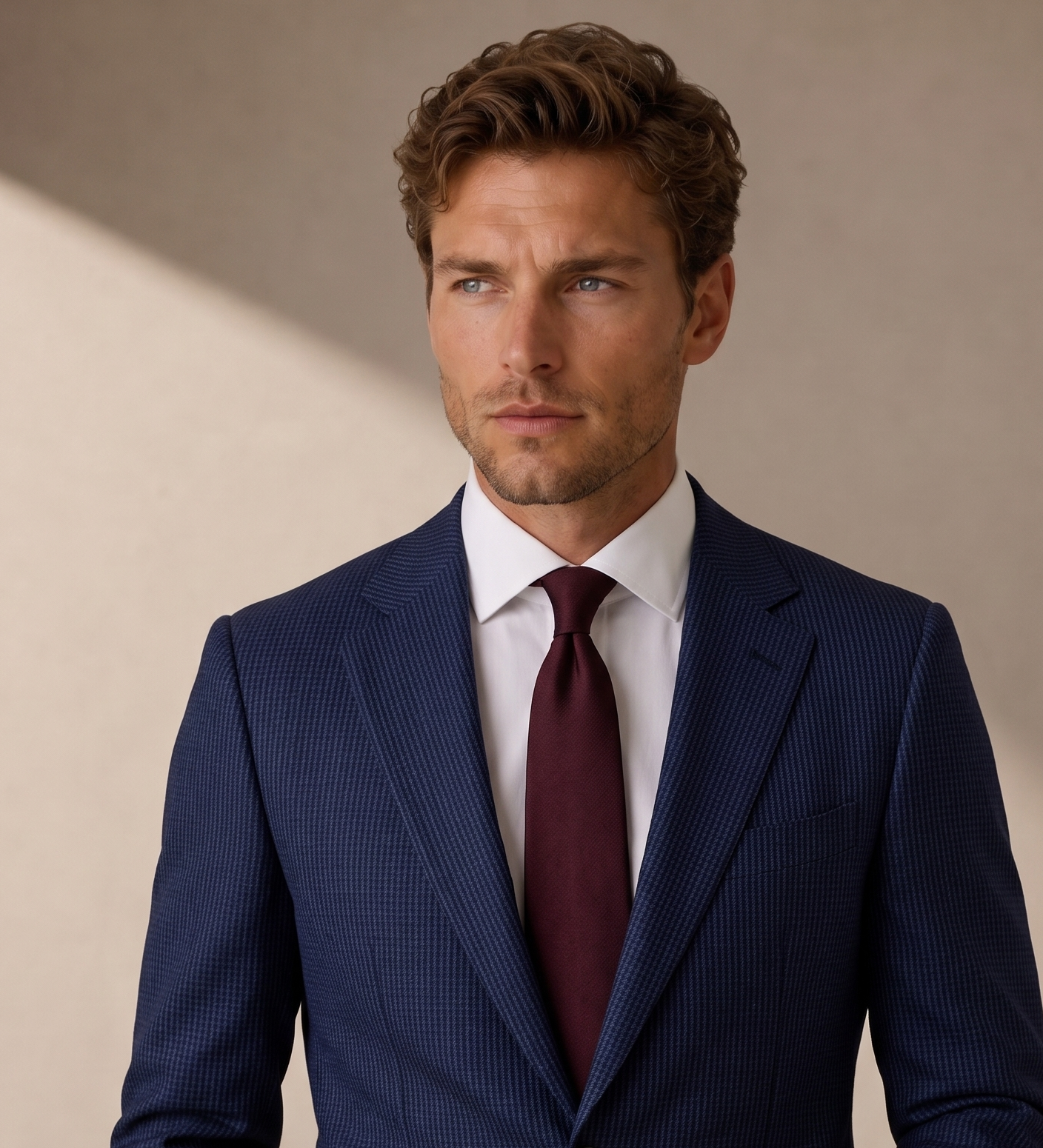
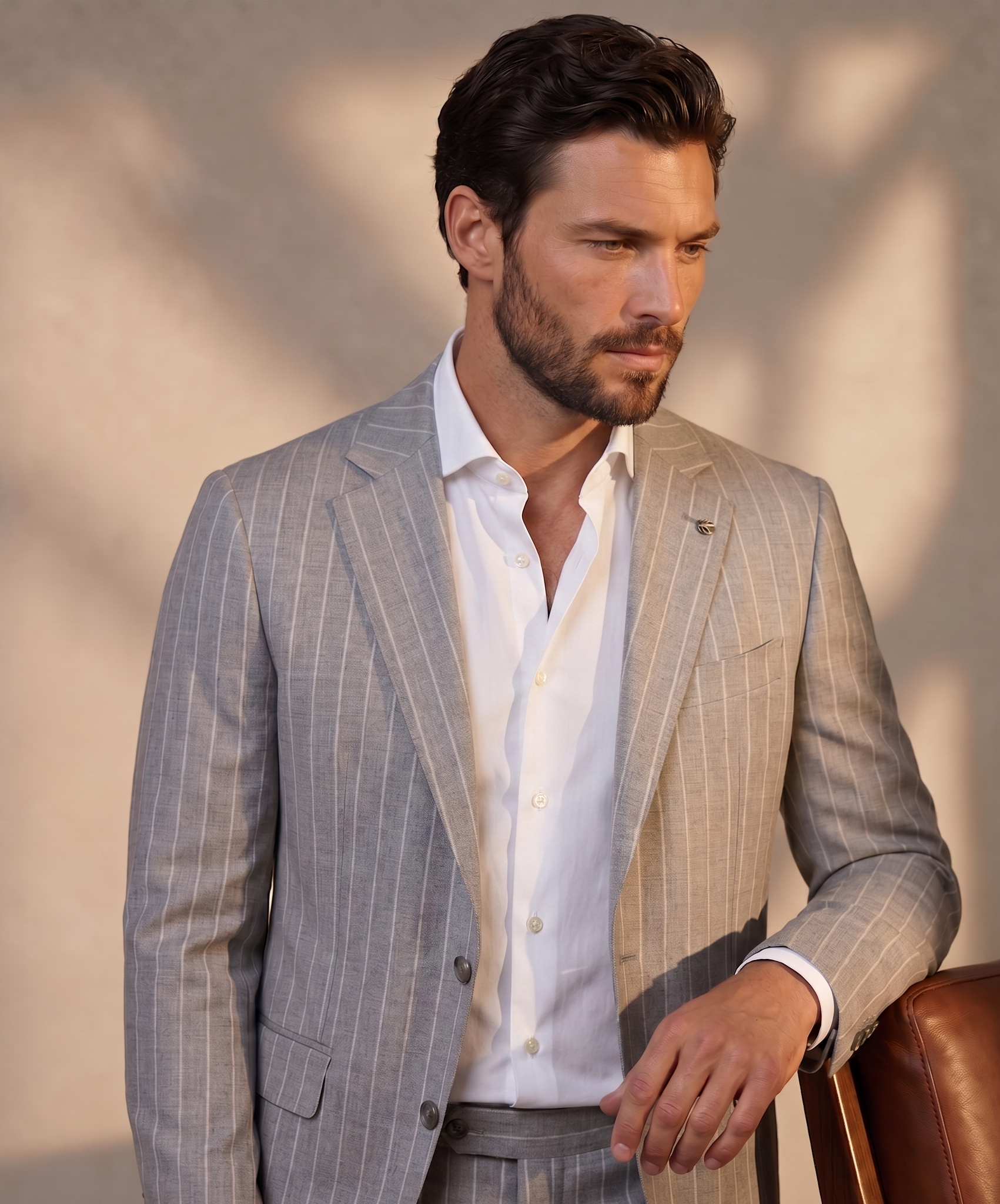
Plan your wedding suit in Hamburg in person
If you’re planning your made-to-measure wedding suit in Hamburg and would like a personal alternative to classic branch or chain advice, you can get to know Varazio first – with no obligation at all.
Varazio is a young, owner-run tailoring house backed by more than ten years of professional experience. It grew out of a passion for good clothing and the conviction that made-to-measure shouldn’t follow a one-size-fits-all formula. That’s why the focus is on personal advice, individuality and a suit that suits not only a wedding, but above all the man who wears it.
For your first contact, you can book a free, no-obligation preliminary consultation at our showroom in Hamburg’s HafenCity. You can ask questions, get to know the fabrics and find out together whether Varazio is the right partner for your wedding.
Ideally, you should schedule the in-depth wedding appointment three to four months before your wedding day. That leaves enough time for advice, fabric selection, production, the fitting and any adjustments.
You can book appointments online via our booking page as well as by email to mail@varazio.de or via WhatsApp on +49 176 22555306.