For many men, a tailored suit is their first encounter with individually made clothing – often for their wedding, an important appointment or because off-the-peg simply never fits properly.
At the same time, there are many open questions: Is it really worth it? What does it cost? What happens at an appointment?
There are numerous providers in Hamburg, but the differences in quality and advice are considerable and hard to spot from the outside.
In this article, I explain when a tailored suit makes sense, what to look out for when choosing a provider and which mistakes you can avoid – so that your first suit of this kind turns out to be a good decision.
Made-to-measure suits in Hamburg: why you should treat yourself
Perhaps you’re planning your wedding. Or you have an important business appointment coming up where you really want to make a convincing impression. Or perhaps it’s simply the moment you realise that off-the-peg suits never quite fit properly. That’s exactly when the question arises: is it worth having a suit made?
As a men’s outfitter in Hamburg’s HafenCity I experience this almost every day: many men come to us with a mixture of curiosity and uncertainty. They know they’re looking for something special, but aren’t sure whether a suit like this is really the right decision. And that’s completely normal.
When does having a suit made really pay off?
It’s worth it if you need a fit that truly takes your proportions into account. That doesn’t just apply to unusual body shapes. Even if you have broad shoulders and a narrow waist, arms of different lengths or a particular posture, ready-to-wear quickly reaches its limits.
Something I notice again and again: many men think their body is the problem when suits don’t fit properly. In most cases, it’s simply the standard size that doesn’t match individual proportions. A suit cut to your measurements solves exactly that. It is made to fit your body – not the other way round.
The occasion naturally plays a role too. For your wedding, an important appearance or if you regularly need to be well dressed for work, a suit of your own makes sense. But beyond that as well, because a well-made suit lasts for years and can be combined for different occasions.
Fit, comfort and effect: the difference from ready-to-wear
The most obvious difference is the fit. While ready-to-wear is produced in standard sizes and only allows limited adjustments by an alterations tailor, a custom suit takes your individual measurements into account from the start. That applies not only to the length of the sleeves or trouser legs, but also to shoulder balance, waist height, the fall of the trousers and how the suit sits on your body as a whole.
What many people underestimate: a well-fitting suit feels completely different. It doesn’t restrict you, doesn’t pull anywhere, isn’t too tight across the shoulders and doesn’t create unsightly creases. You can move freely. You notice that. And it also affects your body language. Anyone who feels comfortable in their clothes carries themselves differently.
The effect on others shouldn’t be underestimated. In photos especially, for example at your wedding, a precisely fitting suit makes an enormous difference. Even if you know nothing about fashion, others see immediately whether a suit really fits well or just somehow fits.
Why a tailored suit is a long-term investment
It costs more than ready-to-wear, no question. But the fabrics are also of higher quality and more breathable, they feel better and the workmanship is more stable. And because the suit really fits well, you wear it more often. Even laypeople often recognise from the feel and appearance that this suit was made for its wearer.
Something I see again and again in consultations: many people think a wedding suit is only worn once. It doesn’t have to be. If you plan from the start for the suit to be usable afterwards, you can design it so that it suits different occasions.
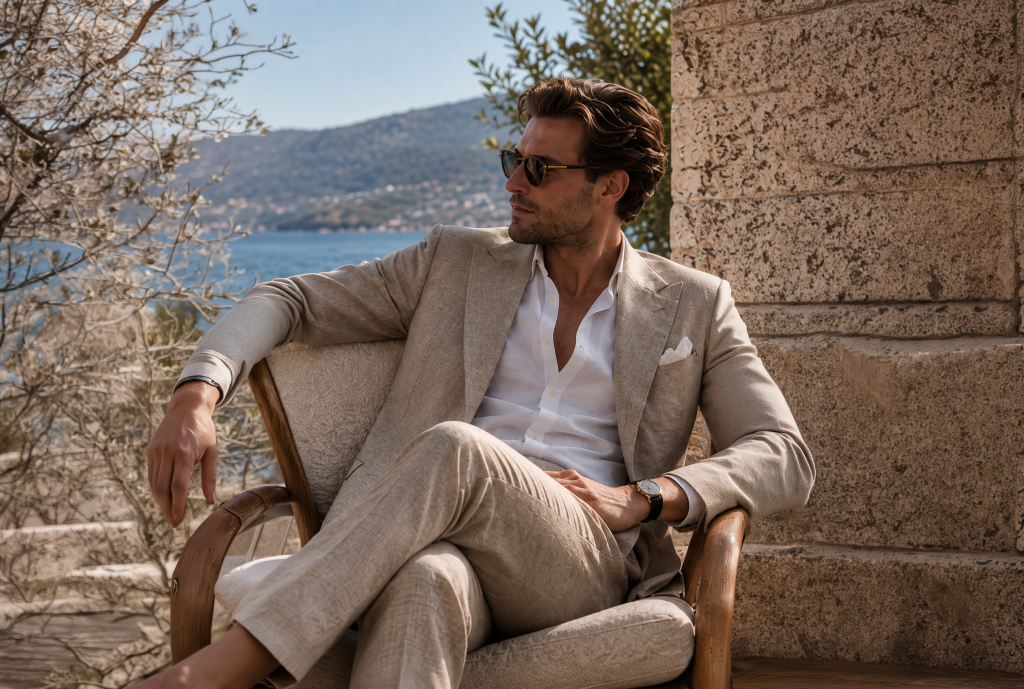
A jacket can be combined with other trousers, and well-fitting suit trousers can also be worn with just a shirt and no jacket. Suits with texture and a sportier feel are particularly well suited to this, because they don’t look too “suit-like”. What matters, though, is that this versatility is considered right from the style consultation, as it influences the entire look.
Tailored clothing is also more sustainable. Instead of buying new every few years because the fit was never quite right or the quality declines, you have a garment that lasts. It’s a conscious purchasing decision rather than fast consumption.
Your first custom suit! What might still be making you unsure
It’s completely normal to feel unsure before your first one. You’re entering territory that may be unfamiliar to you. You don’t know exactly what to expect, whether the investment is really worth it and whether the result will live up to its promise. I know the most common doubts.
Will a suit made for me really fit better than ready-to-wear?
Yes. And that’s not a marketing claim, but simply how made-to-measure works. Your suit is made according to your individual measurements. This means that shoulder width, arm length, waist, waist height and all other relevant measurements are matched precisely to you.
Ready-to-wear works with average values. A size 40 means that chest, waist, arm length and shoulder width correspond to a statistical average. If your proportions differ from this, the suit won’t fit properly. An alterations tailor can only help to a limited extent, because they work within narrow limits. You can shorten trousers or take them in a little, but you can’t really adjust the shoulders or fundamentally change the silhouette.
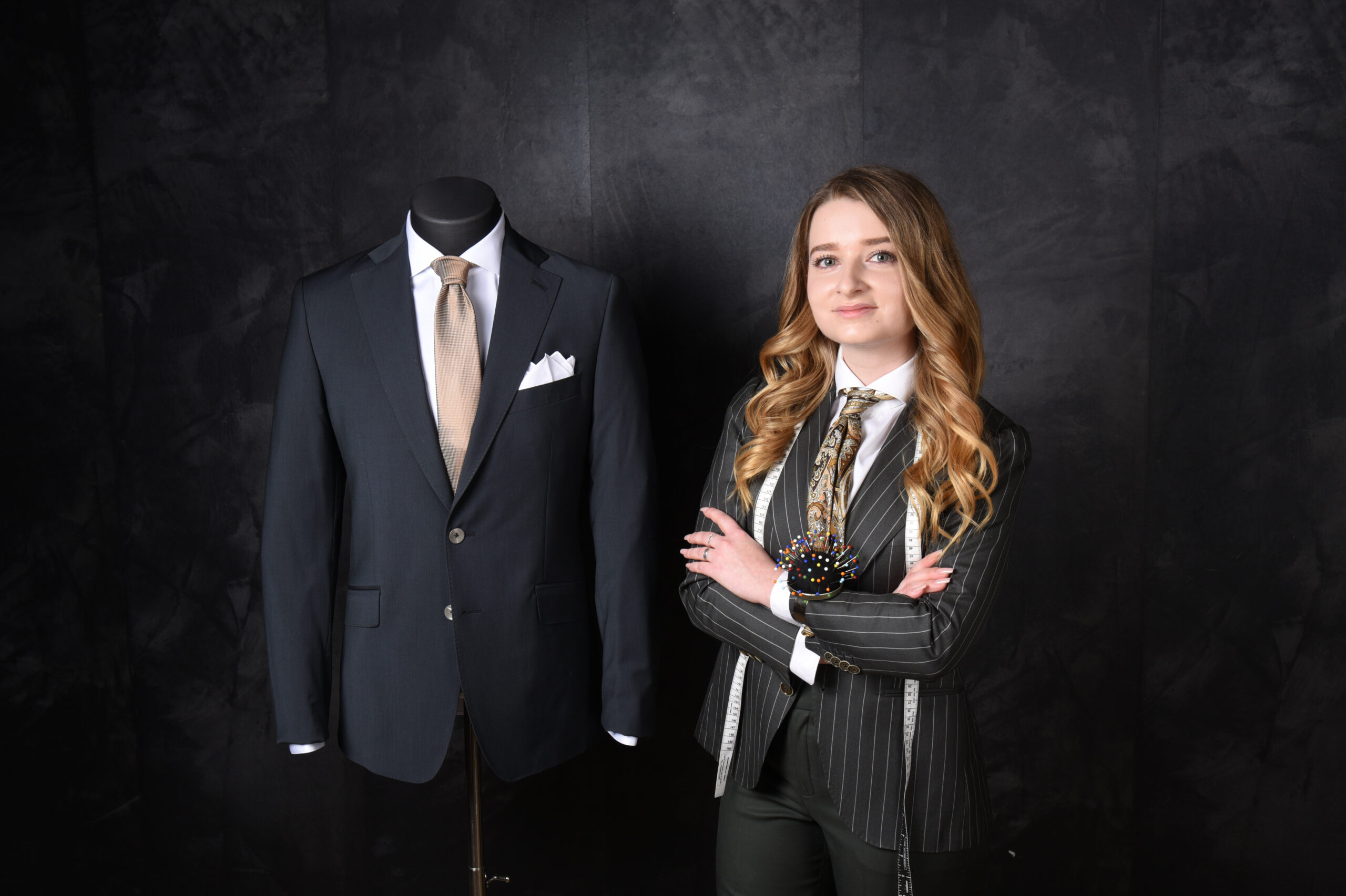
I see this every day at Varazio: men come to us frustrated because no off-the-peg suit fits properly. Often, this is down to perfectly normal proportions that simply don’t match the standard. Having a suit made solves that.
Do I even need a tailored suit, or is ready-to-wear enough?
That depends on your expectations. If you’re looking for a suit that fits somehow and that you only wear rarely, ready-to-wear may be enough. But if you want the suit to fit really well, be comfortable and make you feel confident, a suit made for you is the better choice.
For special occasions such as your wedding, where you spend the whole day in your suit, made-to-measure definitely makes sense. It’s also worth the investment for work if you regularly have to represent your company.
What happens at an appointment with a men’s outfitter?
An appointment with us begins with a conversation. I want to know what you need the suit for, which style you like and whether there are any particular requirements. Then we look at fabrics. This is about colour and texture, but also the season and the occasion. A summer wedding calls for a different fabric from a business suit for the winter.
Then I take your measurements. This takes its time, because precision is what counts. After that, we discuss details such as the cut, number of buttons, pocket styles and other personal touches. At the end, you know exactly what your suit will look like and when it will be ready.
Roughly what does a suit like this cost – and what determines the price?
The price range is wide and depends above all on the fabric and the type of tailoring – made-to-measure is usually more affordable than full hand tailoring, because it works with an existing base pattern that is individually adapted. Full hand tailoring means a completely individual pattern and often more handwork, which is correspondingly more expensive.
The fabric also plays a big role. At Varazio, we deliberately work with high-quality wool fabrics, because they make a clear difference in comfort and effect. They are breathable, regulate temperature and feel considerably more pleasant even in direct contact with the skin – for example in the trousers.
At the same time, it’s not just about the fabric itself, but also about the workmanship. While many off-the-peg suits are fused, we work with a pick-stitched canvas. This makes the suit drape more naturally, adapt better to the body and keep its shape in the long term.
What I always advise: don’t just go by the price, but by what you really need and how long you want to wear the suit.
Made-to-measure, full hand tailoring, ready-to-wear – what do they actually mean?
Ready-to-wear is pre-made clothing in standard sizes. You buy what is available and can only have it altered to a limited extent.
Made-to-measure works with an existing base pattern that is adapted to your individual measurements. This allows a very good fit and a high degree of personalisation, without having to create a completely new pattern. For most men, this is the sensible way into tailored clothing.
Full hand tailoring means that the pattern is created entirely individually for you. This often requires several fittings and is the most elaborate form of tailoring. Full hand tailoring makes sense above all if you have very specific requirements or fit preferences – or if you consciously appreciate the highest form of craftsmanship.

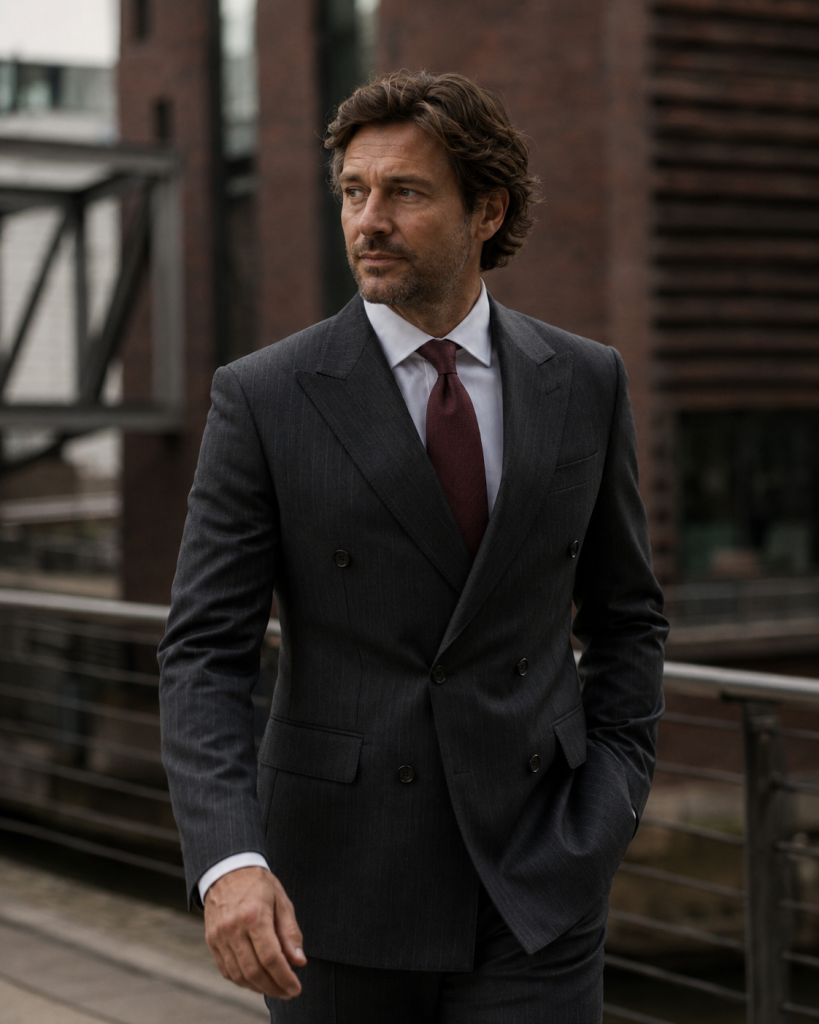
Tailoring providers in Hamburg: what to look out for
Many providers, big differences – and why it’s hard to see through
Hamburg has a wide choice of tailoring providers. That sounds good at first, but it doesn’t make the decision any easier. Some work with made-to-measure, others with full hand tailoring. Some mainly offer quick standard solutions, others place great value on in-depth advice. From the outside, this is often hard to tell, because many advertise with similar terms.
Something I notice again and again: many clients come to us after looking around at other providers and say that they didn’t get a clear idea of what exactly to expect. The differences between providers lie not only in the price, but above all in the approach and how closely your individual situation is considered.
How to recognise a good provider in Hamburg
A good provider takes the time to understand your situation. This begins before the actual measuring. Where will you wear the suit? What role does it play in your everyday life or at your occasion? What proportions do you have? These questions are important because they are the basis for everything else.
As men’s outfitters, we see again and again that clients come to us with very different starting points. Some have broad shoulders and a narrow waist, others a particular posture or arms of different lengths. Made-to-measure can solve these proportion problems far better than ready-to-wear – but only if the provider also knows the relevant measurement parameters.
Another hallmark: a good provider explains what they’re doing and why. After the appointment, you should have a feel for why certain fabrics or cuts make sense for you and which don’t.
Advice that goes beyond taking measurements
Taking measurements alone isn’t enough. The real work lies in the advice before and afterwards. Which fabric suits your occasion and the season? What colour effect do the fabric texture and the light on the wedding day create? How can you still wear the suit after the wedding – perhaps even combining individual pieces?
What I personally think is important: advice shouldn’t overwhelm you, but help you make decisions that suit you. Especially if you’re having a suit made for the first time, you don’t need technical jargon, but clear explanations. If, for example, you’re looking for a wedding suit, how it will go with your partner’s wedding dress is exactly what advice should cover.
Why good advice takes time – and that’s okay
A good consultation takes time. That may feel unusual to some, especially if you’re used to buying something quickly and leaving. But a suit like this isn’t an impulse purchase. It’s about capturing your proportions correctly, choosing the right fabrics and developing a coherent overall look.
At Varazio we deliberately take plenty of time for first appointments – we want to understand who you are, what you have in mind and what matters to you. This process can’t be dealt with in ten minutes. And that’s perfectly fine. Good advice means you feel more confident afterwards. Not more rushed.
Transparency on fabrics, options and prices
A reputable provider openly shows you which fabrics are available, explains the differences and gives you clear prices. You should know what is possible in which price range and how much each option costs. Transparency helps you make a conscious decision.
What I often experience: clients are unsure because they didn’t receive clear information beforehand. Some thought certain adjustments were included; others didn’t know there were different fabric qualities. That’s why we make a point of communicating clearly from the start: what is possible and what it costs.
Common mistakes with your first tailored suit – and how to avoid them
One of the most common mistakes is focusing only on the price. Having a suit made can make sense in different price ranges – what always matters are your standards, the quality and the advice behind it. If these factors are right, the result can convince regardless of price. If they’re lacking, it usually affects the fit and longevity.
Another mistake: hasty decisions without real understanding. If you don’t know why a particular fabric or cut is being recommended to you, the basis for a good choice is missing. Take your time to ask questions. A good provider will take the time for them.
Following trends can also be problematic. Your suit should suit you, not a zeitgeist, which will look different again in two years. Especially when you’re planning for a special occasion such as a wedding, it’s worth talking about the overall look.

In summary: frequently asked questions about made-to-measure suits
How long does it take until my suit is ready?
The production time depends on the provider and the tailoring system chosen. With made-to-measure, you can expect around four to eight weeks and often somewhat longer with full hand tailoring. If you’re planning for a fixed date such as a wedding, you should start early and allow for a buffer.
Can I still wear my suit after the wedding?
Yes – and that is exactly one of the great advantages of tailoring. You can choose the suit so that it also suits other occasions, whether in business or at events. Individual pieces such as the trousers or the jacket can often also be combined separately. That makes the suit a long-term investment.
What is the difference between made-to-measure and full hand tailoring?
Made-to-measure works with an existing base pattern that is adapted to your individual measurements. This allows a great deal of variation with comparatively short production times. Full hand tailoring means that the pattern is created entirely individually for you. This is more elaborate and more expensive, and often requires several fittings. Made-to-measure is a concept in its own right and, for many clients, a sensible way in.
Do I need several fittings?
That depends on the tailoring system. With full hand tailoring, several fittings are usual; with made-to-measure, one or two appointments are often enough. Several fittings are not automatically a mark of quality, but a question of approach.
Is a tailored suit really more sustainable than ready-to-wear?
It is, because it is made exclusively for you – without overproduction and with a clear focus on quality. As a result, it is bought more consciously, worn for longer and often replaces several purchases. Especially if you keep wearing the suit after the wedding, that’s a clear advantage.