The wedding suit rarely stands on its own. It always works in interplay with the style of the wedding, the venue and the wedding dress.
Details such as coordinating colour nuances – for example between the shirt and the dress – are often underestimated. It’s less a question of pure taste and more often one of a coherent overall picture. Differences between shades of white or fabric colours stand out far more in photos later on than in direct comparison.
This article looks at which aspects play a role in the choice and why good advice can help ensure that the suit, the dress and the wedding concept truly go together in the end.
Why the wedding suit isn’t a stand-alone piece – but part of your overall concept
Choosing the wedding suit rarely begins in the shop or with the question of colour. The direction often already follows from your overall concept. The groom’s suit rarely stands on its own; it always works in the context of what you as a couple want to show on your wedding day. That includes the wedding dress, the decorations, the venue, the lighting and, of course, your personalities. Anyone who looks at the suit completely in isolation often misses the chance of a truly coherent overall picture.
How the wedding suit, wedding dress and decoration concept form a visual whole
If, for example, a wedding takes place in a very elegant style at a classic venue – such as a hotel in the heart of Hamburg on the Alster – the style of the suit also plays an important role. A beige linen suit would quickly look too casual in a setting like this. An elegant navy three-piece with a light blue textured tie, on the other hand, suits the formal setting far better and at the same time subtly picks up the maritime flair of the Hanseatic city.
So the question is less which suit you like in isolation, and more which one works together with the dress, the venue and the style of the wedding and makes you look coherent as a couple.
That doesn’t mean everything has to look the same. Bride and groom can set different accents. What matters is that the elements harmonise with each other.
This is often achieved through coordinated colour nuances, a similar style and a good feel for contrasts. Experienced advice can help you find this balance and place the suit sensibly within the overall picture.
What “old money”, modern or classically elegant actually mean for a men’s suit
Styles such as old money, modern or classically elegant aren’t empty terms. They set a clear direction for how the suit should look.
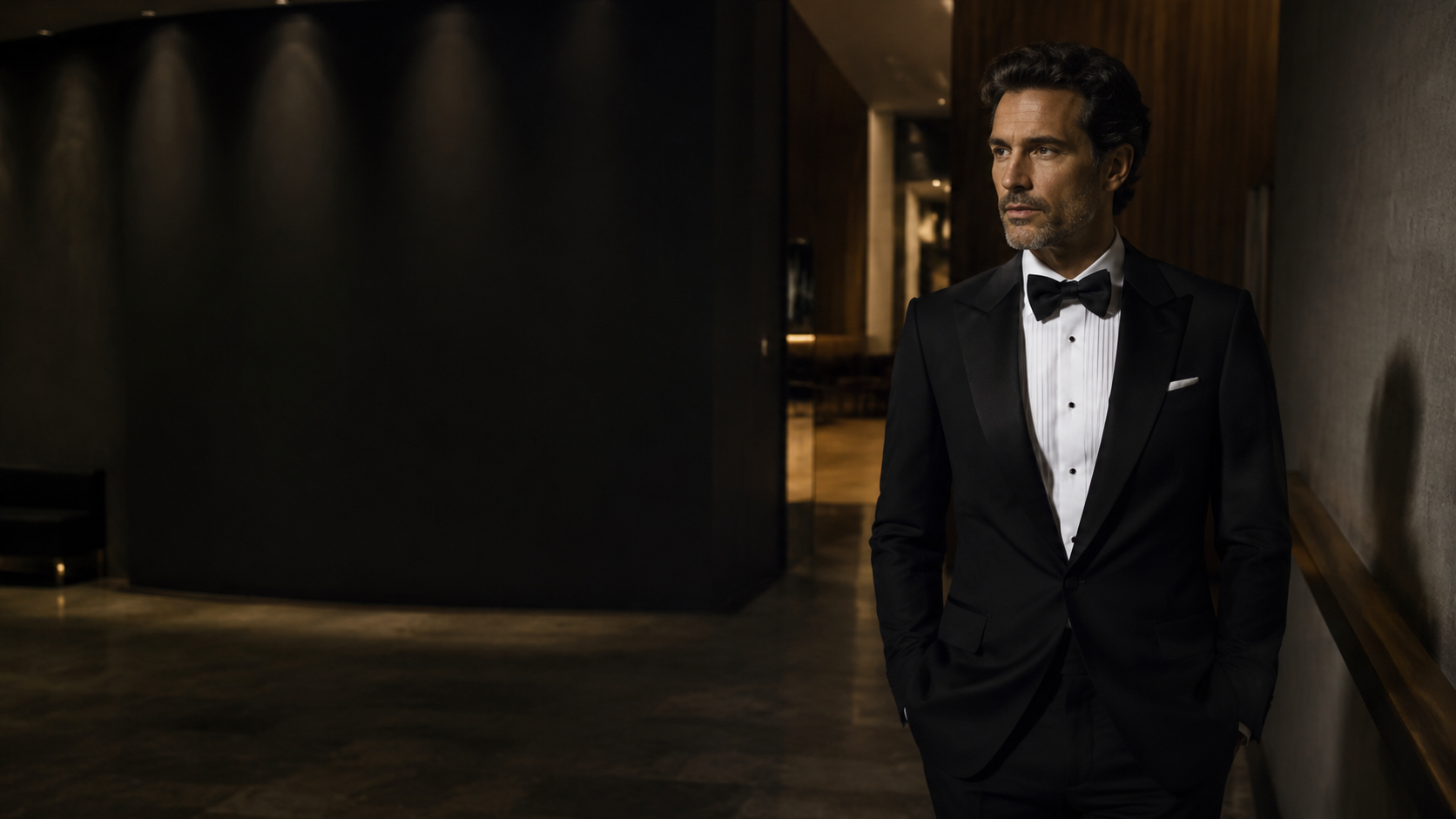
An old-money-style wedding thrives on restraint and clarity. The look is pared back, precise and naturally refined. At its heart are classic suits in navy or black, often conceived directly as a dinner suit or dinner jacket.
Striking textures, fashion experiments or unusual colours have no place here. What matters is a coherent overall appearance that looks calm and effortlessly elegant.
The effect takes its cue from “quiet luxury”. Luxury shows not through attention, but through consistency of style.
A modern wedding deliberately sets different accents. Silhouettes can be looser, proportions slightly altered, colours chosen more freely.
Classically elegant lies right in between. The suit remains timeless and formal without looking severe. It follows clean lines and proven cuts that still look right in photos years later.
The style of the wedding sets the framework. Anyone who ignores it quickly looks out of place – especially visible in the pictures.
Why the style of the wedding helps determine the suit
The style of your wedding is more than just a question of taste. It’s the thread that holds all the decisions together. A wedding on Lake Garda with Mediterranean flair calls for different suits than an urban city wedding in an industrial venue. A mountain wedding in the Austrian Alps, in turn, has its very own requirements.
The suit has to suit the venue, the season, the formality of the occasion and the groom’s personality. It becomes authentic when the wearer feels comfortable in the suit and, at the same time, the look matches what the wedding promises.
Venue, climate and season – what they mean for the wedding suit
The choice of wedding suit depends largely on where and when the wedding takes place. Venue, climate and season influence not only comfort, but also the overall effect in pictures. A suit that works perfectly in a cool September in Germany can become torture at a summer wedding in southern Europe.
Differences between a wedding in Germany and a summer wedding in the south
A wedding in Germany at moderate temperatures often leaves a little more freedom with fabrics and colours. Materials with a little more texture or classic cuts can work well here.
It’s a different story at a wedding in Italy, Spain or Greece, where temperatures of 30 to 35 degrees are not unusual. Here, a heavy suit fabric quickly becomes uncomfortable. Light, breathable materials are then not only more comfortable, but also look better.
Which fabrics and cuts really make sense in the heat
At high temperatures, open weaves such as fresco or lightweight wool qualities are the best choice. They let air circulate and reduce the build-up of heat. The construction of the suit also plays a role: unpadded shoulders, a lighter lining or even an unlined jacket can improve comfort considerably. In terms of colour, lighter shades are a good choice, as they reflect light and absorb less heat. Sand, light grey, beige or light blue are stylish alternatives to dark suits and go well with summery wedding concepts.
When a white dinner jacket is stylistically right – and when it isn’t
A white dinner jacket is an elegant option for festive summer evenings, especially in southern countries. It suits formal weddings with an evening character, ideally combined with black dinner suit trousers. What matters: a dinner jacket belongs to evening wear and shouldn’t be worn at daytime weddings or informal celebrations.
It only works when the wedding is clearly formal and the venue lives up to this elegance. In a rustic setting or at a relaxed garden wedding, it looks out of place. Choosing a dinner jacket is therefore always also a statement about the style and formality of your wedding.
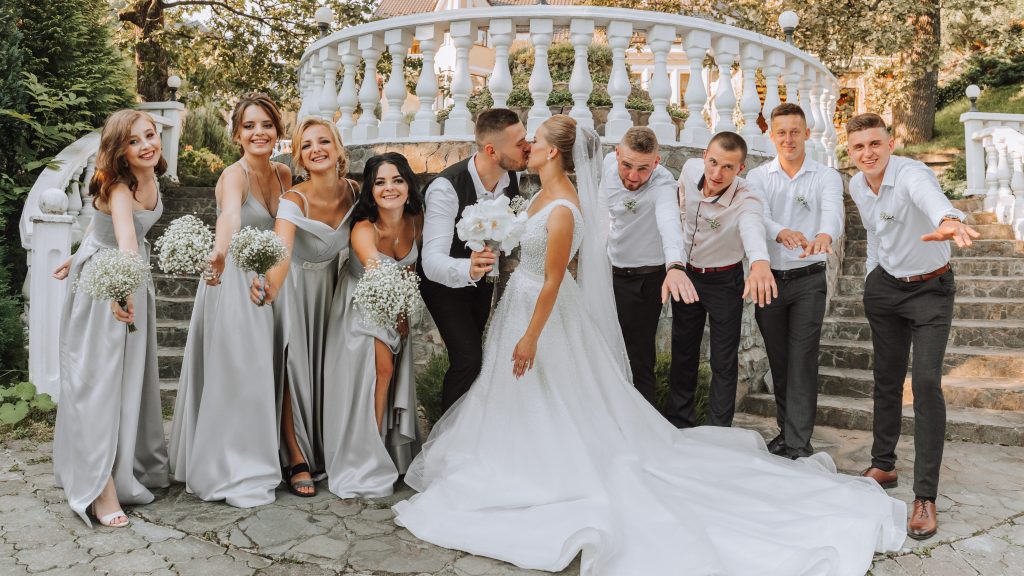
Colour subtleties with the wedding suit: why the shirt has to match the wedding dress
Ivory, champagne or blush: the reality of modern wedding dresses
Anyone who believes wedding dresses are uniformly white is often surprised at the fitting. Most modern wedding dresses aren’t in a cool, brilliant white, but have subtle nuances.
Ivory is one of the most common shades: a warm, creamy white. Champagne goes a step further towards beige-gold undertones, while delicate blush nuances give the dress a soft, romantic warmth.
In bridal fashion these colour differences aren’t the exception but the rule. They influence how the wedding dress looks in different lighting situations and which shades of the men’s suit go with it. When you plan your wedding suit, you should know these nuances and take them into account when choosing the shirt.
Why a cool white shirt can be a problem
A brilliant shirt in cool white looks like the safe choice at first glance. But if the wedding dress has a warm ivory or champagne tone, a visible contrast arises. And it isn’t always intended. The cool white shirt reflects light differently from the warm fabric of the dress, and the wedding dress can look duller or even greyish next to it.
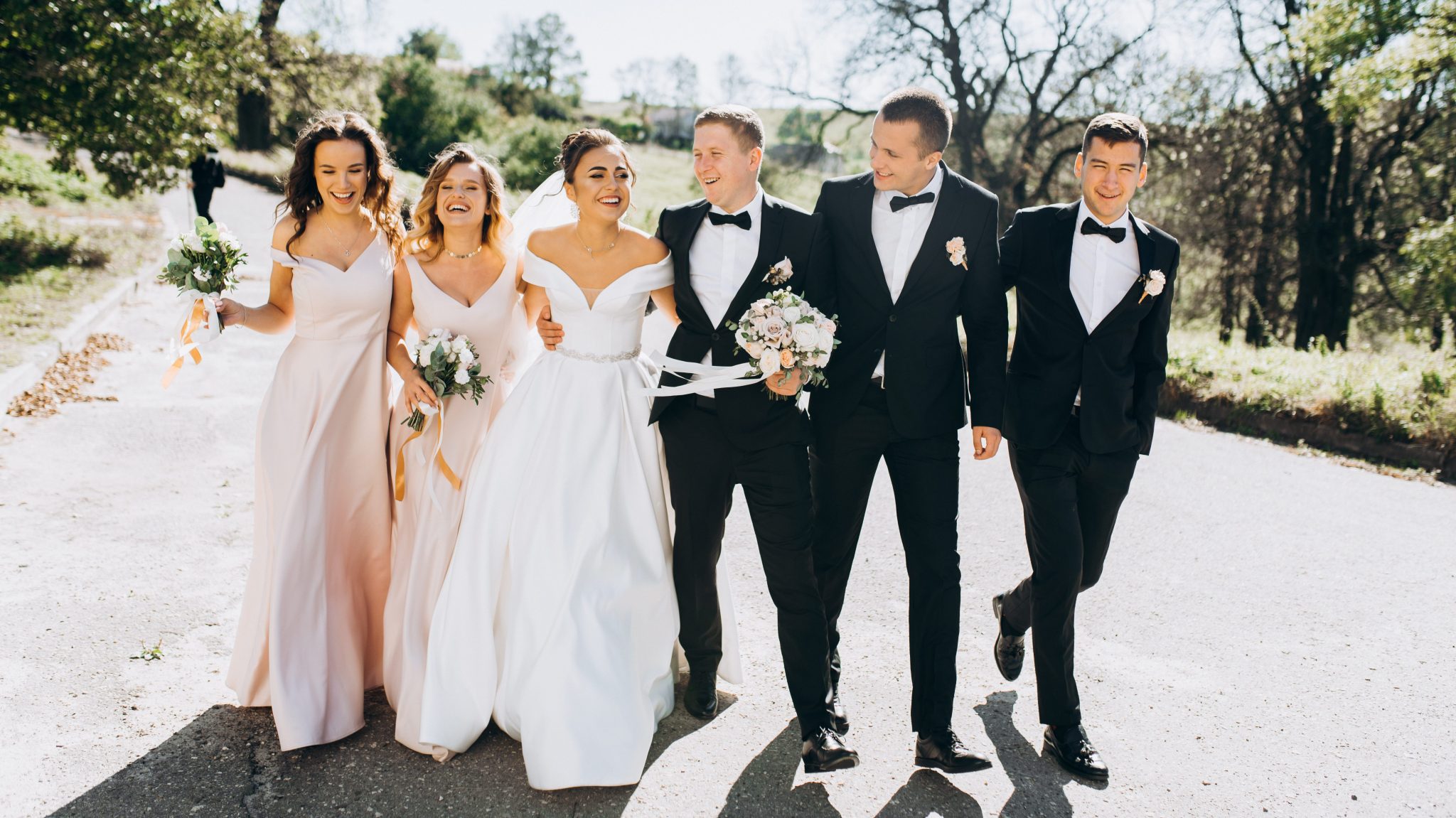
This is particularly noticeable in close-ups or joint couple photos. As a couple, you want to look harmonious, without one of you standing out because of differences in brightness. The shirt should therefore take its cue from the shade of the wedding dress. This isn’t a stylistic gimmick, but important for the overall picture.
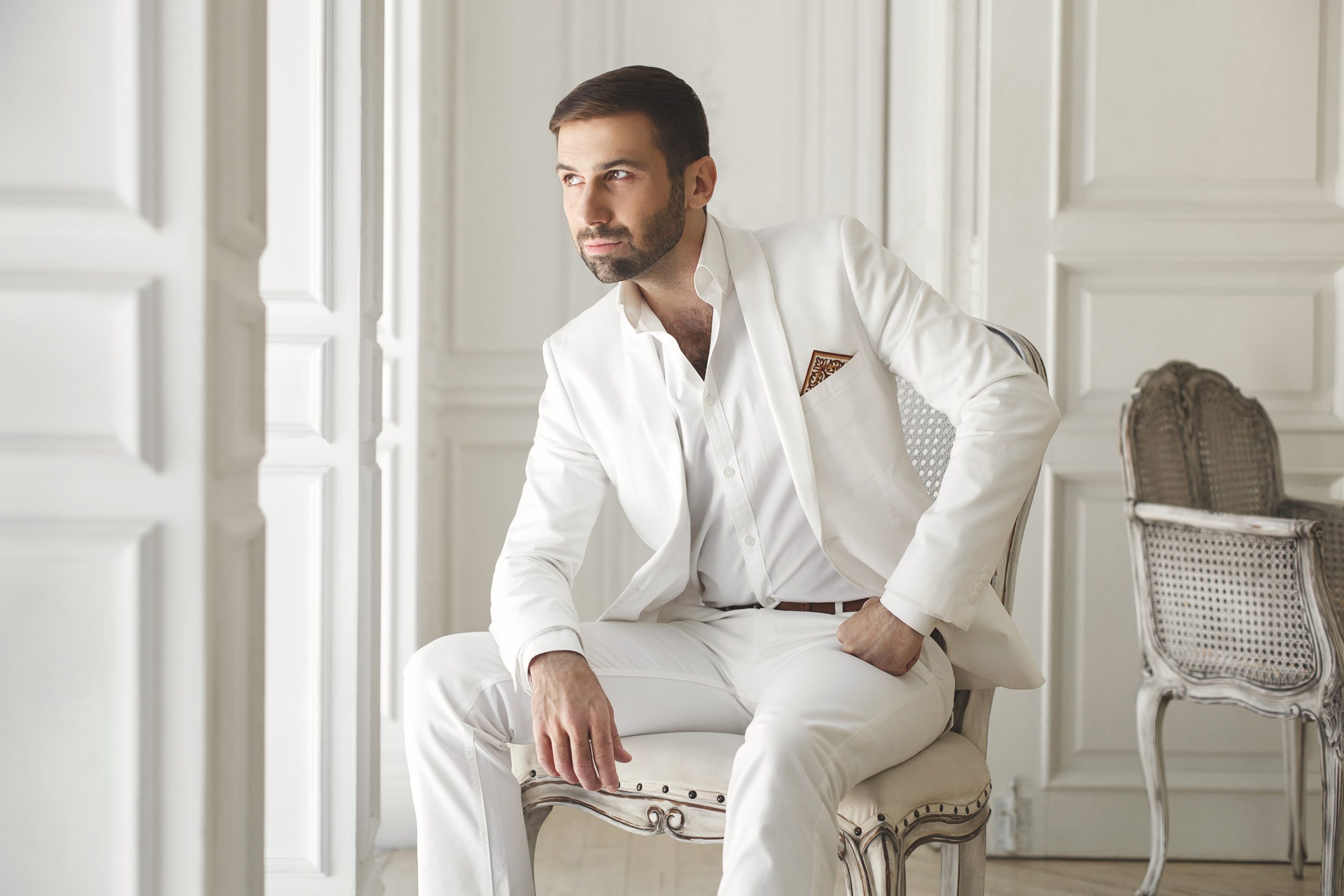
How light and photography amplify colour differences
Lighting plays a big role in how colours look. Natural daylight, warm candlelight at an evening wedding or artificial spotlights at the venue change how colours look considerably. What looked harmonious in the shop can suddenly look different under other lighting conditions.
Then there’s the camera: professional wedding photography works with different lenses, white balance and post-processing. In the process, colour differences often become even more visible than to the naked eye. A cool white shirt next to a warm-toned wedding dress can positively glow in photos, while the dress next to it looks less radiant. This can only be avoided by consciously coordinating the colours.
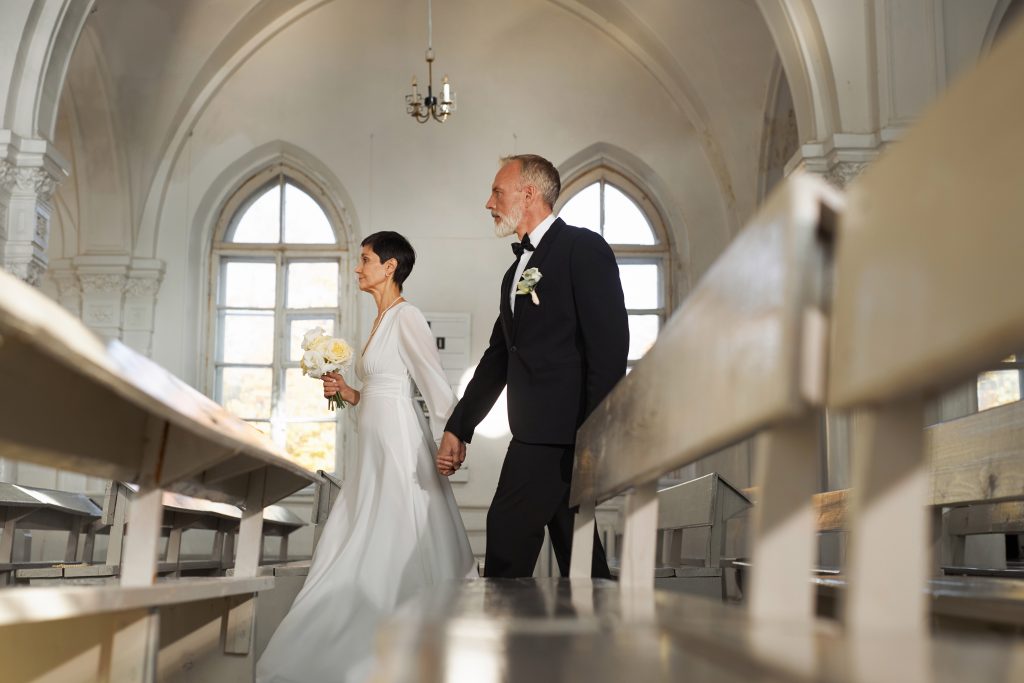
Taking the wedding’s colour palette into account for the suit too
Many weddings today work with a clearly defined colour palette for decorations, flowers and stationery. If these colours also appear in small details of the suit, the overall picture looks particularly coherent. Accessories such as the tie or pocket square offer ideal opportunities for this. It isn’t about copying every colour exactly. A subtle reference to the wedding’s main colours is often enough for the overall picture to come together harmoniously.
Frequently asked questions about the wedding suit and coordinating it with the wedding dress
By the way: you’ll find more questions & answers here!
Does the groom have to match his suit exactly to the colour of the dress?
An exact colour match isn’t strictly necessary, but deliberate coordination is. It isn’t about the suit and dress looking identical, but about them going together. The shirt should take its cue from the shade of the wedding dress, while the suit itself supports the concept through its cut, fabric and style. What matters is that no unwanted contrasts arise.
How do we find out which style really suits us?
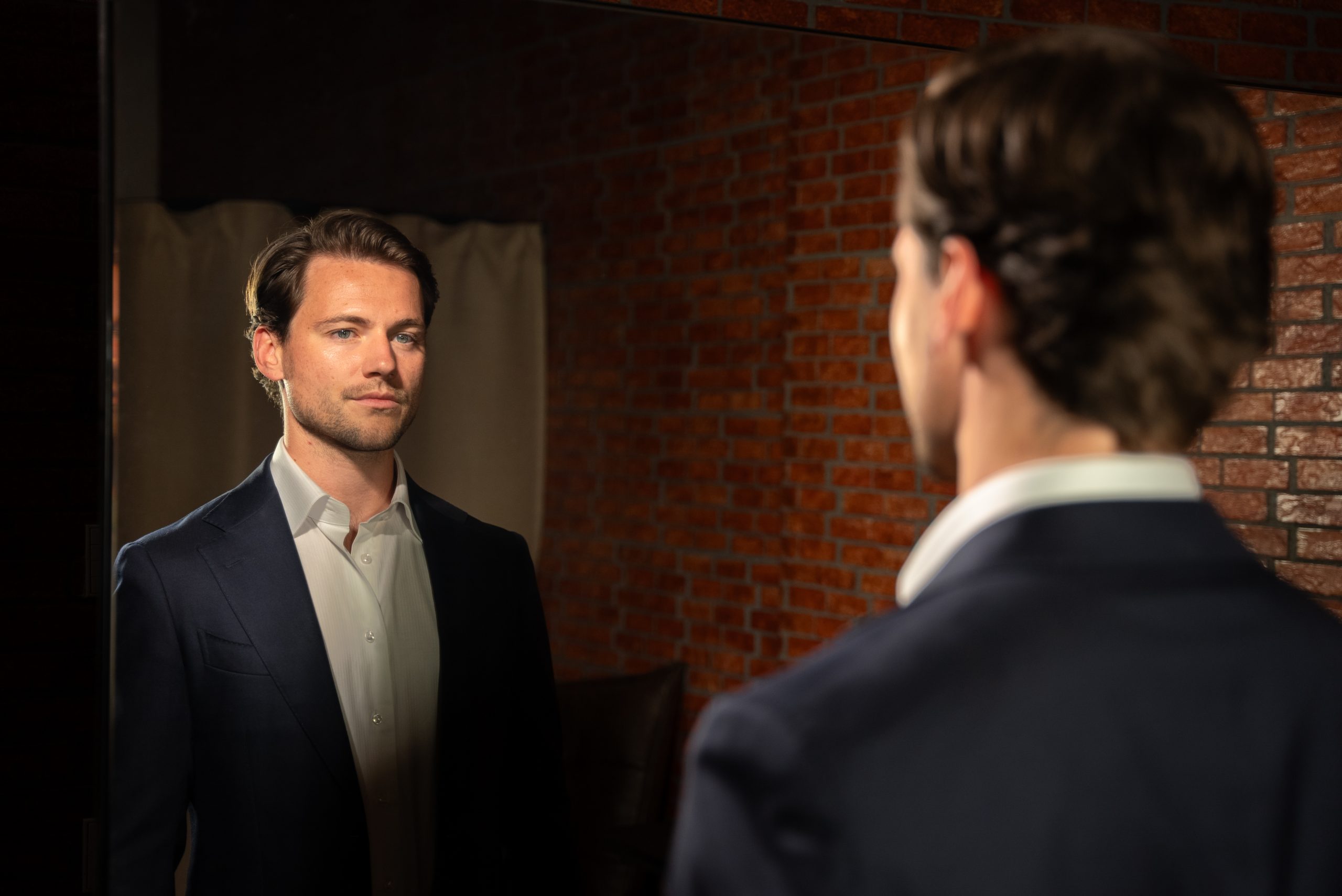
The style of your wedding suit should follow from your overall concept. Think together about what atmosphere your wedding should have. Classically elegant, modern and pared back, romantic and playful, or relaxed and summery? Look at your venue and think about your decorations and your personal taste. Good advice helps you bring all these factors together and find the right style, one that suits you.
When should the men’s suit be ordered or adjusted by at the latest?
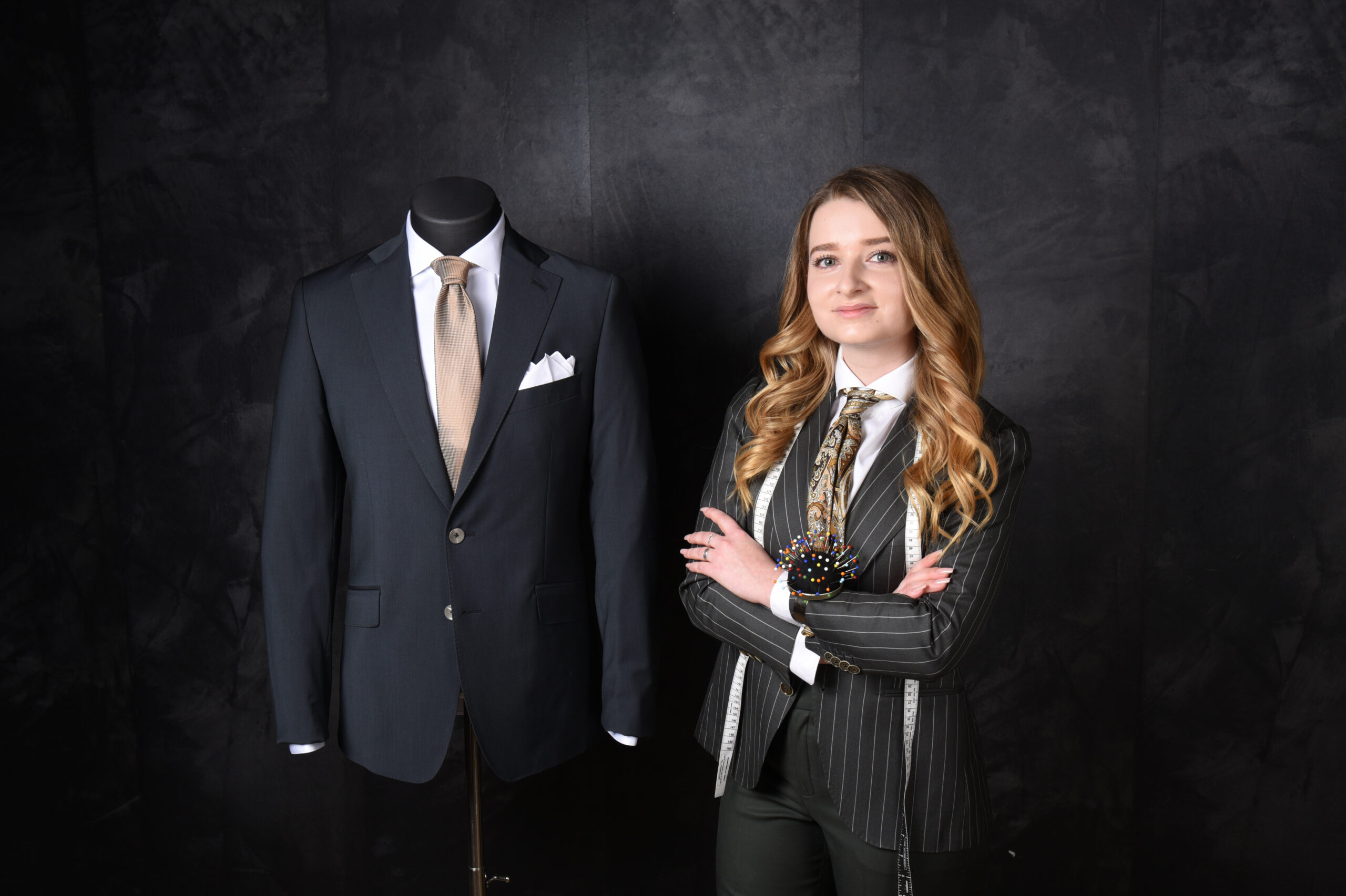
A wedding suit should be planned in good time – especially if it is being tailored for you. As a rule, a lead time of around three to four months before the wedding is recommended. That leaves enough time for advice, adjustments and possible alterations – and, above all, the full choice of fabrics is still available during this period.
The basic rule is: the earlier the appointment, the greater the choice. Over the course of the season, individual fabrics or qualities are often already sold out.
With fabrics in stock, shorter timeframes of around four to six weeks are also possible. However, this option always comes with a more limited choice and is no substitute for planning with enough lead time.
Can the groom wear a dark suit if the dress is light?
Yes, that’s absolutely possible and often even desired. A dark suit can create an elegant contrast to the light wedding dress, as long as the shirt, tie or bow tie are well coordinated. What matters is that the overall picture works and the suit suits the wedding concept.