A dress code on an invitation leaves many men with question marks at first. Is a dark suit enough, or is a dinner suit expected? Is a tie compulsory, or can it be more relaxed? And how much personal style is actually allowed?
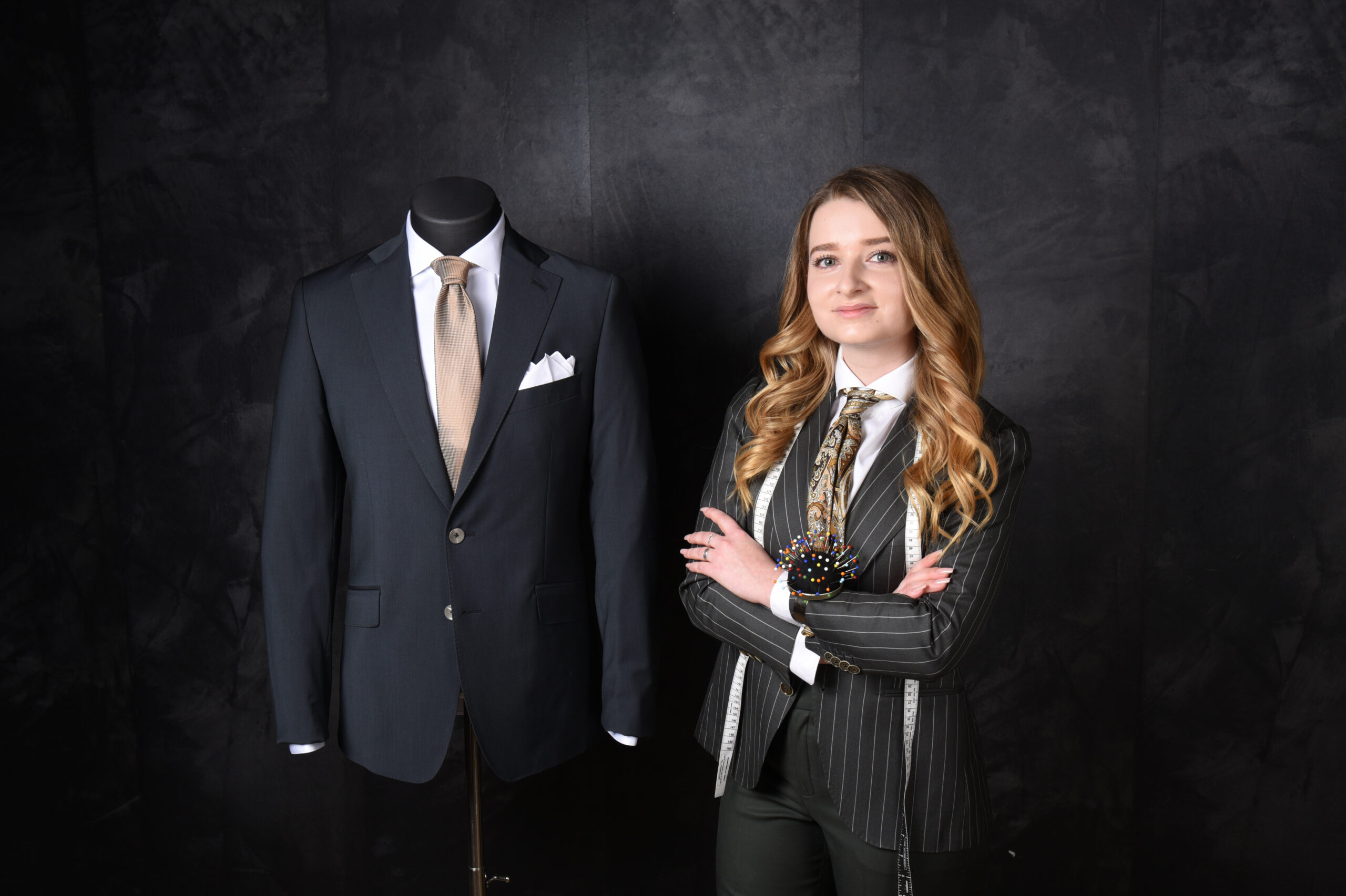
I hear exactly these questions again and again in my consultations at VARAZIO in Hamburg’s HafenCity. In this article, I explain the most important dress codes – from Black Tie through Cocktail and Business Attire to White Tie – and show you how to tell what the host really means.
What does a dress code on an invitation mean?
A dress code sets out how formal the clothing at an occasion should be. It depends on the type of event and the time of day. Some dress codes define very precisely what is worn; others deliberately leave room for interpretation.
For you as a guest, a dress code is above all a guide. It shows you the setting the host would like. It only gets tricky when the terms are ambiguous or you understand them differently from how they were meant.
Uncertainty usually arises over how formal a dress code is really meant to be. That’s why, in a consultation, I first clarify exactly what the invitation says, where and at what time of day the event takes place, and what your role there is.
The time of day is the first clue. The dinner suit and the tailcoat are evening wear and are traditionally only worn from around 6 pm onwards. During the day, a dark suit is appropriate for formal occasions.
Next comes the occasion itself. A gala or an evening at the opera calls for something different from a business reception or a garden party. And finally, your role counts: a groom has different requirements from a wedding guest.
For me, a consultation therefore doesn’t begin with rigid rules, but with the question of what impression your outfit should make at the occasion and in your surroundings.
What does the Black Tie dress code mean?
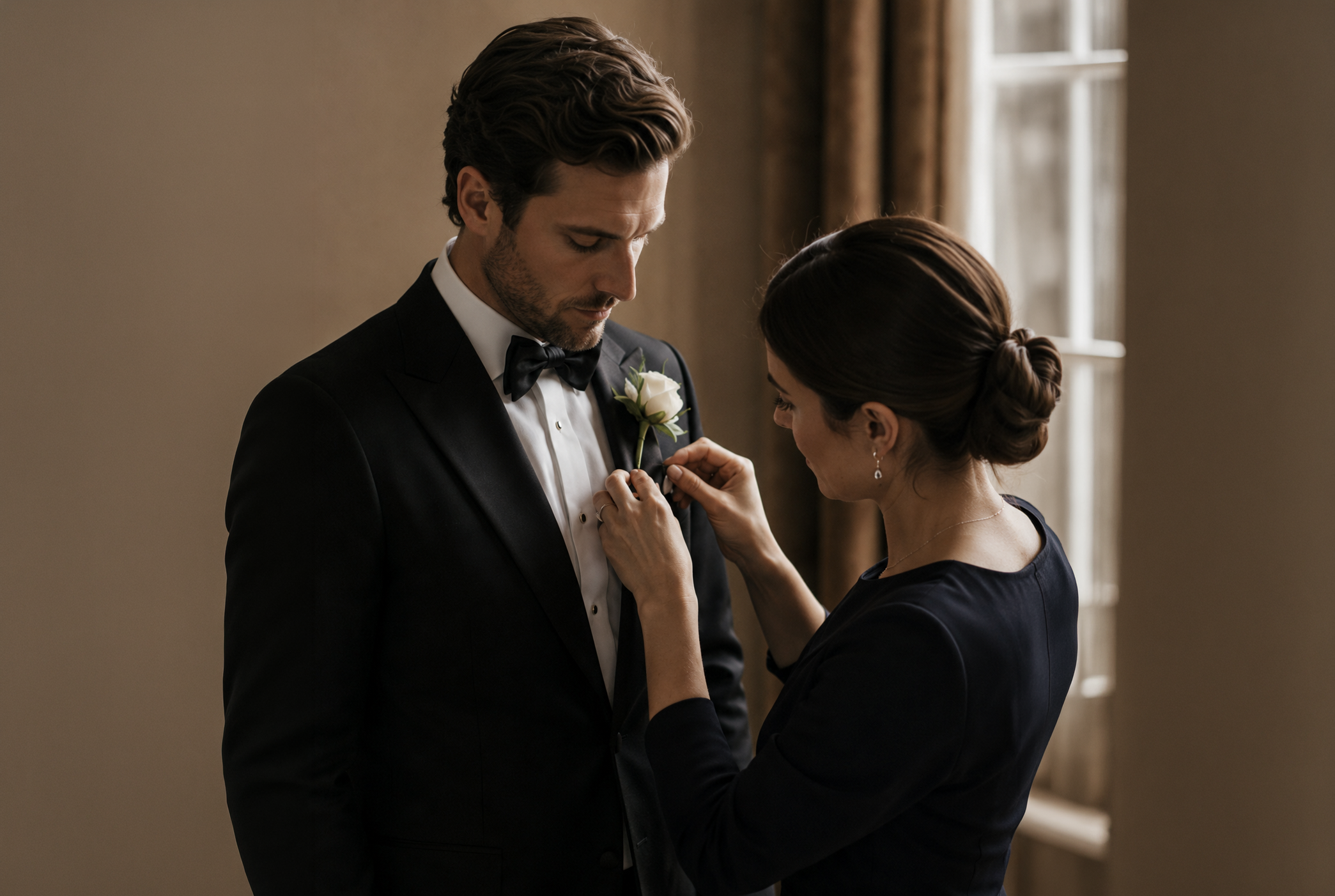
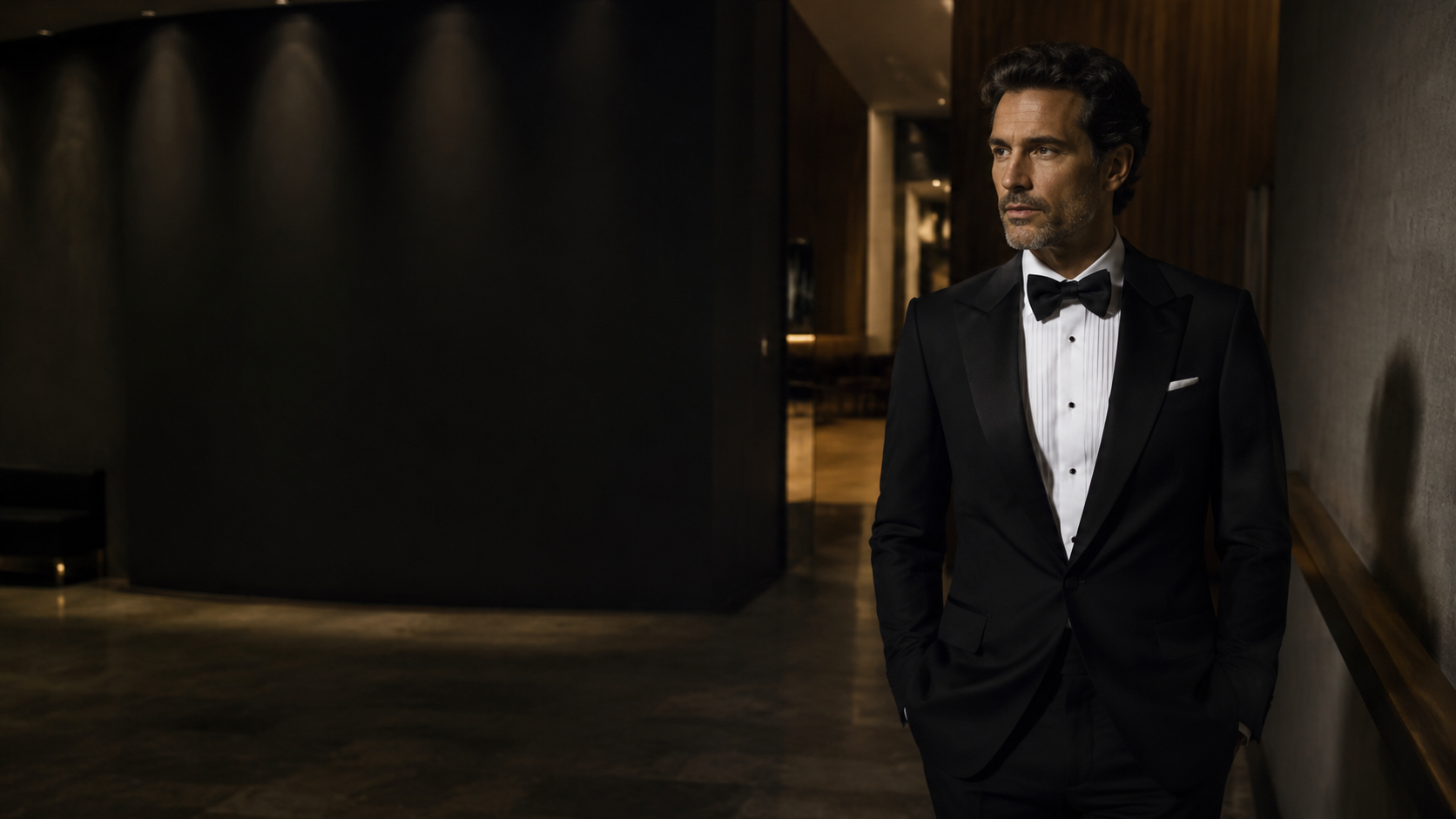
Black Tie means: a dinner suit instead of a lounge suit. In Germany, the dinner suit is also known as the “kleiner Gesellschaftsanzug”. This dress code is expected at galas, balls, award ceremonies, evenings at the opera and evening weddings.
This is exactly where the most common misunderstanding in my consultations arises: a black suit with a black tie is not enough for Black Tie – it would not meet the dress code.
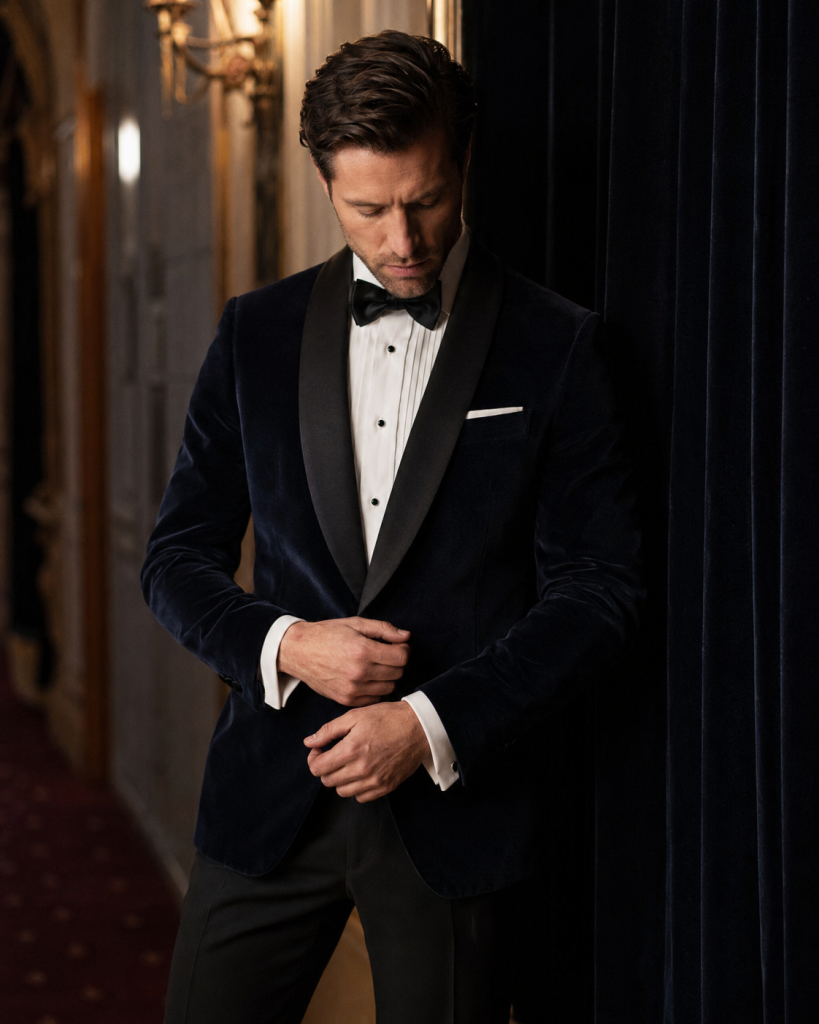
The dinner suit is traditionally black or midnight blue. It has peak lapels or a shawl collar faced with silk or satin, and is worn with trousers that have a silk stripe down the side. The classic dinner suit is often single-breasted, but double-breasted dinner suits are just as historically correct.
What belongs to a Black Tie outfit: shirt, bow tie, cummerbund and shoes
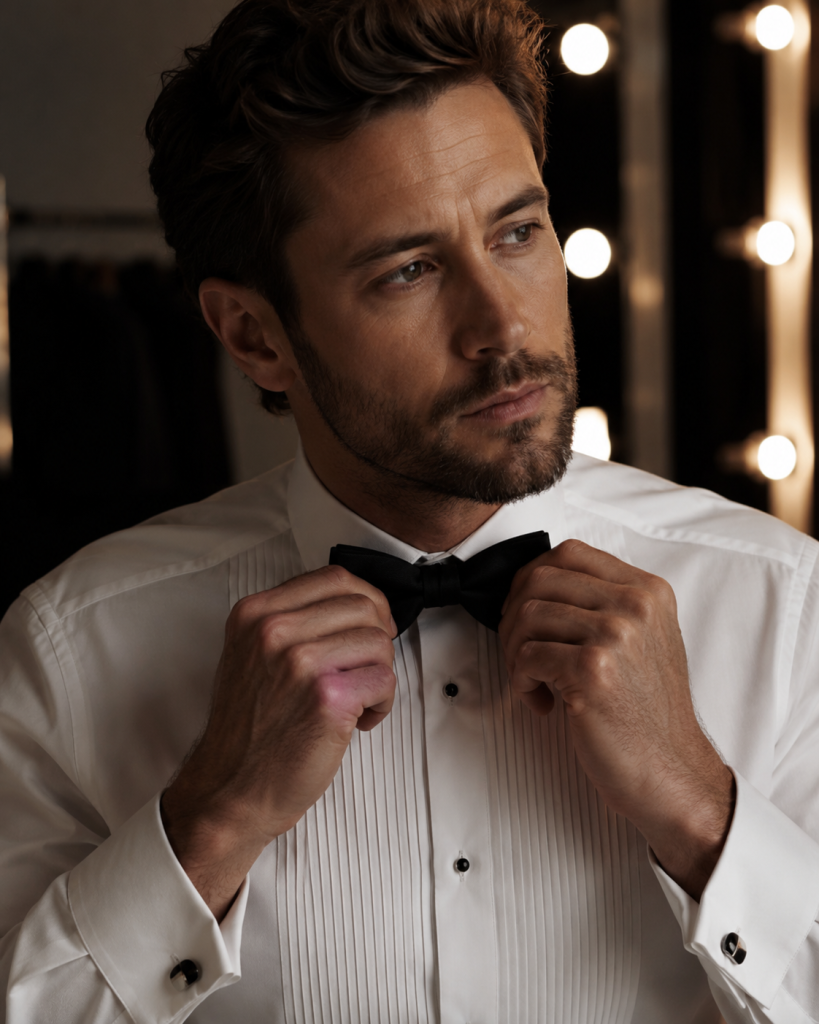
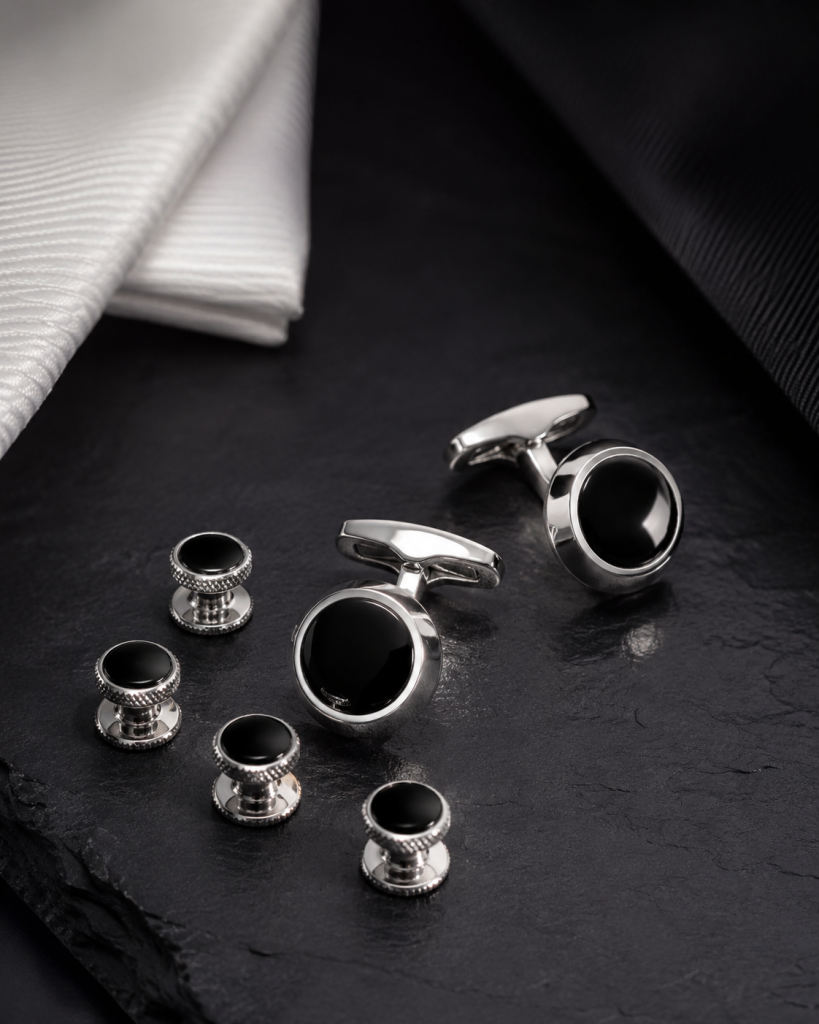
With a dinner suit, you wear a white dress shirt with double cuffs and cufflinks. Add to that a black silk bow tie, ideally self-tied. A necktie has no place here.
With a single-breasted dinner suit, the waist is covered by a black cummerbund or a low-cut evening waistcoat – never both at once. With a double-breasted dinner suit, the cummerbund and waistcoat are left out, and the jacket stays buttoned instead.
The dinner suit trousers have their own rules, too: they are traditionally worn without turn-ups. Their braid stripe is made of silk and matches the silk lapels and the bow tie in colour and material.
When it comes to shoes, simple, polished black Oxfords are often named as suitable alongside black patent leather shoes. With a dinner suit, I clearly recommend black patent leather shoes, not Oxfords or Derbies in ordinary smooth leather. Black socks go with them; black silk socks are ideal.
What are the most common Black Tie mistakes?
With a dinner suit, it’s often small details that miss the dress code. Typical Black Tie mistakes are:
- ordinary suit trousers instead of dinner suit trousers with a silk stripe
- a necktie instead of a bow tie
- brown or colourful shoes
- a coloured waistcoat
- bare leg showing when seated because the socks are too short
What does “Black Tie optional” on an invitation mean?
One exception is “Black Tie optional”. Only when the invitation explicitly says so is a dark suit with a tie acceptable as well as a dinner suit. If it just says “Black Tie”, it remains a dinner suit with a black bow tie.
In this case, I recommend a well-fitting dark suit, for example in navy or charcoal, with a white shirt and a well-matched tie. The dinner suit is still the option the host would actually prefer.
Your own dinner suit from VARAZIO in Hamburg: what I look out for
When I make a tailored dinner suit for you, it’s not just about meeting the rules of Black Tie. The dinner suit should suit your type, your proportions and your role at the occasion. For a groom, I therefore look at different details than for a guest invited to a gala.
With the fabric, it’s above all about texture, drape and a matt elegance. Classic dinner suit fabrics include barathea and fine Super wool qualities. Whether a dinner suit is right for a wedding at all depends on the venue, the time of day and the concept of your celebration.
Black or midnight blue: which colour is right for a dinner suit?
For a versatile, classic dinner suit, I recommend black or – above all – a very dark midnight blue. The reason is the light: many events take place indoors, where a fabric takes on light differently than in daylight.
Under artificial light, a black dinner suit can quickly look greyish. A very deep blue, on the other hand, tends to look black. You can read more about how colours work depending on occasion and light in my article on suit colours.
Shawl collar or peak lapels, cummerbund or waistcoat?
Whether a shawl collar or peak lapels suit you better depends very much on your type. I decide this together with you in the consultation, when we can see the proportions on your body.
With a single-breasted jacket, I find a cummerbund very important. Alternatively, you can choose a low-cut evening waistcoat, which is clearly different from a classic business waistcoat. For a groom in particular, the waistcoat makes sense: he remains clearly recognisable as the groom even when he takes off his jacket later in the evening.
Where can you add your own touches to a dinner suit?
With a dinner suit, your personality shows above all through cut, proportions and small details. The shape of the bow tie or your choice of cufflinks are good ways to add a personal note without breaking the dress code.
A distinct variation within the Black Tie wardrobe is the dinner jacket. At modern evening weddings, velvet dinner jackets are popular, combined with classic black dinner suit trousers. This lets you interpret Black Tie individually without leaving the formal rules behind.
In theory, you can also wear lightly coloured socks. That is more a question of taste and depends on how creatively you want to interpret the look. If you’re looking for a dinner suit cut to your measurements for your next Black Tie occasion, book an appointment with me in HafenCity.
What do you wear for a Cocktail dress code?
Cocktail is a dress code for evening events from around 4 pm, such as receptions or exhibition openings. It is one step less formal than Black Tie, so a dinner suit isn’t necessary.
You wear a dark – but not necessarily black – suit with a light long-sleeved shirt and an understated tie. Black socks and black lace-up leather shoes complete the outfit.
Business Attire, Business Casual, Smart Casual: what’s the difference?
You’ll encounter these three dress codes mainly in a professional setting. They differ in how formal the outfit is – and above all in whether a tie and a full suit are part of it.
Business Attire: dark suit with a tie
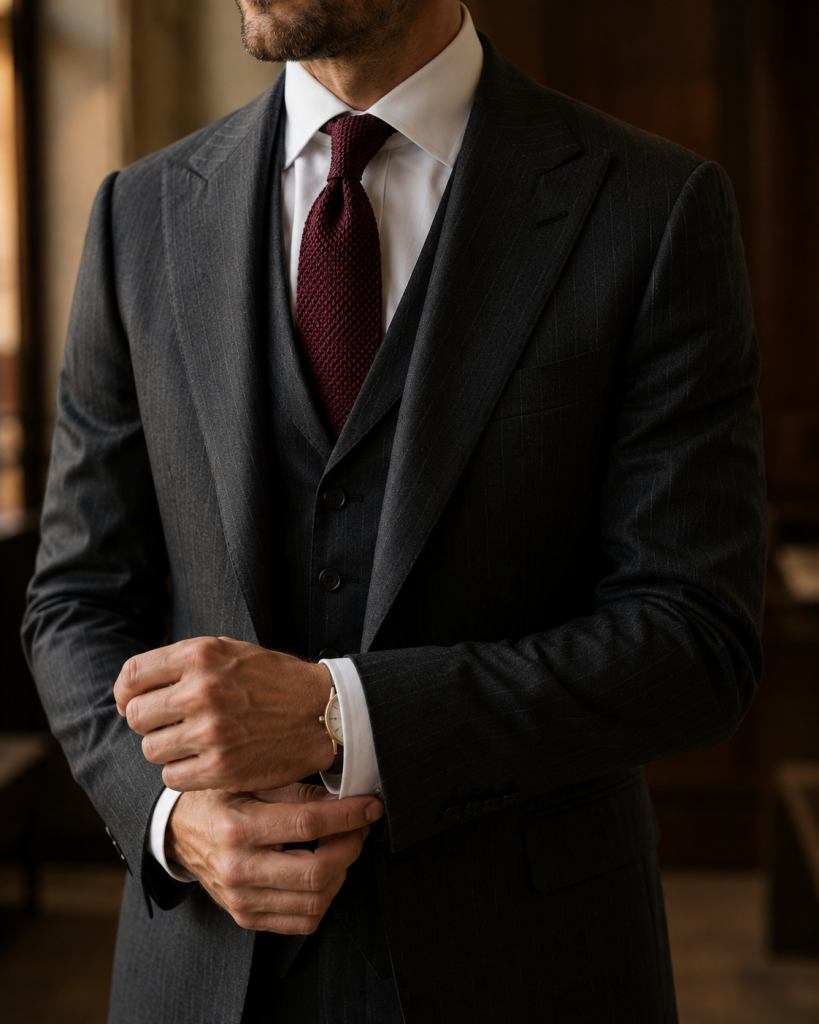
Business Attire, also called Business Formal, is classic business wear. It is typical for banks, law firms, consultancies and important client meetings. It includes a dark suit in navy, grey or charcoal, a light shirt, a tie, dark socks and well-kept dark leather shoes.
For me, navy is the foundation of every business wardrobe. It looks serious, yet more approachable than black, and can be combined with white or light blue shirts as well as with brown or black shoes. In business, black, by contrast, can quickly look harsh or distant.
Business Casual: jacket without a tie
Business Casual is more relaxed than Business Attire. You combine a jacket with chinos or smart trousers and wear leather shoes and a shirt – but leave out the tie. Depending on the setting, a high-quality polo shirt can also be appropriate.
Smart Casual: relaxed yet elegant
Smart Casual combines relaxed and elegant elements. A jacket or a fine jumper meets chinos or dark jeans, worn with a shirt without a tie. Loafers or elegant leather trainers work well for shoes.


What does the dress code “Leger” or “Casual” mean?
“Leger” is the German equivalent of “Casual” and refers to a relaxed, informal style of dress. It is the most relaxed of the common dress codes – one step more casual than Smart Casual, where a jacket or a fine jumper provides the elegant element.
Jeans or chinos are suitable, for example, with a shirt, a polo shirt, a T-shirt or a jumper. Trainers or slip-ons are fine for shoes; you can wear a jacket, but you don’t have to.
Casual doesn’t mean careless, though. Your clothes should be well kept and suit the occasion. Tracksuit bottoms, flip-flops or very worn shoes are usually out of place even with a casual dress code.
What do “Informal” and “Come as you are” on an invitation mean?
Both phrases sound relaxed, but are often misunderstood. What is meant depends heavily on who is inviting you and for what occasion.
What does “Informal” mean?
“Informal” on invitations is misleading. It doesn’t mean leisurewear – it means a dark suit with a tie.
The misunderstanding comes from English etiquette, where “formal” stands for evening dress with a tailcoat or dinner suit, i.e. White Tie and Black Tie. In this sense, “Informal” simply means that no dinner suit is required. A well-fitting dark suit is still what is expected.
What does “Come as you are” mean?
At business events, “Come as you are” means you turn up dressed as you are at the office. The invitation is usually aimed at guests coming straight from work. In traditional industries, that means: in a suit, though the tie may be loosened.
With a private invitation, for example to a birthday, it’s a different story. Nobody there expects you to turn up in a suit. The host is more likely saying that you don’t need to dress up specially for the evening. Well groomed is still welcome.
What do you wear for Garden Party and Beach Formal?
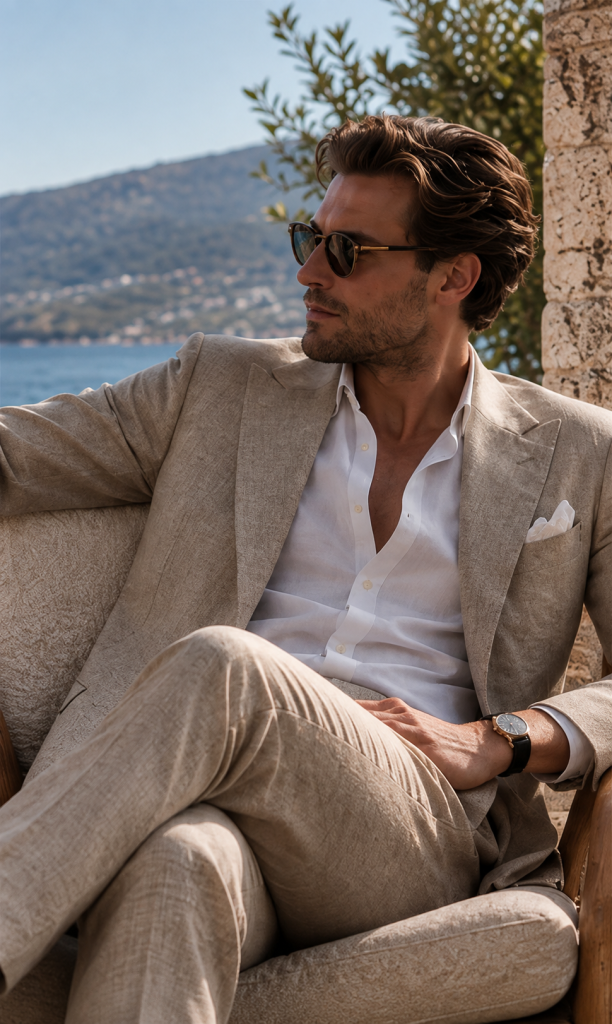
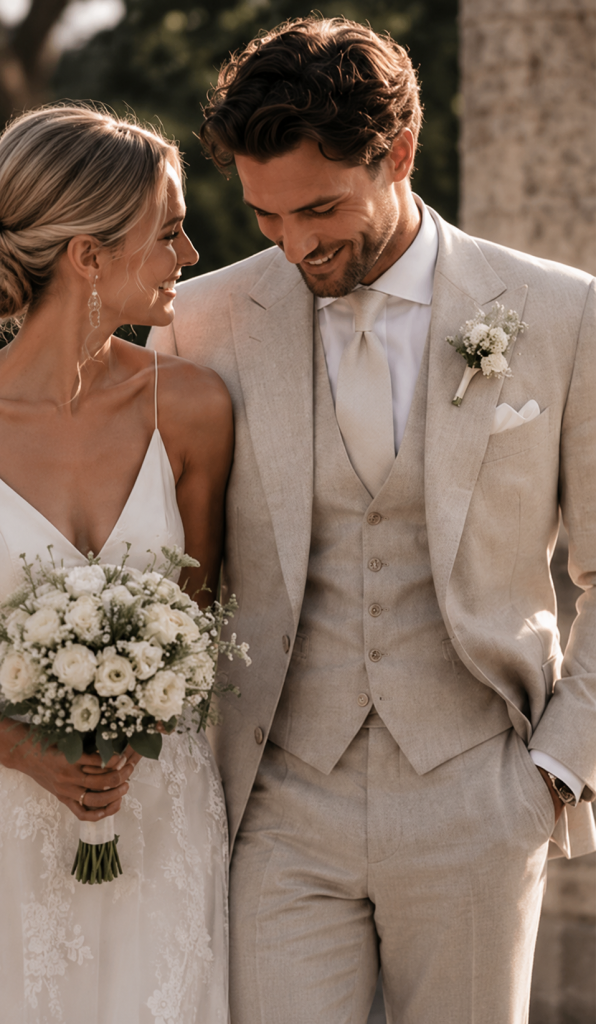
For Garden Party and Beach Formal, light, pale fabrics such as linen are allowed. Linen trousers, a linen shirt and a light-coloured jacket are appropriate here. Swimming shorts and flip-flops, however, remain off limits.
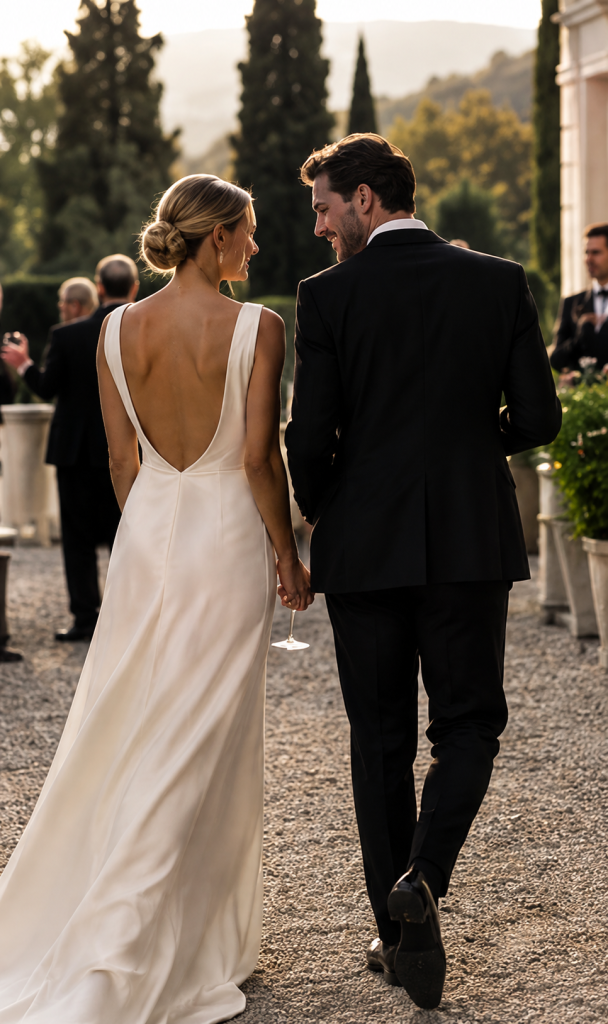
For daytime occasions, it’s also worth considering the light: pale colours such as beige, sand or light grey look fresher in daylight – for example at summer weddings or destination weddings. Dark colours, on the other hand, come into their own in evening light and at evening events.
What does the White Tie dress code mean?
White Tie is the most formal dress code for men. You’ll only encounter it at a few occasions, such as state banquets, opera balls and royal galas. Instead of a dinner suit, a tailcoat is worn.
What goes with a tailcoat for White Tie?
The tailcoat is cut short at the front and ends at the back in tails that reach the back of the knee. It is worn with black trousers with two silk stripes, a white shirt with a wing collar, a white piqué waistcoat and a white bow tie.
Black patent leather shoes are worn, with black knee-length socks. The result is an outfit in which every piece is defined, leaving little room for interpretation.
What is off limits with a White Tie dress code?
With White Tie, a dinner suit, a black suit, a necktie and a black bow tie are all a no-go. Anyone who turns up in a dinner suit where a tailcoat is expected does not meet the dress code.
One detail many people don’t know: traditionally, no wristwatch is worn with White Tie.
What should you do if the dress code on the invitation is unclear?
If the invitation is worded unclearly or you’re torn between two levels, my first recommendation is: briefly ask the host or organiser. It shows consideration and stops you from interpreting the dress code more elaborately than intended.
To place it, I also look at the occasion and the time. A reception in a professional setting comes with different expectations from a private celebration, even if both are described as festive.
If there is still room for interpretation, a dark suit with a white shirt, a well-matched tie and dark brown or black shoes is almost always an excellent basis for festive occasions. I only recommend a dinner suit when it clearly suits the occasion.
Frequently asked questions about dress codes
Can I wear a black suit for Black Tie?
No. Black Tie requires a dinner suit with a black bow tie; a black suit with a tie does not meet the dress code. Only with “Black Tie optional” is a dark suit with a tie acceptable.
What is the difference between a dinner suit and a tailcoat?
The dinner suit belongs to Black Tie and is worn with a black bow tie. The tailcoat is reserved for White Tie, has tails at the back and is combined with a white bow tie and a white piqué waistcoat.
From what time do you wear a dinner suit?
The dinner suit and the tailcoat are evening wear and are traditionally only worn from around 6 pm. During the day, a dark suit is appropriate for formal occasions.
What do you wear for a Cocktail dress code?
A dark – not necessarily black – suit with a light long-sleeved shirt and an understated tie, with black socks and black lace-up leather shoes.
What is the difference between Business Attire and Business Casual?
Business Attire means a dark suit with a tie. For Business Casual, you wear a jacket with chinos or smart trousers and a shirt without a tie.
Conclusion: understanding the dress code and appearing with confidence
A dress code isn’t an obstacle but a guide. If you know what lies behind Black Tie, Cocktail or Business Attire and also consider the time, occasion and your role, you’ll almost always find the right outfit. If an invitation remains unclear, a quick question to the host is the easiest way.
Within the dress code, there is still room for your personality – through cut, proportions and details. If you’re looking for a tailored dinner suit or suit for this, I’ll be happy to advise you personally at VARAZIO in Hamburg’s HafenCity. Book an appointment and together we’ll find out what suits your next occasion.