
A business suit is more than just formal wear. It accompanies you through meetings, client conversations, presentations and many other professional situations in which the first impression plays an important role. But what really matters? Which colours look serious? Which fabric is suited to everyday working life? And how do you recognise a business suit that not only looks good but also convinces in the long term?
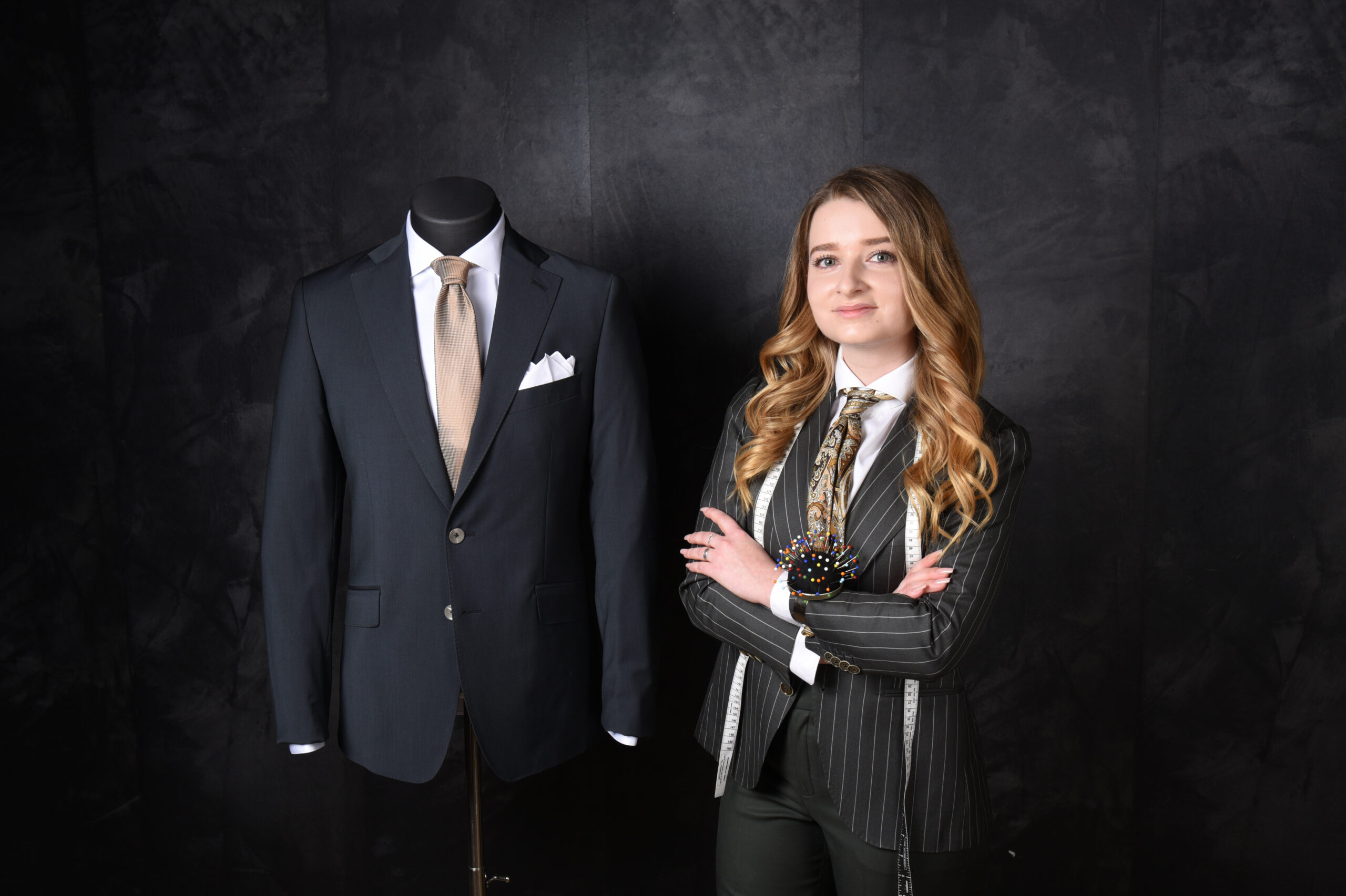
As a men’s outfitter at Varazio I help men every day to find the right suit for their profession and their personality. In this article, I show you which factors are truly decisive when choosing the right suit, and how colour, fabric, workmanship and fit work together so that you come across as authentic, professional and stylish.


Why is the business suit so important?
The influence of clothing on how others see you
Clothing always makes an impression, long before a conversation begins. In professional life especially, the first impression often determines whether someone is perceived as competent, trustworthy, a strong leader or approachable. A business outfit for men should therefore not only look well groomed, but deliberately support the impression you want to make.
A business suit is far more than a formal dress code. It is part of your personal positioning and subconsciously tells the person opposite you about your standards, your professionalism and your personality. That’s why choosing a suit should never be left to chance.
Several factors work together here.
- Colour: influences the emotional effect
- Fabric: changes how the surface is perceived
- Workmanship: determines the quality
- Fit: ensures that everything works together harmoniously
Only when these elements are matched does a confident overall appearance emerge.
Not every suit suits every profession
There is no such thing as the perfect business suit. What matters far more is that the suit suits your professional environment and your personality.
A managing director has different requirements for his appearance than a management consultant, a lawyer or someone from a creative industry. That’s why I never begin a consultation with current trends or rigid business dress code rules, but always with the question of what effect the suit should have and how it will be worn later.
Your wearing habits also play an important role. Someone who wears their business suit every day needs different fabrics and properties than someone who only puts it on occasionally for meetings or client appointments. A good suit should therefore not only look convincing, but also suit everyday working life.
Choosing the colour for the ideal business suit
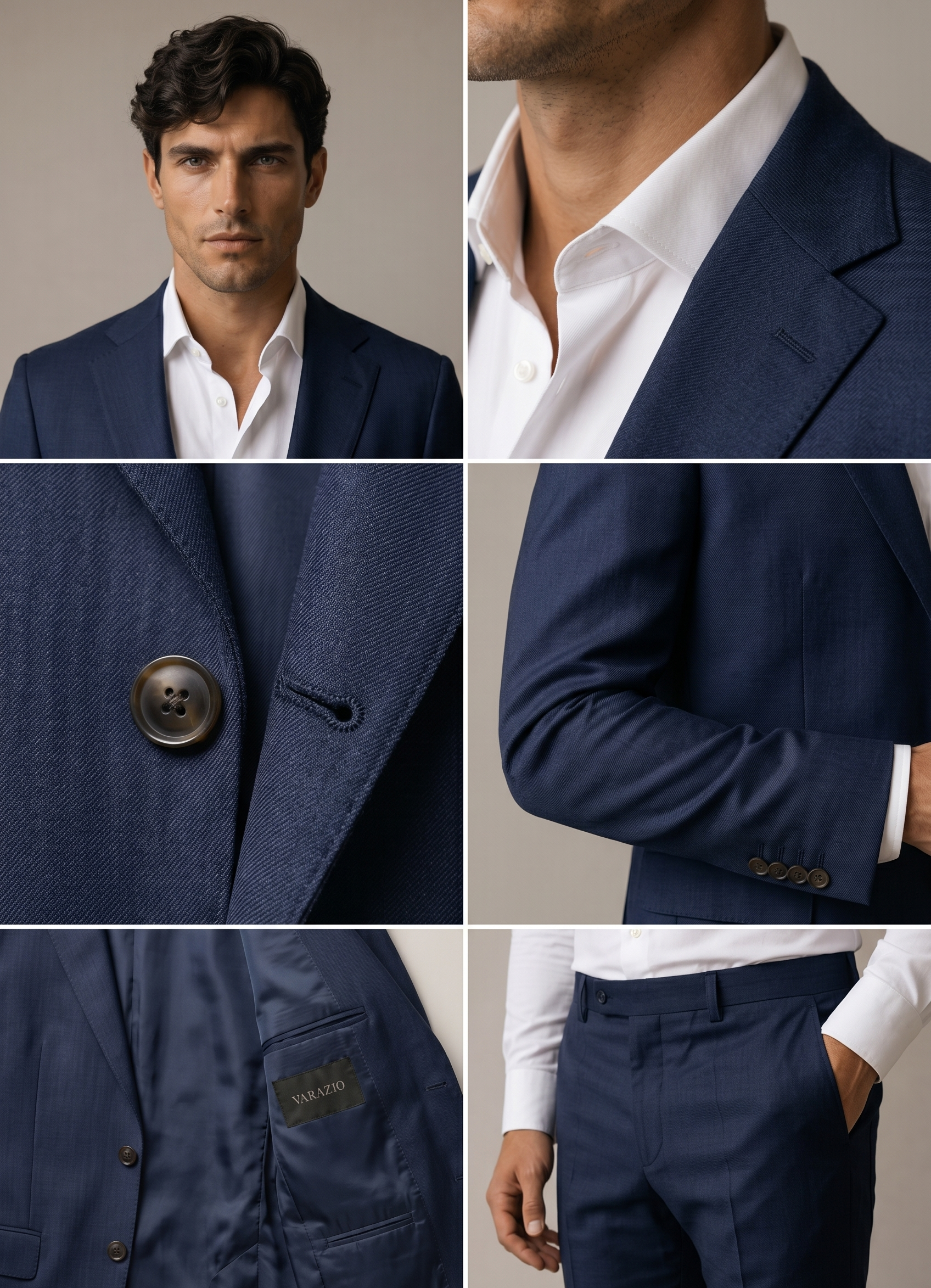
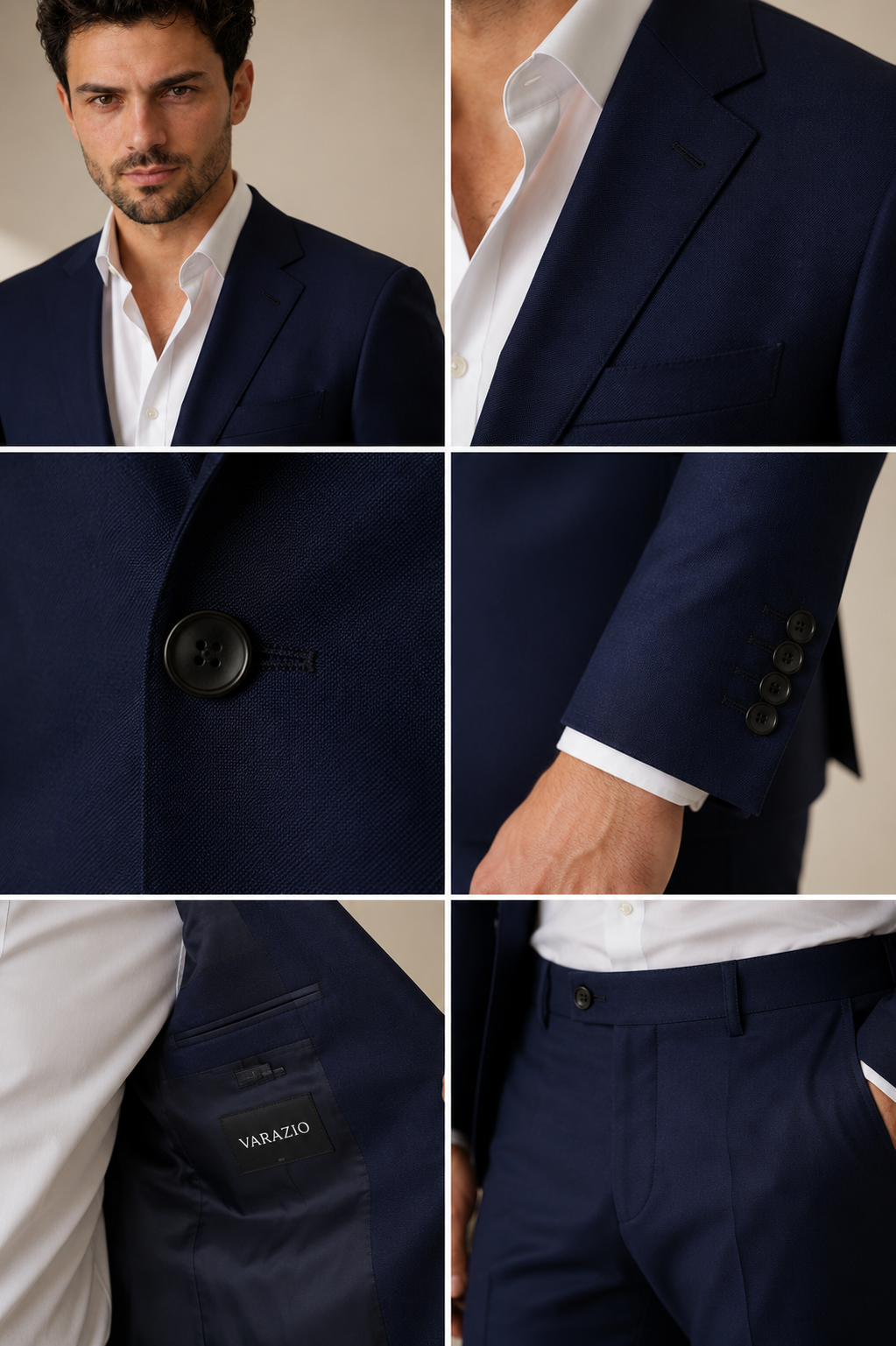
Navy and dark blue – the foundation of every business wardrobe
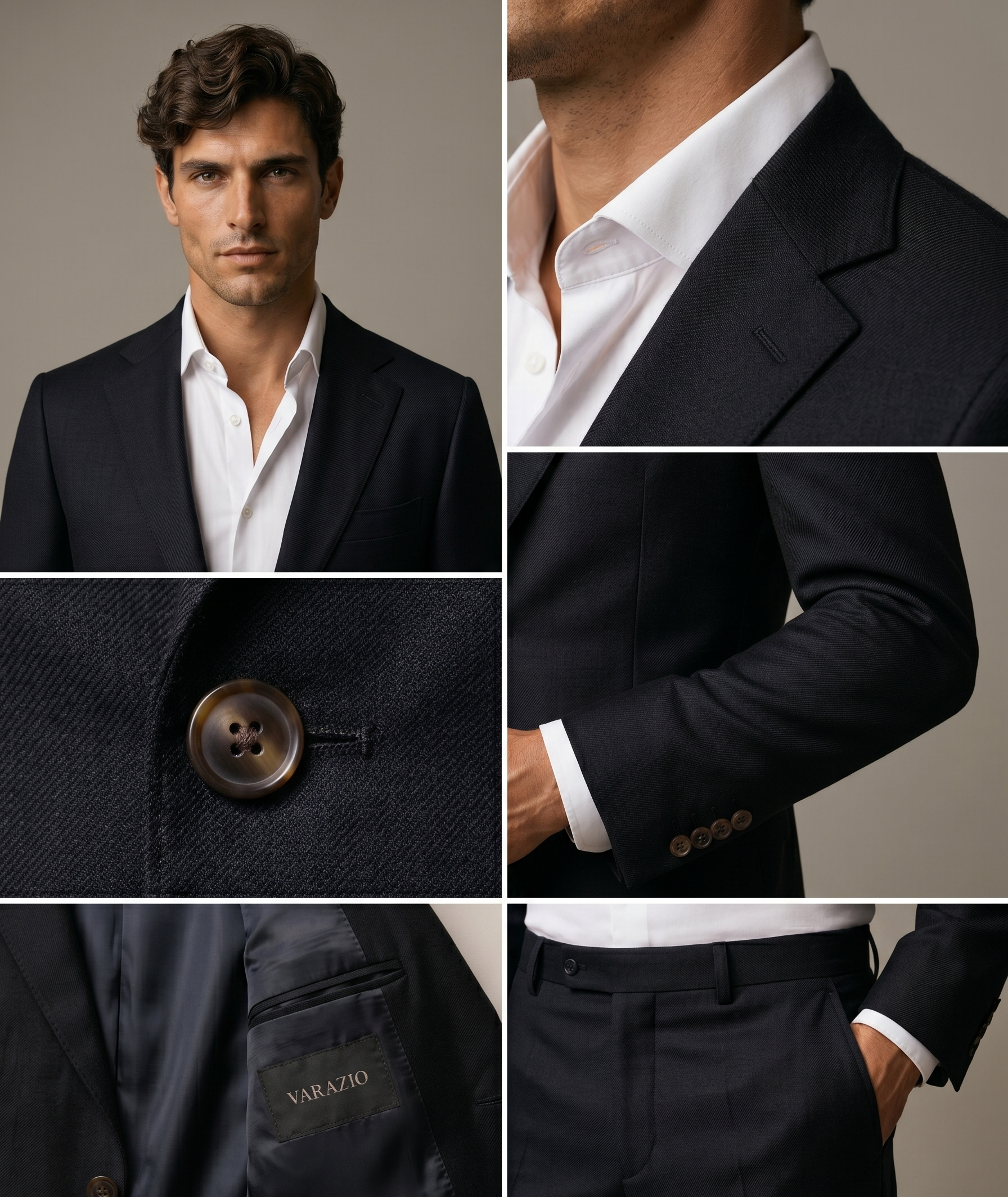
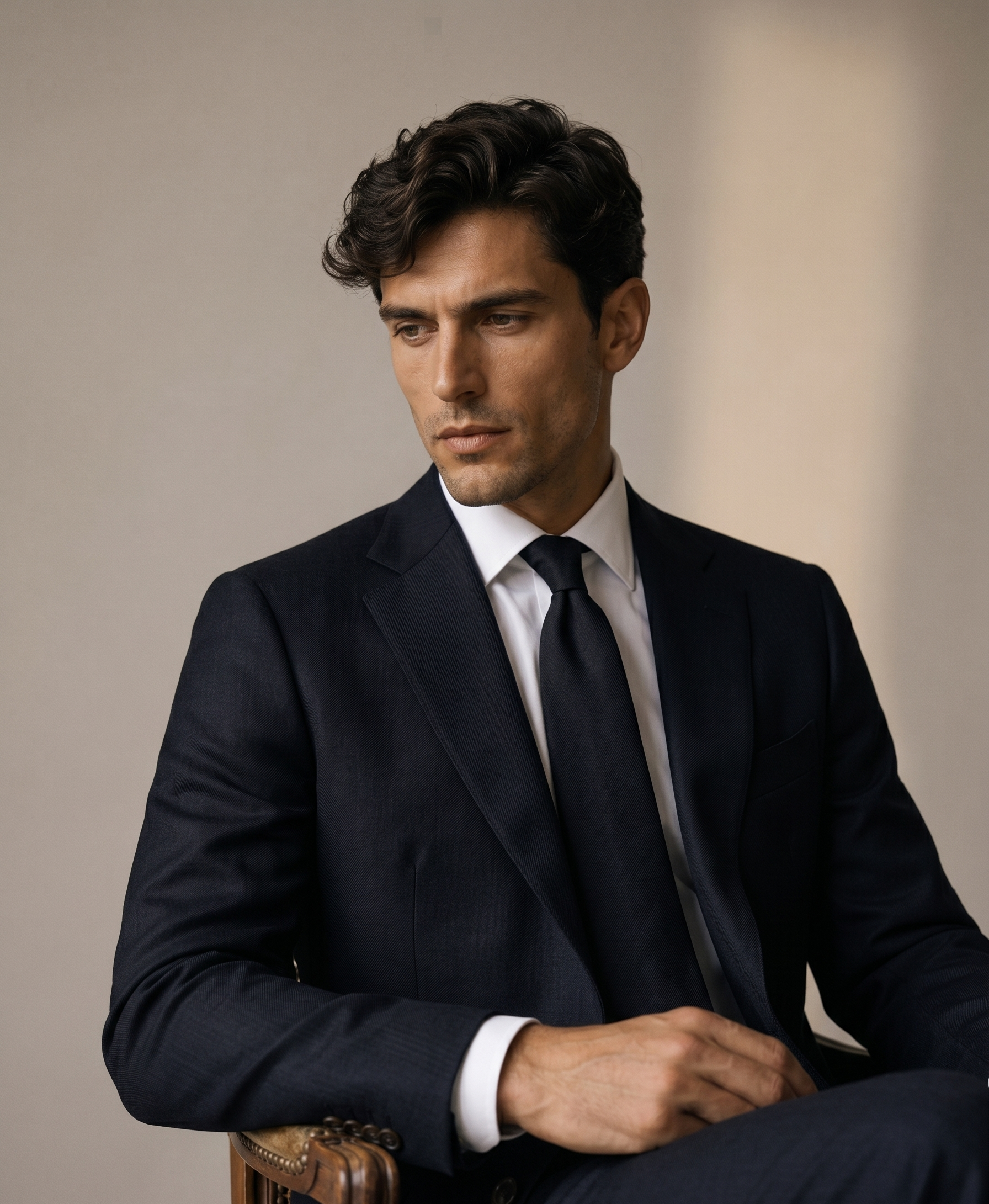
For me, navy, or dark blue, is the foundation of a classic business wardrobe. Hardly any other colour combines seriousness, competence and modernity in such a balanced way. At the same time, navy looks more approachable than black and can be combined in many ways.
A navy suit works with white as well as light blue shirts and goes with brown as well as black leather shoes. This makes it suitable for almost every professional situation, from everyday office life to an important client meeting.
There are differences within the shades of blue, however. Darker nuances look more formal and authoritative, while lighter blues appear more modern and somewhat more open.
Charcoal and grey – timeless professionalism
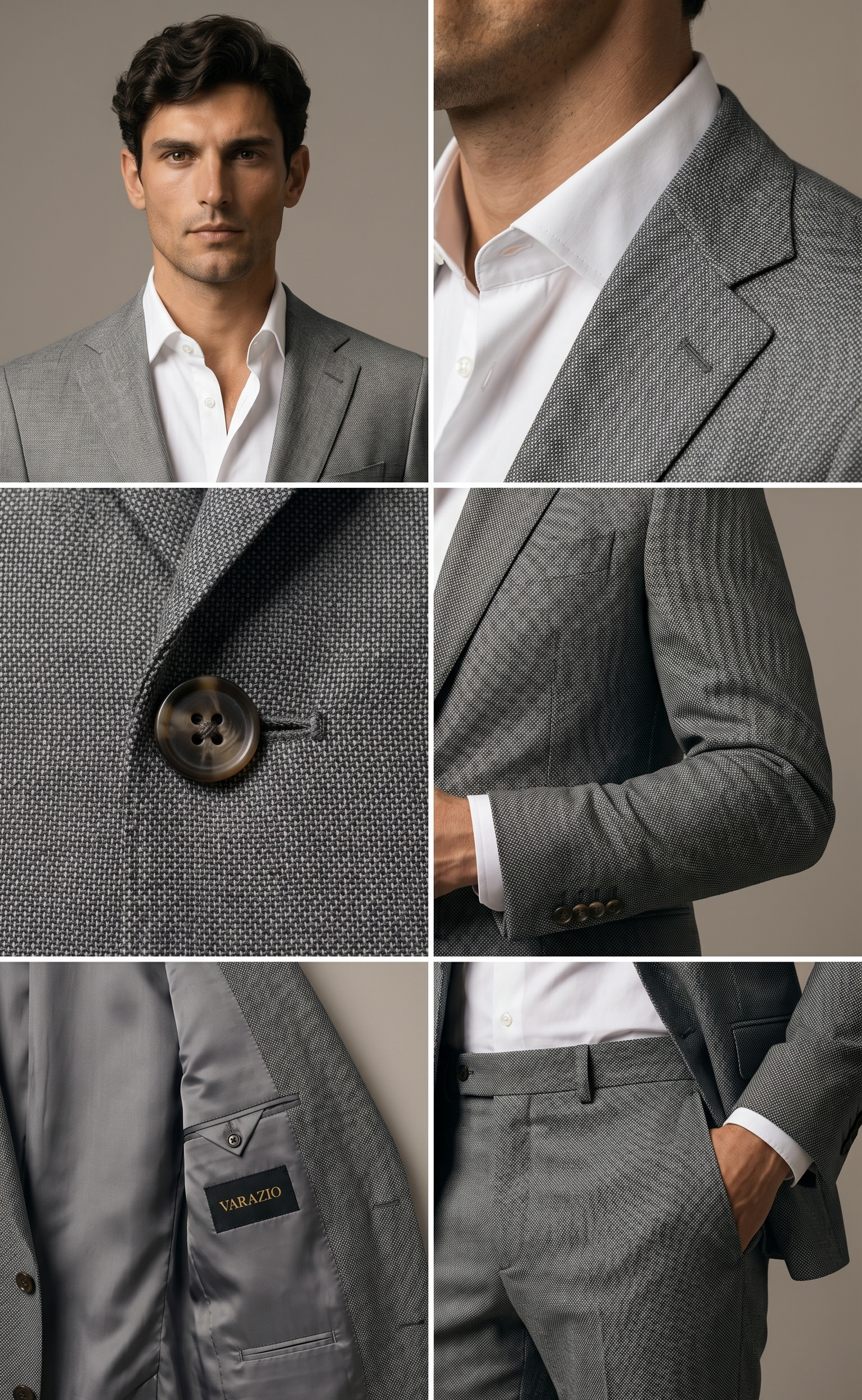
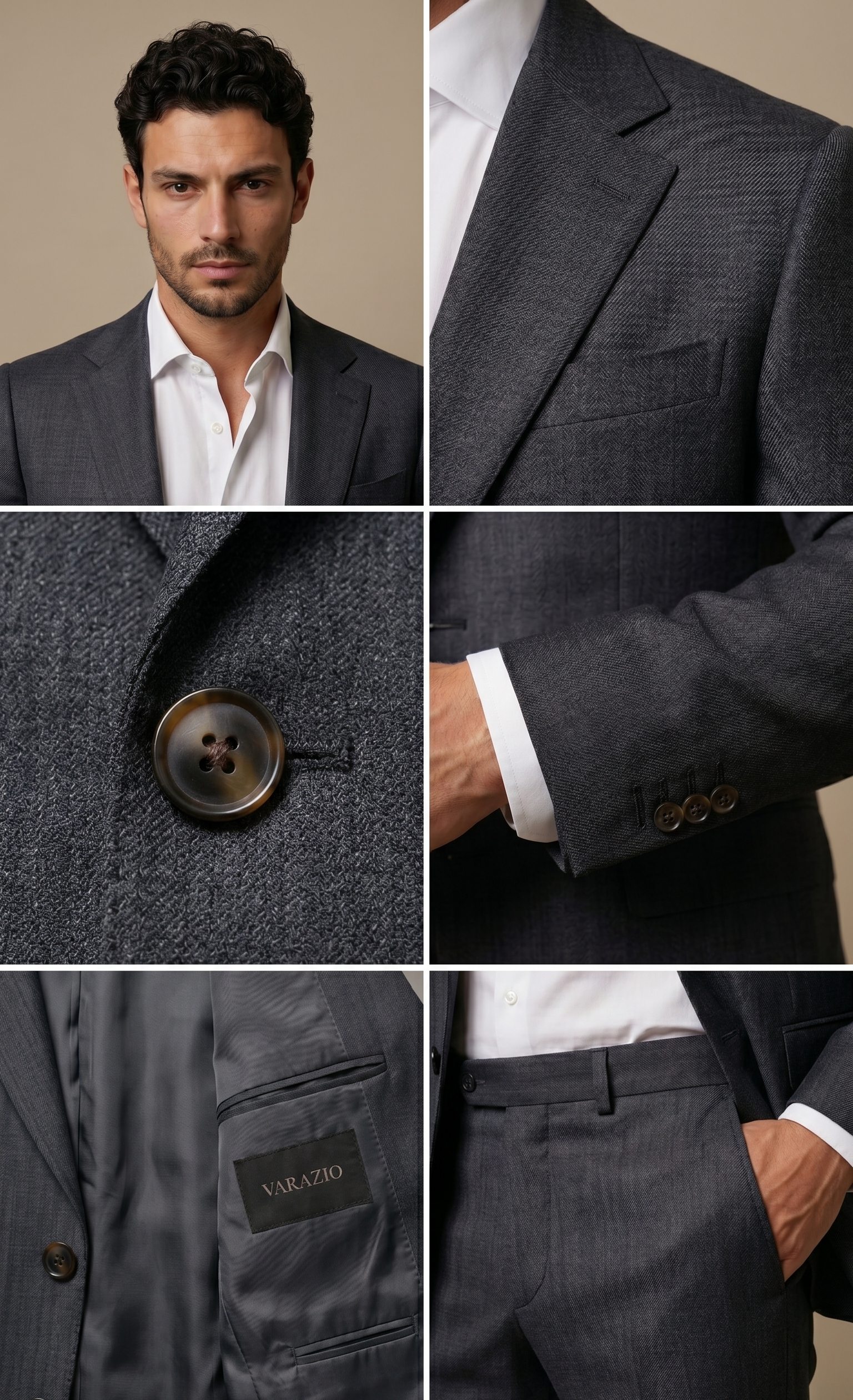
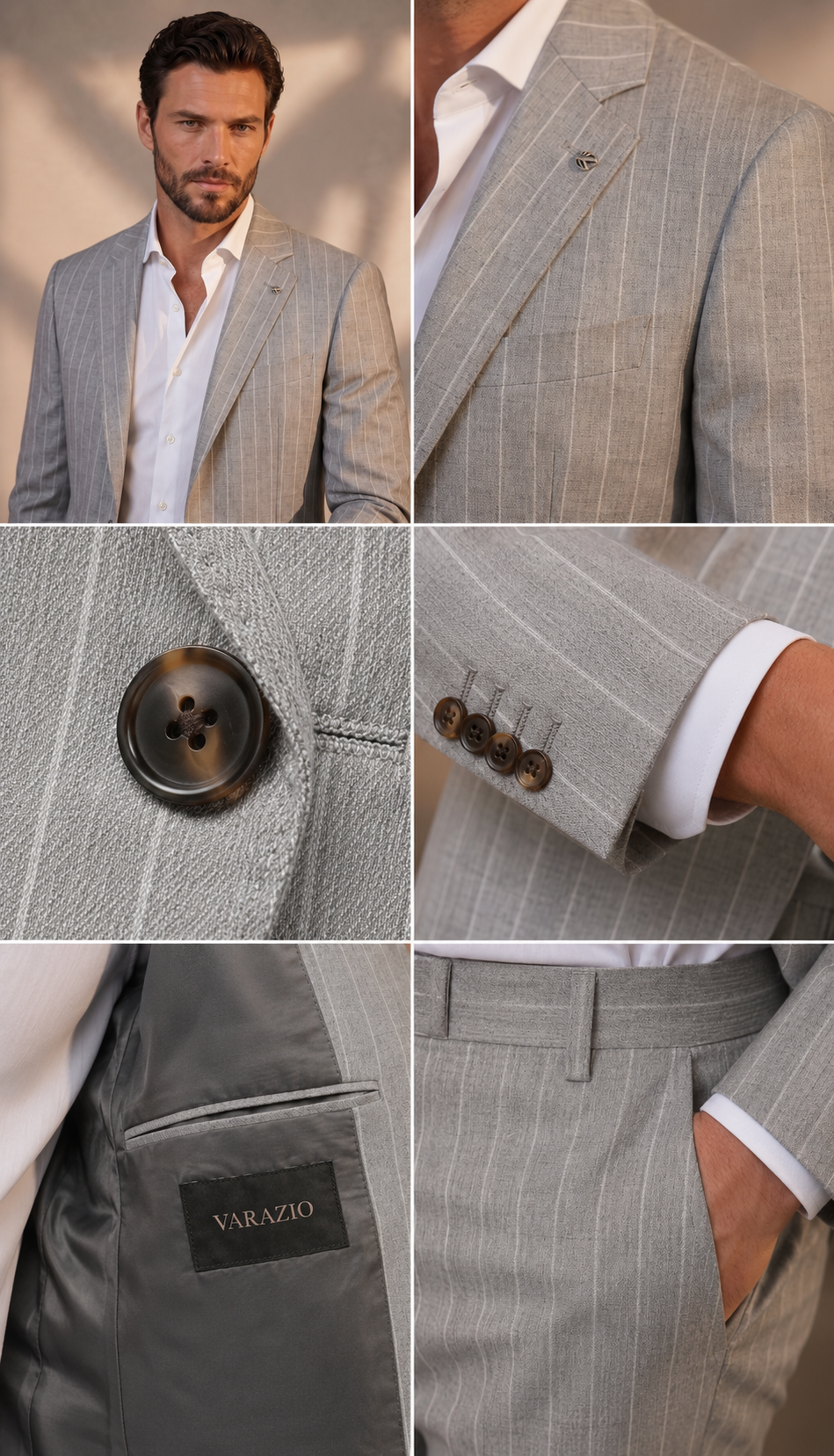
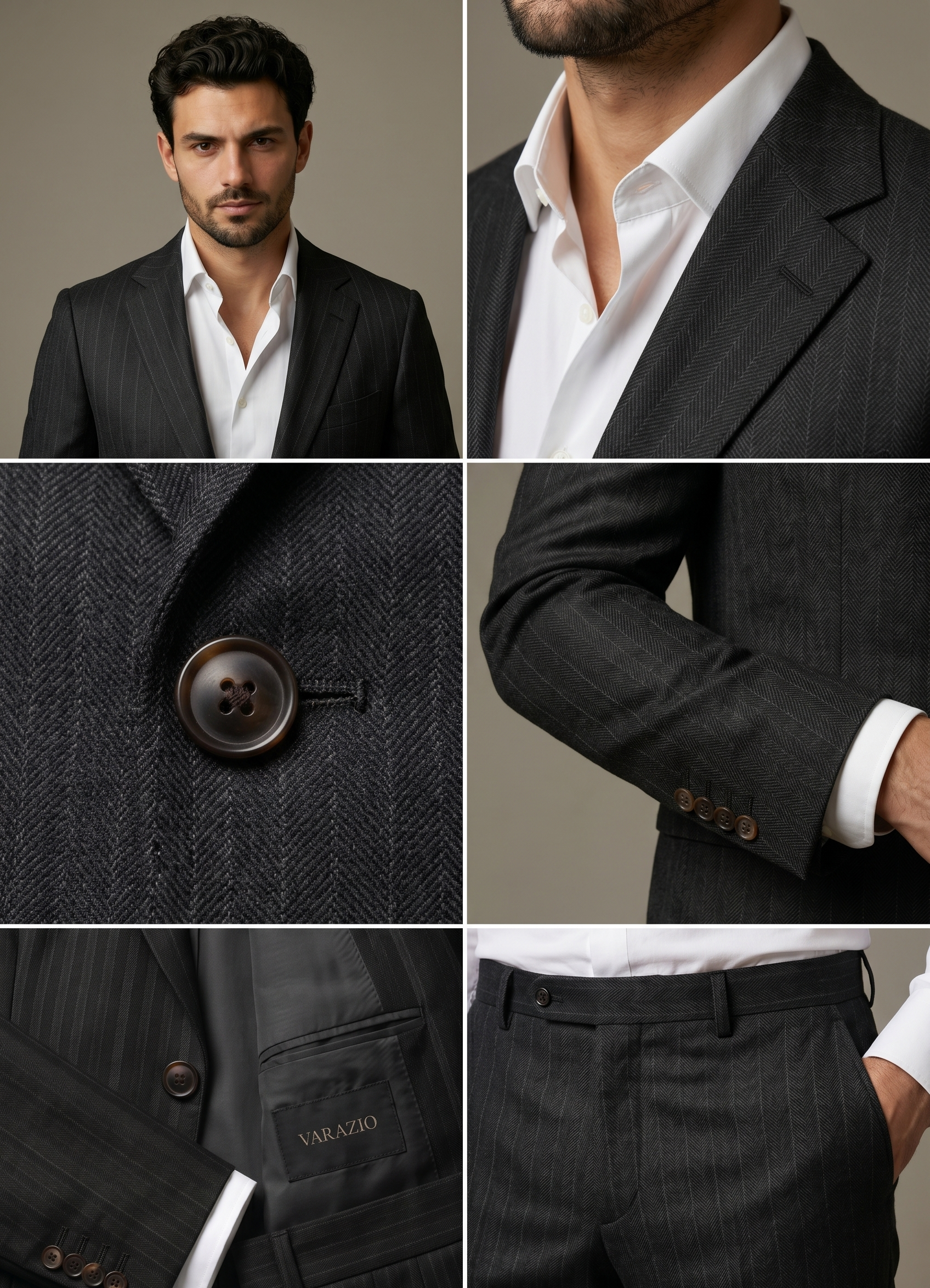
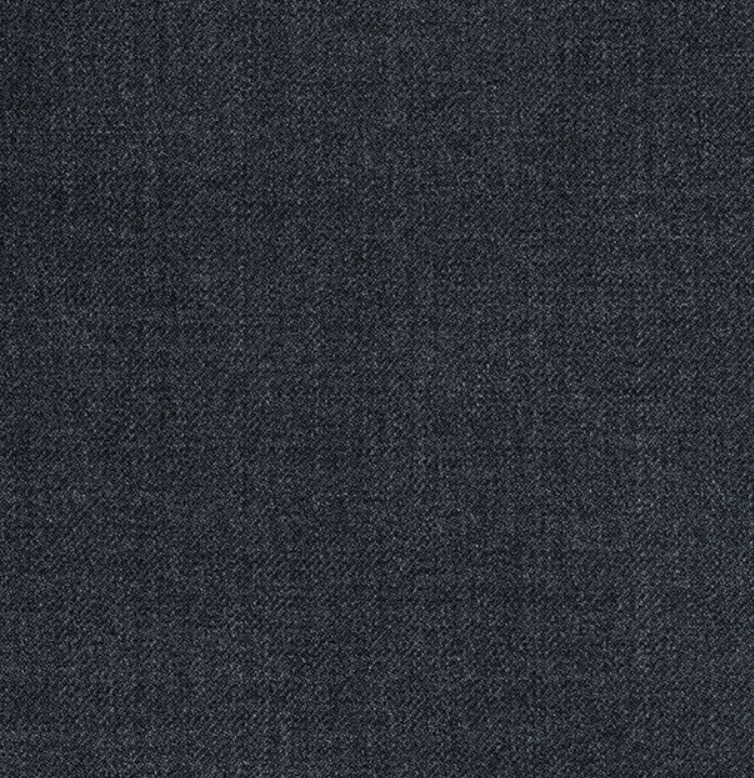
Alongside navy, charcoal and classic shades of grey are, for me, among the most important colours in business. They stand for objectivity, calm and professionalism, and are therefore an excellent choice in almost every industry.
Not all greys are the same, though. Dark charcoal conveys more authority and formality, while mid-grey tones look more modern and somewhat more relaxed. This lets you shape the impression you want to make without leaving the classic business look behind.
Another advantage: shades of grey form a calm foundation and combine superbly with different shirt, tie and shoe colours.
Why black is often not the best choice for business
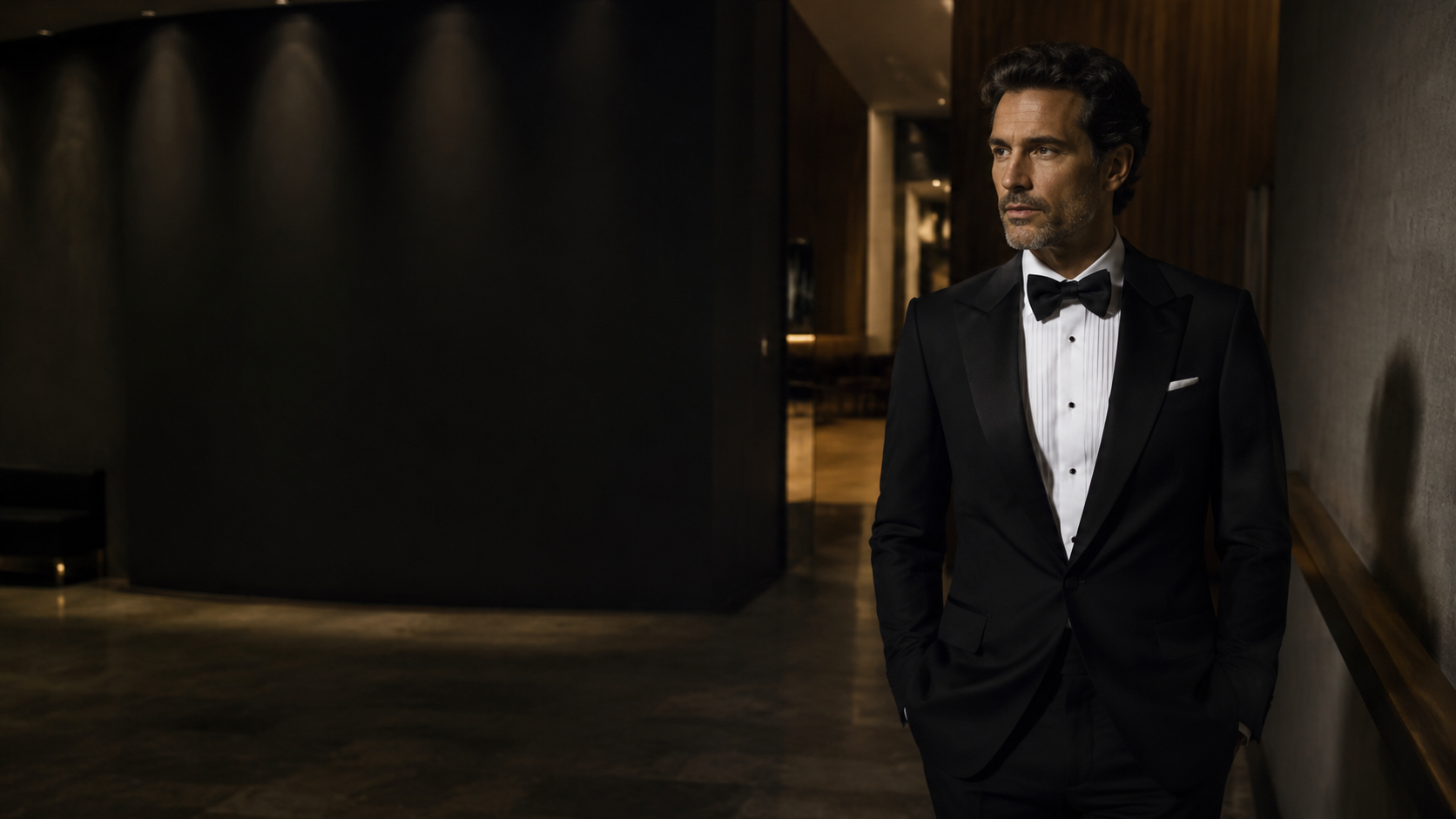
Many people automatically associate black with elegance. In classic everyday business, however, black often looks stricter and more distant than navy or charcoal.
In daylight especially, a black business suit often looks very harsh. If you want to appear professional while still seeming approachable, navy or grey is the better choice in most cases.
I therefore recommend black above all for very formal evening events, galas, dinner suits or classic Black Tie occasions.
The importance of fabric and texture in a business suit
A fine men’s suit doesn’t convince through its colour alone. It is the chosen fabric and its texture that determine how the suit looks, how comfortable it is to wear and how well it suits everyday working life.
Besides appearance, properties such as breathability, durability, crease resistance and temperature regulation also play an important role. That’s why it’s worth taking a closer look when choosing the fabric. It influences not only comfort, but also the longevity and overall impression of a suit.
Smooth or textured fabrics – which suits you?
When choosing a business suit, many men focus on the colour first. In fact, however, the effect of a suit always comes from the interplay of colour, fabric and texture.
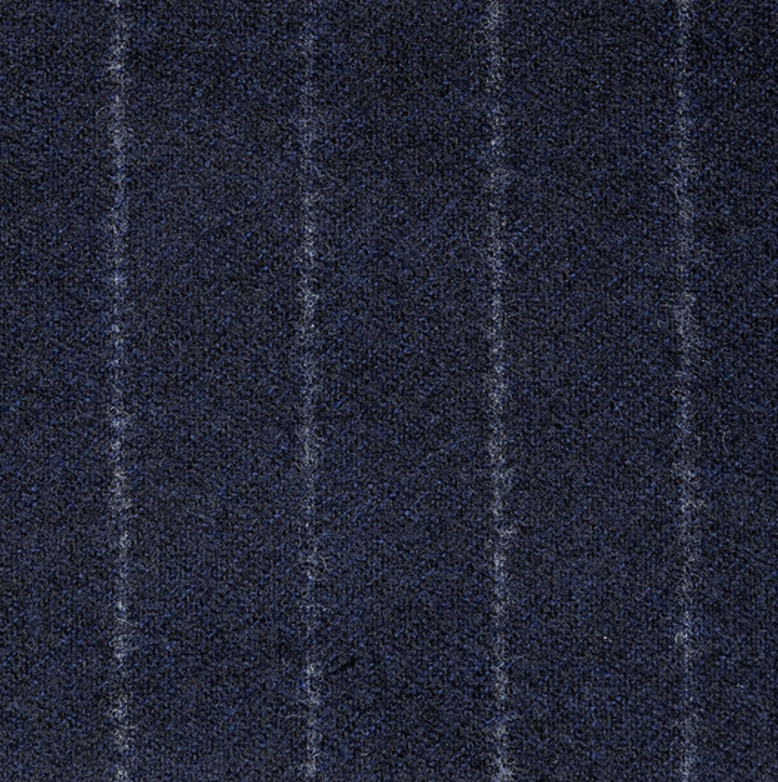
Two business suits in an identical navy can look completely different. A smooth fabric reflects light evenly and therefore appears calmer, more elegant and more formal. A textured fabric, on the other hand, brings more depth and liveliness to the outfit and looks more modern and somewhat more relaxed.
That’s why the choice of fabric should never be considered separately from the colour. Only the interplay of shade, fabric texture and workmanship determines whether a business suit looks classic, modern or a little sportier.
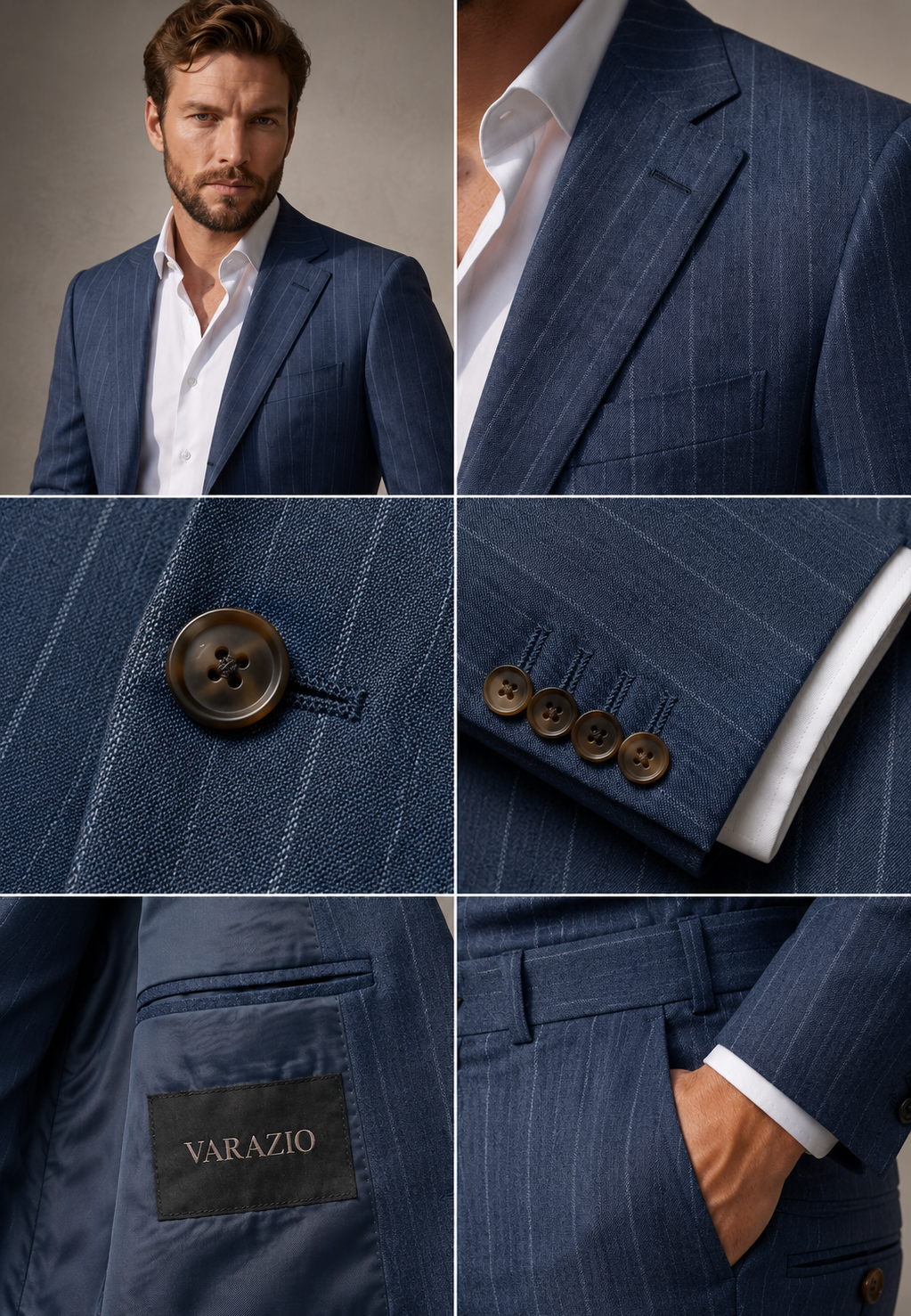
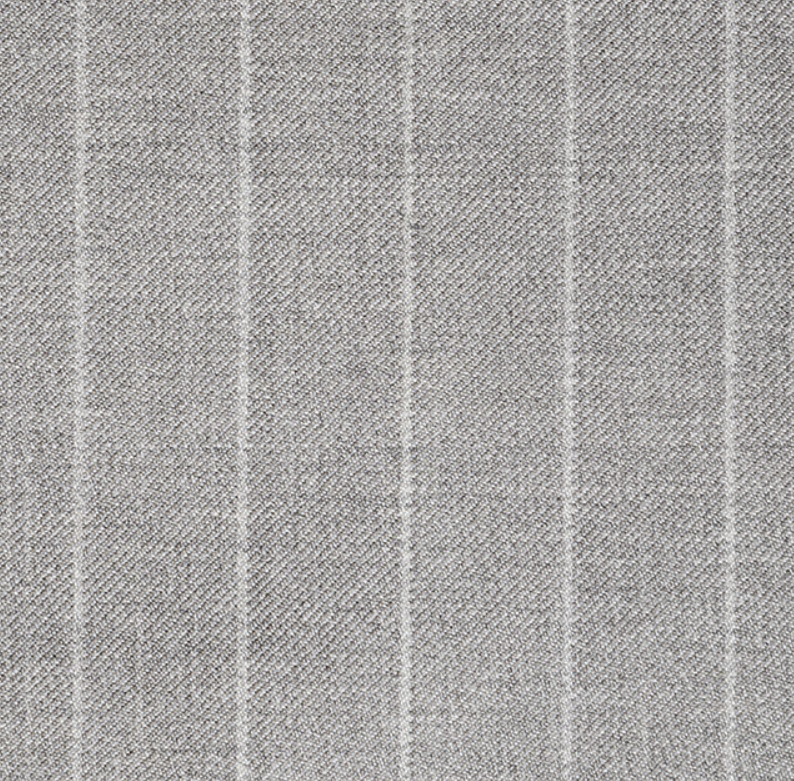
Smooth fabrics look particularly calm, fine and formal. They are excellent for classic business suits and formal dress codes. Subtle pinstripes can underline this effect further without losing the professional impression.
Textured fabrics give a suit more depth and make it livelier. As a result, they look more modern and often somewhat more relaxed. Especially in companies with a less formal dress code or in Business Casual settings, textured fabrics are an excellent choice.
Even though textured fabrics look more relaxed, they are by no means of lower quality. What matters far more is that fabric, colour and occasion go together harmoniously.
The right weave makes the difference
Besides texture, the weave also influences the look and properties of a fine suit.
- Twill is one of the classics. Its fine diagonal structure makes it look elegant and formal, while also being particularly robust. For many men, twill is the ideal choice for everyday working life.
- Hopsack has a more open weave, which makes it look somewhat sportier and more modern. At the same time, the fabric remains pleasantly breathable and creases comparatively little. That makes hopsack ideal for Business Casual combinations or somewhat more relaxed working environments.
- Flannel is characterised by its soft surface and gives off a warm, refined appearance. In the autumn and winter months especially, flannel is a popular choice for business suits.
- Fresco is open-woven and particularly breathable. This makes the fabric ideal for warm temperatures and long working days in summer.
Which weave is right therefore depends not only on personal taste, but also on when and how often the suit is worn.
Why pure new wool is the best choice for business suits
When clients ask me about the ideal material for a business suit, in most cases I recommend pure new wool.
Pure new wool combines many properties that are particularly important in everyday working life. It is breathable, regulates temperature, holds its shape and creases comparatively little. This keeps the suit comfortable even after many hours, and it looks well kept for longer.
Compared with fabrics with a high polyester content, natural fibres feel considerably more pleasant. They don’t develop an artificial sheen, create a more balanced body climate and hold their shape better even when worn regularly.
Anyone who wears their business suit often benefits in the long term from high-quality natural materials.
What Super 100, Super 120 or Super 150 really mean
When buying a suit, many men go by the so-called Super numbers. The common assumption is: the higher the number, the better the fabric.
It isn’t quite that simple, though.
The Super number describes only the fineness of the wool fibres used and says nothing about the overall quality of a fabric. A particularly fine fabric often feels very soft, but is usually more delicate and less hard-wearing at the same time.
For everyday business wear, Super 100 or Super 120 are therefore often the more sensible choice. They offer a good balance of comfort, a refined look and sufficient robustness.
If you wear your suit regularly, you will in many cases benefit more from a durable fabric than from the highest possible Super number.
Fine workmanship makes the difference
A high-quality fabric forms the basis of a good suit. Just as important, however, is the workmanship. Cleanly finished lapels, high-quality canvassing, precise buttonholes and balanced proportions ensure that a suit drapes harmoniously and keeps its shape even after frequent wear. These details are often only noticed at second glance, yet they decisively shape the overall impression.
Ready-to-wear, made-to-measure and full hand tailoring compared
When people talk about business suits, you often hear terms such as Ready-to-Wear, Made-to-Measure or tailored suit. They are frequently used interchangeably, although they describe different concepts.
A ready-to-wear suit is made in fixed standard sizes. If it doesn’t fit perfectly, an alterations tailor can adjust certain areas – for example the sleeve or trouser length, and sometimes the width. The basic construction of the suit, however, stays the same.
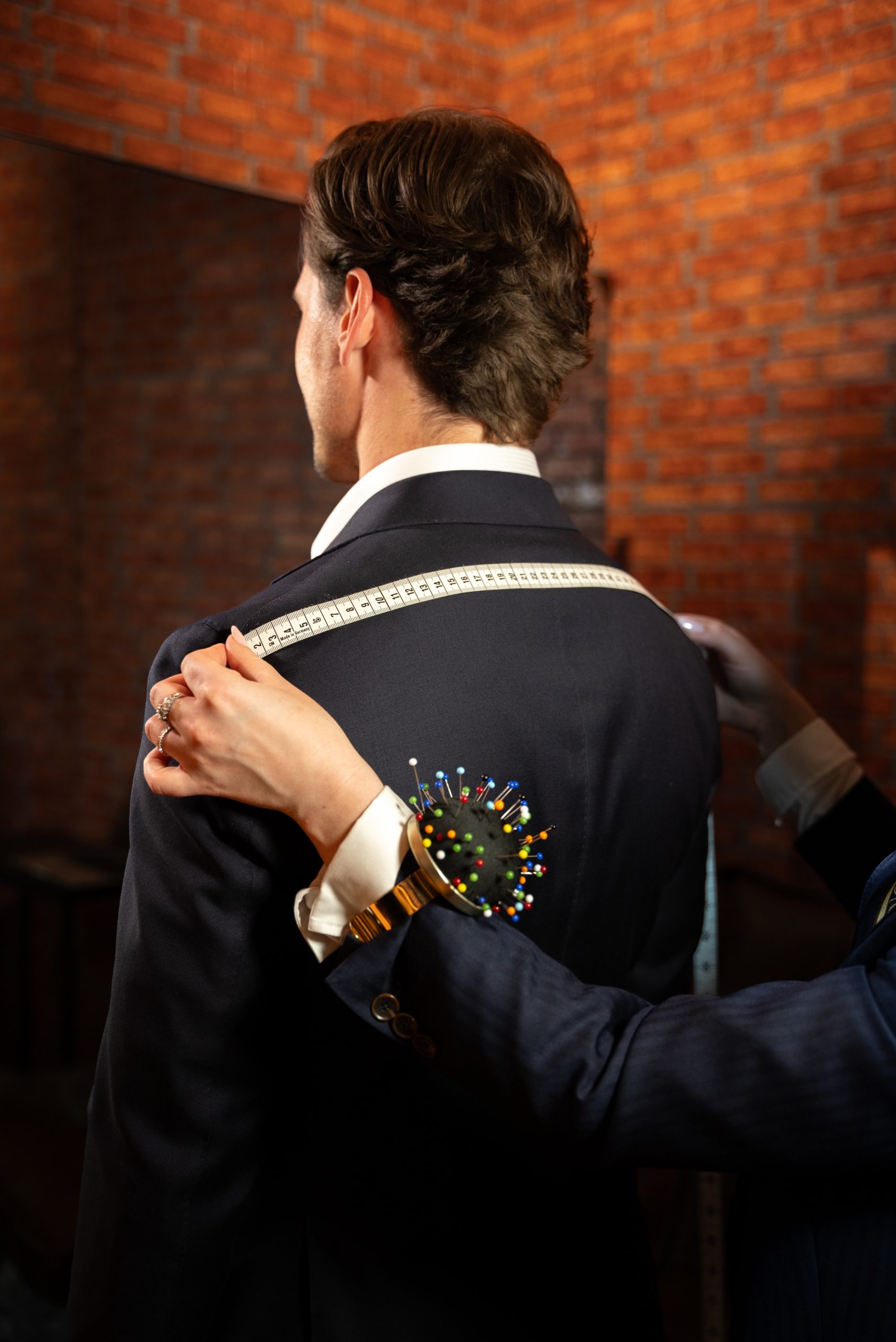
By contrast, Made-to-Measure is a tailoring system in its own right. Here, an existing base pattern serves as the starting point and is individually adapted to your body measurements and proportions. At the same time, it offers numerous ways to personalise the suit – for example in the fabric, lining, buttons or other details.
This differs from full hand tailoring, the most traditional form of tailoring – here, a completely new pattern is developed for each client. Everything is done painstakingly by hand, and the process often involves several fittings.
Where ready-to-wear reaches its limits
For many men, a ready-to-wear suit is a good solution. However, it is based on average measurements and therefore can’t fully take every individual body shape into account.
An alterations tailor can make many adjustments and considerably improve the fit of a suit. But if the basic proportions aren’t right, even they reach their limits.
This affects, for example, men with broad shoulders and a narrow waist, arms of different lengths, a particular posture or other individual body proportions. In such cases, the basic construction of a ready-to-wear suit can only be changed to a limited extent.
Why made-to-measure allows more individuality
Here, it’s not just individual measurements that are adjusted. Important parameters such as shoulder balance, arm length, waist height, the fall of the trousers and posture also go into the making of the suit.
The result is a suit that better supports the body’s natural proportions and often drapes more harmoniously than a standard model.
On top of that, there are many ways to personalise the suit. Fabric, lining, buttons, lapels and other details can be chosen to suit your personal style and your everyday working life.
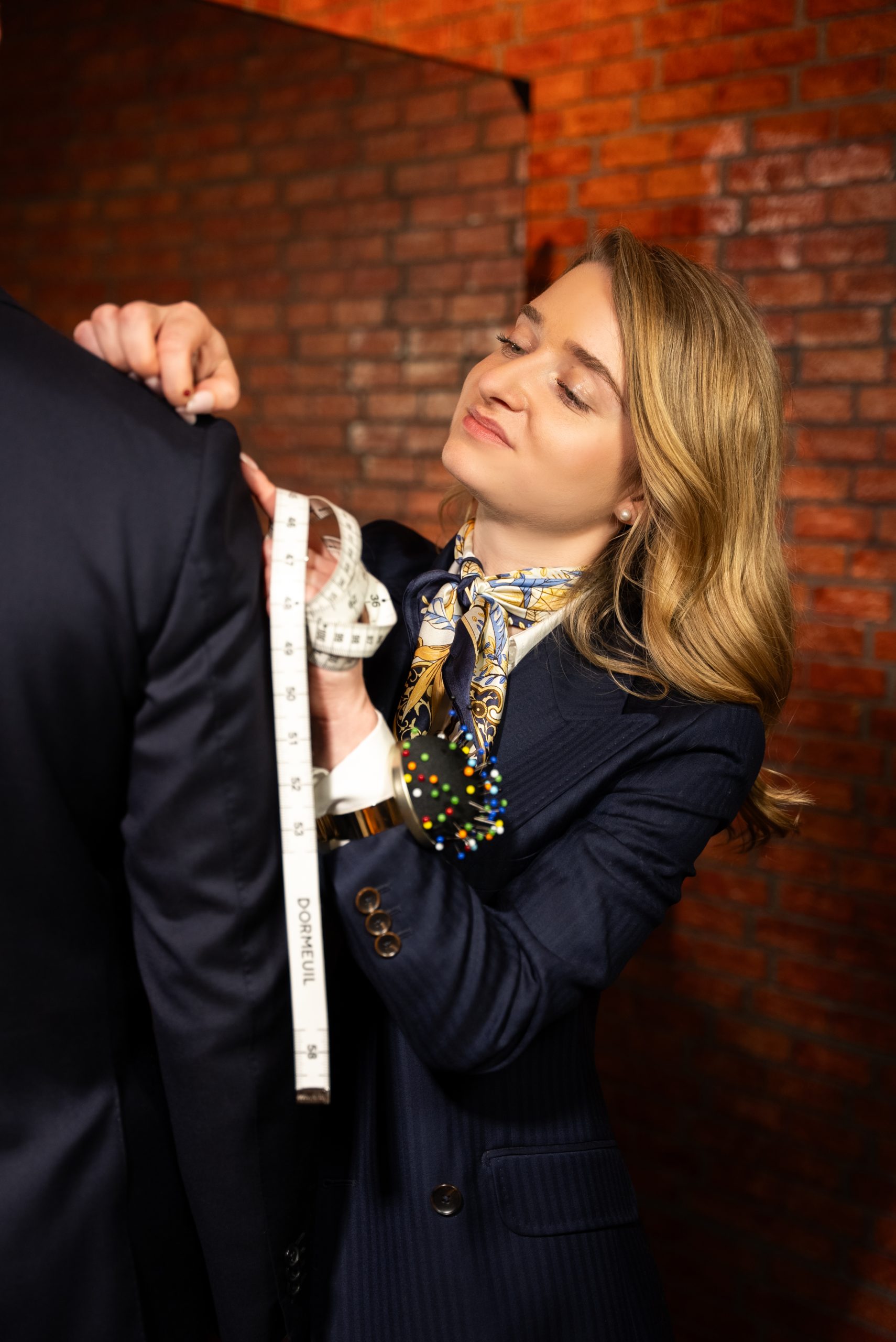
Especially in demanding professional environments, many men therefore deliberately choose a tailored suit for business, to bring fit and impact into perfect harmony.
Fit means more than the right size
A good fit can’t be pinned down by the off-the-peg size alone. What matters is how the suit sits on the body and whether it supports your natural proportions.
A business suit should neither pull nor look too loose, and should be comfortable to wear when you move. When the shoulders, sleeves, waist and trouser fall work together harmoniously, the result is a coherent overall impression that conveys professionalism and assurance.
Which solution is best ultimately always depends on individual requirements. What matters is not whether a suit is ready-to-wear or made-to-measure, but that it suits the person, their working life and the desired effect.

Business Casual – a professional appearance with more flexibility
In my consultations at Varazio I often find that clients assume they always have to wear a classic business suit at work. In fact, the dress code has changed in many companies. Business Casual offers the chance to look professional while bringing a little more flexibility into your wardrobe.
For many companies, Business Casual is now a modern form of business wear that combines professionalism and flexibility
Business Casual doesn’t mean anything goes
Business Casual is often confused with a particularly relaxed style of dress. In fact, it’s much more about combining classic garments in new ways and adapting them to the working environment.
A high-quality, textured business jacket often forms the basis of the outfit. Combined with well-fitting chinos or elegant smart trousers, it creates a look that comes across as professional while offering more freedom of movement and versatility than the classic suit.
Depending on the industry, you can wear a high-quality business shirt or a fine knitted polo with it. Understated colours and high-quality materials ensure that the overall look remains well groomed and stylish despite the more relaxed dress code.
Quality remains decisive in Business Casual too
Even when the dress code is more relaxed, the same principles apply as with the classic business suit. A good fit, high-quality fabrics and a coherent combination of the individual garments shape the overall impression.
Textured fabrics in particular are ideal for Business Casual, because they give the outfit more depth while looking somewhat less formal than smooth suit fabrics. Together with a harmonious choice of colours, the result is an appearance that conveys competence and still looks modern.
Ultimately, a Business Casual outfit should also suit your professional environment and your personality. If you pay attention to quality, fit and a balanced combination, you can make a professional impression even without a classic suit.
Frequently asked questions about business suits
How do I find the right fit?
A good fit goes far beyond the right off-the-peg size. Shoulders, chest, waist, sleeve length and the fall of the trousers should be harmoniously matched so that the suit neither pulls nor looks too loose. Especially with individual body proportions, a tailored suit can make sense, because it adapts the cut specifically to the wearer.
Which fabrics are suitable for a high-quality suit?
For everyday working life, pure new wool is a proven choice. It is breathable, regulates temperature and keeps its shape even when worn regularly. Which fabric quality is best also depends on the season, how the suit will be used and your personal requirements. The weave also influences the look and comfort of a business suit.
How many business suits should I own?
That depends on your working life. For many men, two business suits in classic colours such as navy and charcoal or grey form a good foundation. If you regularly attend client appointments, meetings or business events, you will often benefit from a third suit, so that you can choose flexibly depending on the occasion and dress code.
Can I also wear a business suit in a Business Casual style?
Yes. A jacket in a classic colour in particular can be combined in many ways. Together with chinos or high-quality smart trousers and a business shirt or knitted polo, it creates a professional Business Casual look that suits many modern working environments.
Is made-to-measure always the better choice?
Not necessarily. A well-fitting ready-to-wear suit can be a good solution for many men. A tailored suit, however, offers more ways to adapt the suit to individual body proportions and personal wishes. Which option makes sense depends on your figure, how the suit will be used and your own standards.
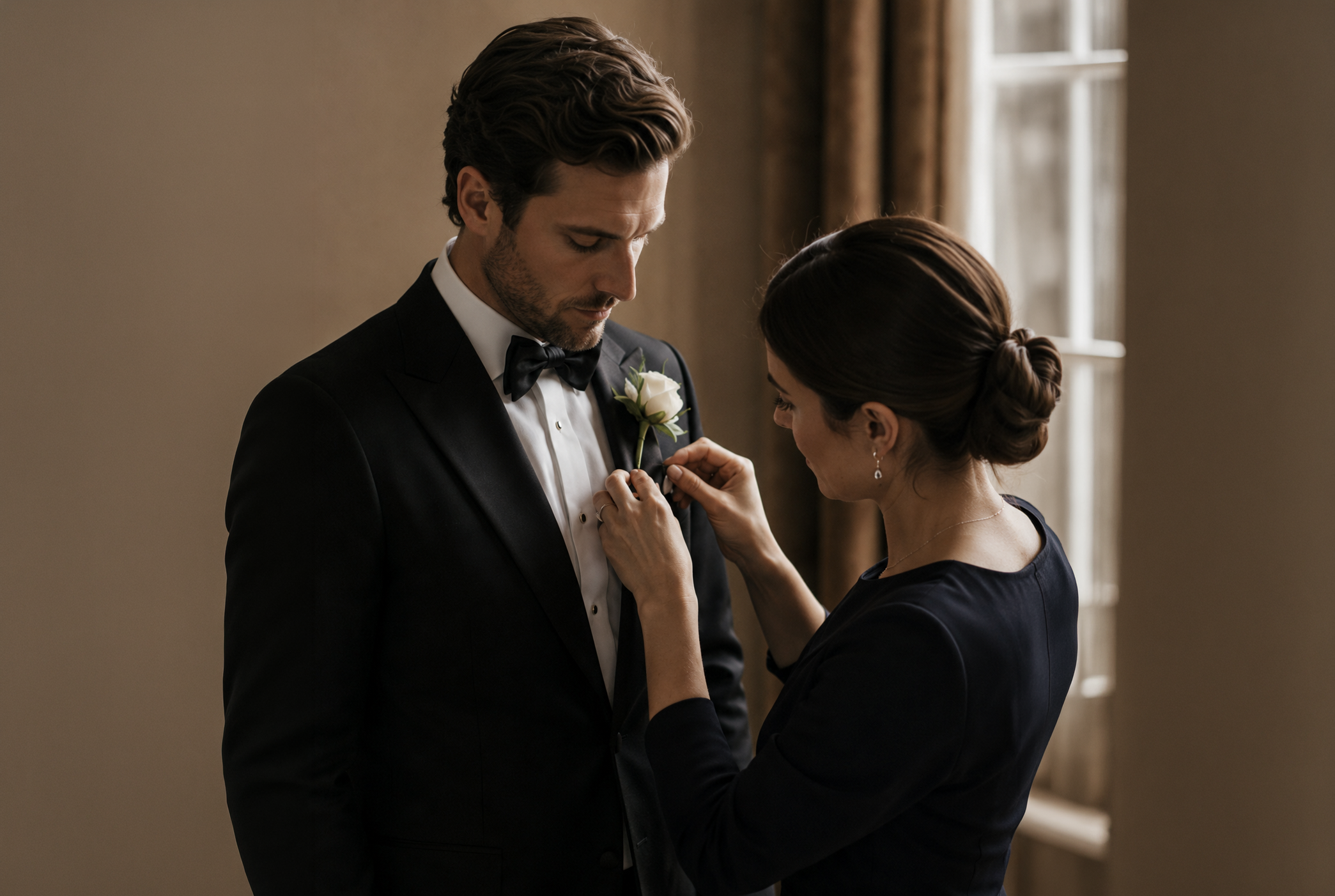
Can I also wear my wedding suit for everyday work?
Yes, provided the cut, colour and fabric are chosen to be timeless. Suits in navy or charcoal in particular can often be worn for work after the wedding. With a simple business shirt and classic leather shoes, you create a professional look for meetings, client appointments or other formal occasions. What matters is that you already think about this in your wedding planning from the start.
Conclusion: the right business suit underlines your personality
The ideal business suit doesn’t follow rigid rules or short-lived trends. What matters far more is that it suits your personality, your working life and the impression you want to make. Because that is exactly when a suit becomes a reliable companion and an expression of your professionalism.