Made-to-measure is more than a better version of ready-to-wear – it is a system in its own right, between off-the-peg and full hand tailoring. The question often arises: Which tailoring system really suits me?
In this article, you’ll find out how ready-to-wear, made-to-measure and full hand tailoring actually differ, when each option makes sense and how to solve proportion problems in a targeted way. You’ll learn what makes a competent men’s outfitter stand out, which adjustments are possible and why more fittings don’t automatically mean better quality.
What is made-to-measure, and why is it so interesting?
The suit influences not only how you look in photos, but also your body language on the big day. But which system of suit-making is right for you? The terms ready-to-wear, made-to-measure and full hand tailoring are often mixed up. Yet behind each one lies a concept in its own right with specific possibilities.
Ready-to-wear, made-to-measure and full hand tailoring: an overview of the three systems
Ready-to-wear refers to pre-made clothing in standard sizes that is produced in large quantities. These suits are based on average body measurements. What many people don’t know: even after alterations, a ready-to-wear suit keeps its basic cut. Sleeves can be shortened and trousers taken in, but the proportions of the shoulders, the line of the back or the balance between upper body and waist can’t be fundamentally changed.
Made-to-measure works with existing base patterns, which are, however, adapted to individual measurements. This allows great variation, both in measurements and in personalisation options. This approach makes it possible to accommodate particular proportions without having to draft a completely new pattern.
Full hand tailoring – the most traditional form of tailoring – means a pattern drafted entirely individually. Here, every piece is made by hand, tailored to your exact body measurements. It often requires several fittings. The effort involved is accordingly far greater than with the other two systems.
Made-to-measure as a concept in its own right: not just “better ready-to-wear”
It is often misunderstood: it isn’t a halfway house between ready-to-wear and full hand tailoring, but a concept in its own right. The decisive difference from ready-to-wear lies not only in the fact that more is adjusted, but in how it is adjusted. While alterations work within narrow limits, this system responds to individual proportions in the pattern itself.
A good example: broad shoulders and a narrow waist can hardly be represented harmoniously in ready-to-wear. Either the shoulders fit, in which case the waist is too wide, or the waist fits, in which case it pulls across the shoulders. A tailored pattern takes these proportions into account in the cut from the start. This requires competent advice.
Who is made-to-measure worthwhile for?
It makes particular sense when standard sizes don’t fit or when you want a suit that can, for example, still be worn after the Wedding is over. Many wedding suits end up in the wardrobe after the big day because they are cut too festively or too specifically. A tailored suit, by contrast, can be designed to combine in many ways.
Tailoring is also helpful for grooms with particular proportions – arms of different lengths, a particular posture or complex silhouettes can be taken into account precisely. The shoulder balance, the waist height of the trousers or the drape of the jacket are individually tailored.
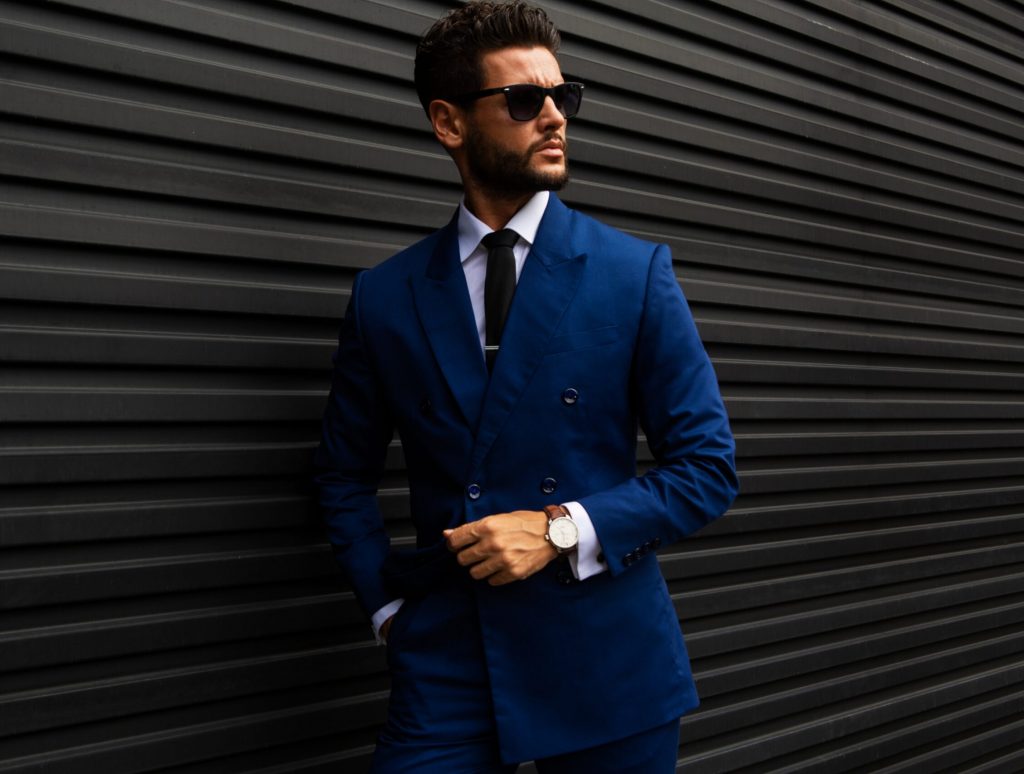
Ready-to-wear, made-to-measure or full hand tailoring: which option suits you?
Off-the-peg ready-to-wear: what alterations can achieve and where their limits lie
Ready-to-wear suits are quickly available, affordable and come in many variations. An alterations tailor can adjust lengths and correct widths. These options have clear limits, however: the shoulder width can hardly be changed, the armholes stay where they are, and the line of the back is fixed. What alterations can’t achieve is a fundamental change in proportions.
Made-to-measure: an individual cut with great variation in measurements and style
It gives you the opportunity to set relevant measurement parameters such as shoulder balance, arm length or trouser fall individually. At the same time, you can choose fabrics, colours and button options freely. The fitting usually takes place in one or two appointments, which keeps the process manageable. The system is flexible enough for individual wishes, yet remains predictable in terms of time and cost.
Full hand tailoring: a completely individual pattern with several fittings
This means the highest level of fit. The pattern is drafted for you, every seam is placed individually. Several fittings are usual to refine the fit step by step. This effort is reflected in the price and lead time – so for a wedding, for example, full hand tailoring is an option if you have the time and the corresponding budget.
Assessing price differences realistically
Ready-to-wear starts at a few hundred euros, made-to-measure costs roughly between €800 and €2,500, depending on the provider, and full hand tailoring usually starts well above €3,000. These differences result from the materials and the work involved. What matters is that you choose the system that suits your proportions and your budget.
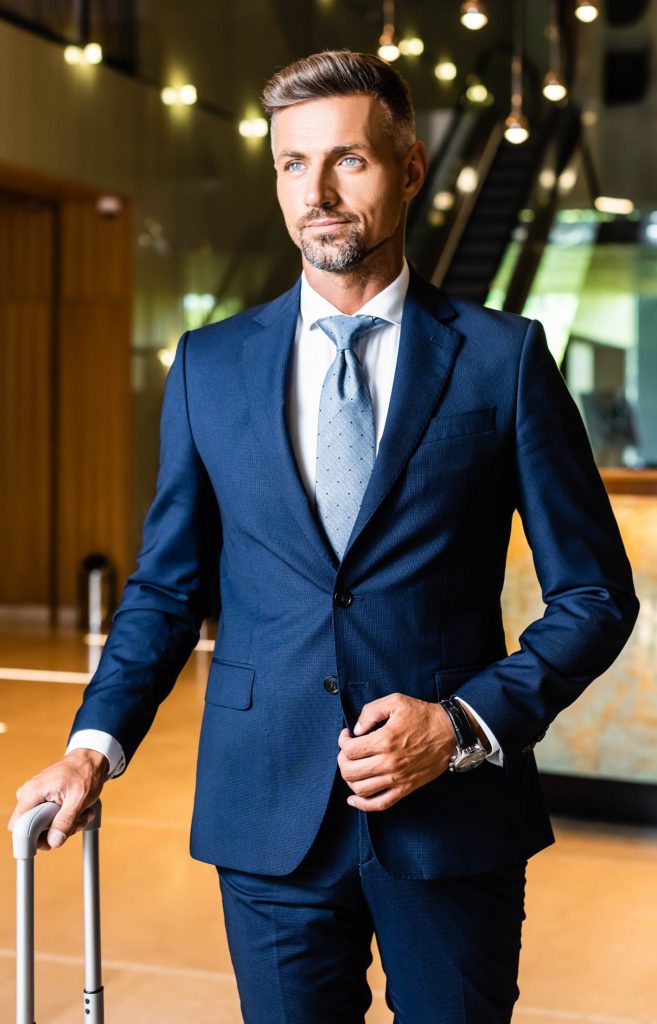
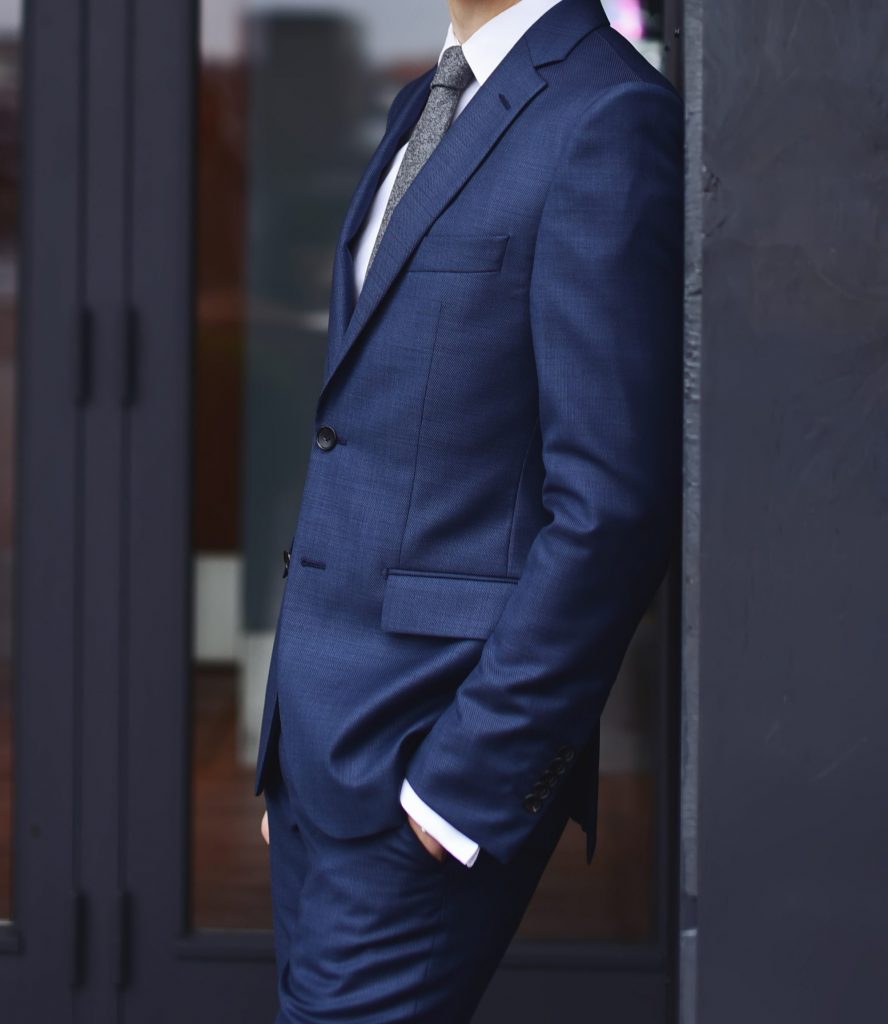
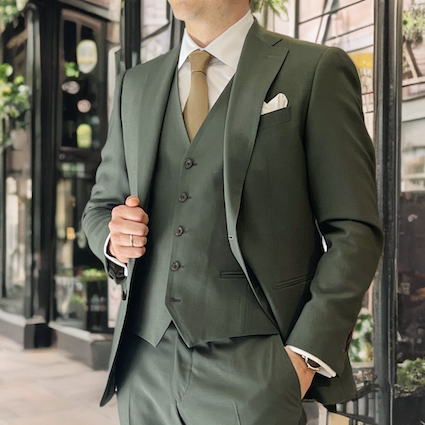
When tailoring really makes sense: typical proportion cases
Broad shoulders and a narrow waist: when standard sizes don’t fit
One of the most common cases where ready-to-wear doesn’t work: broad shoulders, narrow waist. Anyone who does a lot of sport or naturally has a V-shaped silhouette knows the problem. The jacket has to be chosen big enough to fit over the shoulders. At the same time, it then sags at the waist and looks shapeless.
Altering it afterwards is possible, but quickly reaches its limits. The waist can only be taken in so far without the whole cut suffering. The shoulders, the armholes and the proportions of the chest remain unchanged. The result is usually a compromise that shows in photos.
Made-to-measure takes such differences in proportion into account in the base pattern. The width at the waist, the shoulder width, the height of the armhole – all of this is individually matched. The result is a far more harmonious silhouette that not only looks better, but also feels more comfortable to wear.
Taking arms of different lengths and posture into account
An often overlooked point: arms of different lengths or an asymmetrical posture. Many people have one arm that is slightly longer than the other, or one shoulder that sits a little higher. Ready-to-wear doesn’t take this into account: the sleeves are the same length and the shoulders are cut symmetrically. In everyday life, this may hardly be noticeable – in wedding photos it certainly is.
Posture also plays a role. Anyone who spends a lot of time at a desk often has a slightly forward-leaning posture. This affects how the jacket falls at the back and can cause fabric to bunch at the neck or the shoulder seam to slip backwards.
Tailoring makes it possible to build such characteristics directly into the cut. The arm length can be adjusted asymmetrically, the shoulder balance is set individually and the cut of the back is adapted to the actual posture. The result is a suit that doesn’t just fit technically, but also looks visually harmonious.
Why made-to-measure solves proportion problems better than ready-to-wear
The decisive difference: it doesn’t try to adapt a pre-made cut afterwards, but addresses your individual measurements from the outset. While alterations only allow limited corrections, this system works with a flexible base pattern, which can be varied in many parameters.
This concerns not only the obvious measurements such as waist size or sleeve length, but also less visible factors such as the waist height of the trousers or the fall of the trouser legs. All these details help ensure that a suit not only fits, but also looks well proportioned. For the groom, who is the centre of attention and is photographed extensively, this difference counts for a lot.
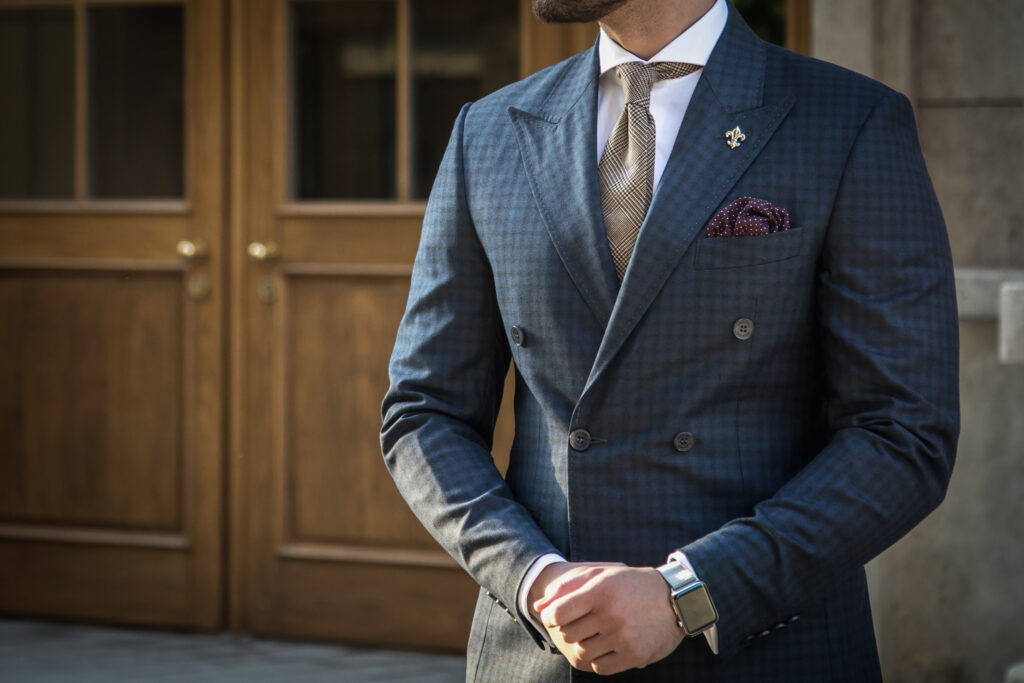
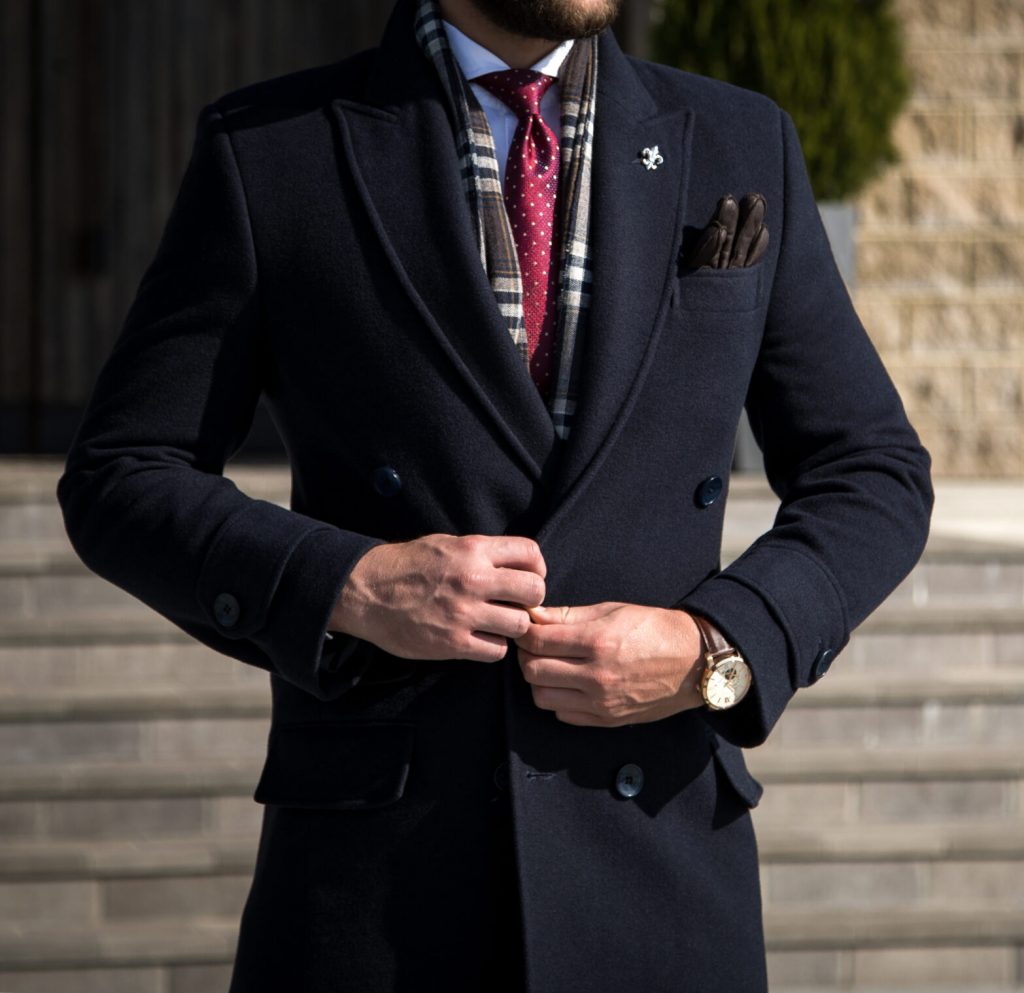
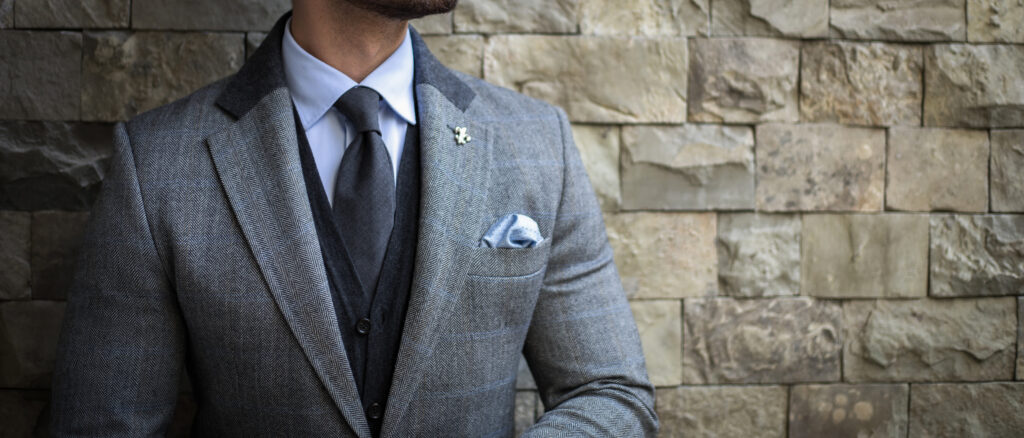
Men’s outfitters in Hamburg and elsewhere: where can you find good tailoring?
How to recognise a good men’s outfitter
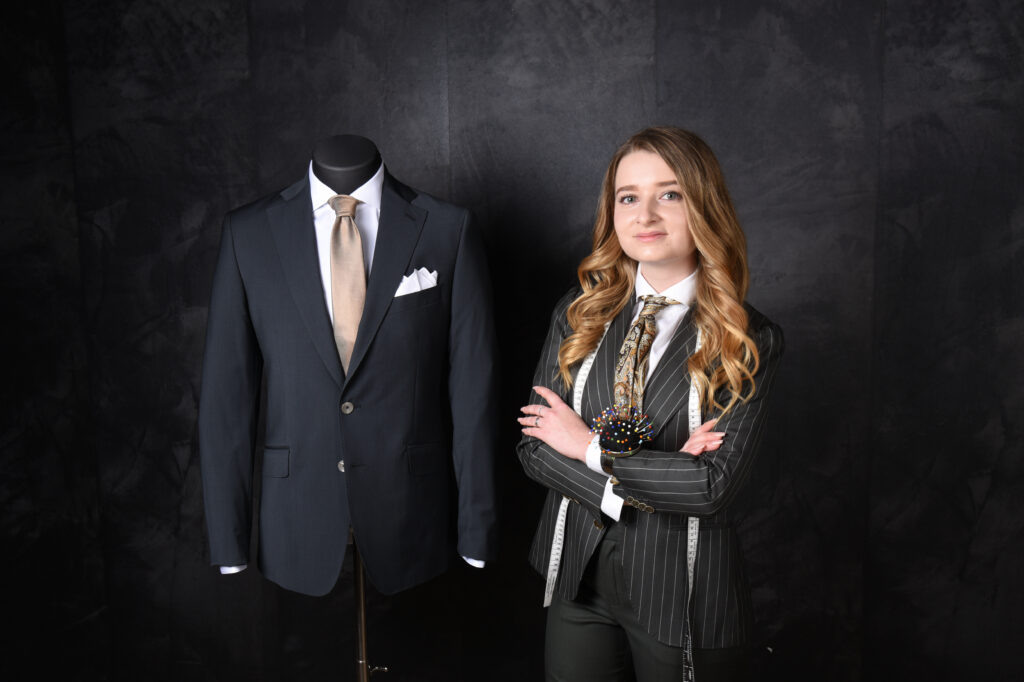
A good men’s outfitter takes time for an in-depth consultation. He asks about the occasion, your style and your individual preferences. He explains the differences between ready-to-wear, made-to-measure and full hand tailoring transparently and makes clear which option makes sense for your proportions and your budget. If a provider recommends a particular solution across the board without considering your body shape, be careful.
The way measurements are taken also shows whether someone knows their craft. An experienced outfitter doesn’t just measure chest, waist and leg length, but also considers shoulder balance and posture. He explains why certain adjustments make sense and how they affect the fit.
Planning and fittings: when should you start?
For a tailored suit, you should allow at least three to four months – that gives enough buffer for production and any fine-tuning. Depending on how busy the provider is, the process can also take longer.
As a rule, you can expect one or two fittings. The first fitting is used to check the fit. By the second fitting, the suit should already be finished and only need minimal corrections. Several fittings are more often necessary with full hand tailoring, but not generally with every made-to-measure suit.
Avoiding typical mistakes when choosing
A common mistake: focusing solely on the price. A tailored suit is an investment that pays off in fit and comfort. Anyone who simply goes for the cheapest provider risks compromises in advice, fabric quality or workmanship. It’s just as problematic to plan the timeframe too tightly or to choose a provider without doing any research first.
Frequently asked questions about made-to-measure
How much more expensive is made-to-measure than ready-to-wear?
The price differences are often smaller than many couples initially think. A good ready-to-wear suit with extensive alterations often already costs €800 to €1,200. Depending on the men’s outfitter and the choice of fabric, a tailored suit often starts at €1,200 to €1,800. The difference becomes relative when you take the better fit and the individual style options into account.
With complex proportions, it can even work out more affordable, because there’s no need for extensive alterations afterwards, which quickly reach their limits with ready-to-wear anyway. High-quality fabrics such as Italian wool blends or breathable summer fabrics also offer more durability and comfort.
How many fittings are usual?
Here, one or two fittings are usual as a rule. The first appointment is for taking measurements and deciding on the cut, fabric and style. The second usually takes place shortly before completion and is used for checking and minor fine-tuning. Unlike full hand tailoring, made-to-measure works with an existing base pattern that is individually adapted.
This makes the process more efficient and easier to plan. Incidentally, the number of fittings says little about quality. What matters is expert advice and the precise implementation of your measurements. Allow at least 30 to 45 minutes for each fitting, so that there is enough time for adjustments.
Can I keep wearing a tailored suit after the wedding?
A well-planned suit can definitely be worn after the wedding too. Thanks to the individual choice of fabric and cut, you can make sure when ordering that the suit also suits business occasions or other events. A classic navy or charcoal suit, for example, can be combined with different shirts and stays stylish for years.
The high-quality workmanship and the better fit help ensure that the investment pays off in the long term.
What happens if the suit doesn’t fit properly after all?
A reputable men’s outfitter in Hamburg will check carefully at the final fitting that all measurements have been implemented correctly. If minor adjustments are needed, these are usually included in the service or will be corrected on fair terms. What matters is that you start your order in good time and allow enough buffer for any corrections.
With a tailored suit, major fit problems are rarer than with ready-to-wear that has been altered afterwards, because the suit is made to your proportions from the start. In the consultation, clarify which guarantees and corrections the provider covers. A buffer of at least three to four weeks gives you peace of mind for any adjustments.
Conclusion: made-to-measure as a smart solution for the big day
It is more than an intermediate solution between ready-to-wear and full hand tailoring. It is a concept in its own right that combines individual fit, stylistic variety and expert advice.
Especially for grooms with particular proportions or who want a suit that can still be worn after the wedding, a tailored suit has convincing advantages. The investment is manageable, and the benefits are felt in the long term. If you plan in good time and choose a competent men’s outfitter, on your wedding day you will not only be well dressed, but also feel at ease.