When you have a suit made, the material decides how it feels on your skin, how it looks and how long it lasts. That’s why at Varazio every consultation begins right here: Which fabric suits your occasion, your personality and your everyday life?
In this article, I show you what really matters when choosing a fabric, which materials I recommend for which situations and how, together with me, you can make the right decision – so that your suit doesn’t just fit well, but convinces in the long term.
Especially if you’ve only ever known off-the-peg suits, it’s worth taking a closer look: they often use blends containing polyester. These are easy-care, but have a number of disadvantages.
Why the material determines comfort, effect and durability
The fabric is the foundation – not just the cut
When I talk to grooms about their wedding suits at Varazio I often hear: “Surely the most important thing is that it fits well.” That’s true. But what many people don’t know: how well a suit fits depends heavily on the fabric. The fabric is the foundation of your suit, and the difference often only becomes noticeable when you’ve been wearing it for several hours.
A good fabric adapts to the body, moves with you and stays stable even after hours. You don’t notice this straight away in the mirror, but over the course of the day. When you sit, move or are out and about for longer, it becomes clear whether the fabric really works.
That’s why I start every consultation with exactly this, because this is where it’s decided whether the suit will really convince later on or just be okay. For me, choosing the fabric is therefore never a question of fashion, but a question of quality and of the occasion.
What sets off-the-peg suits apart from tailored suits
As mentioned briefly at the beginning, off-the-peg suits often use blends with a high polyester content. There’s a simple reason for this: these materials are cheaper to produce and easy to care for.
Disadvantages:
- often less breathable
- often feels stiffer and less natural
- often has a slightly artificial sheen
- depending on quality, loses its shape more quickly
It’s different with a suit made for you. Here, I work with high-quality natural fibres that stay stable throughout the day and are considerably more comfortable to wear. You simply notice that the suit works all day long and doesn’t just look good at the fitting.
How a high-quality cloth really feels
You recognise a high-quality cloth as soon as you touch it. It feels soft, almost slightly silky, without seeming unstable.
When you run your hand over it, you notice a clear difference from cheaper qualities, which often feel stiffer, smoother or slightly artificial. That comes down to the quality of the fibres and the weave.
I always let my clients touch the fabric themselves, because the feel often says more than any description. If you notice that the fabric makes you sweat or feels unpleasant on the skin, that’s a clear sign it isn’t right. Especially at long events such as an outdoor summer wedding, this makes a big difference.
This is exactly where the difference between off-the-peg and a tailored suit shows.

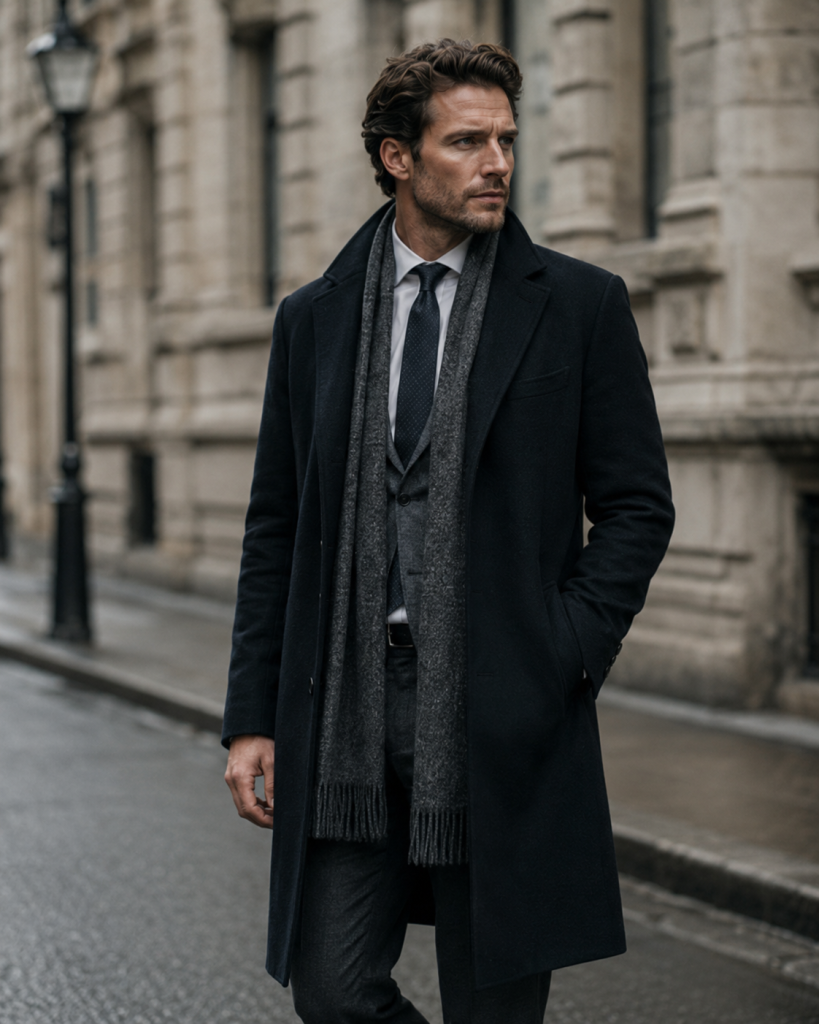
Which fabrics I recommend for men’s suits
Pure new wool as the standard for high-quality made-to-measure suits
Pure new wool is the foundation of a good tailored suit. At our shop, I work with it in most cases, because it simply works most reliably.
The fabric regulates temperature, is breathable, creases less, holds its shape and is easy to care for on top of that. This is exactly what ensures the suit fits cleanly and looks well put together overall.
Whether for business or a wedding: pure new wool is the right choice in most cases. If you’re looking for a suit you can wear in many ways and that looks good for a long time, pure new wool is usually an excellent fit.
What Super numbers really mean – and why higher isn’t always better
The so-called Super numbers, such as Super 100, Super 120 or Super 150, indicate how fine the wool used is. It doesn’t automatically follow that the higher the number, the better the fabric. What matters is what the suit will be worn for, because finer fabrics are more delicate and don’t make sense for every use.
For a suit you wear regularly, I recommend Super 100 or Super 120. These fabrics are robust, look refined and can take a lot. Super 150 or higher is more something for special occasions, when you know you’ll handle it carefully.
What matters isn’t the number itself, but what the suit is intended for.
Linen, silk and flannel for special occasions and seasons
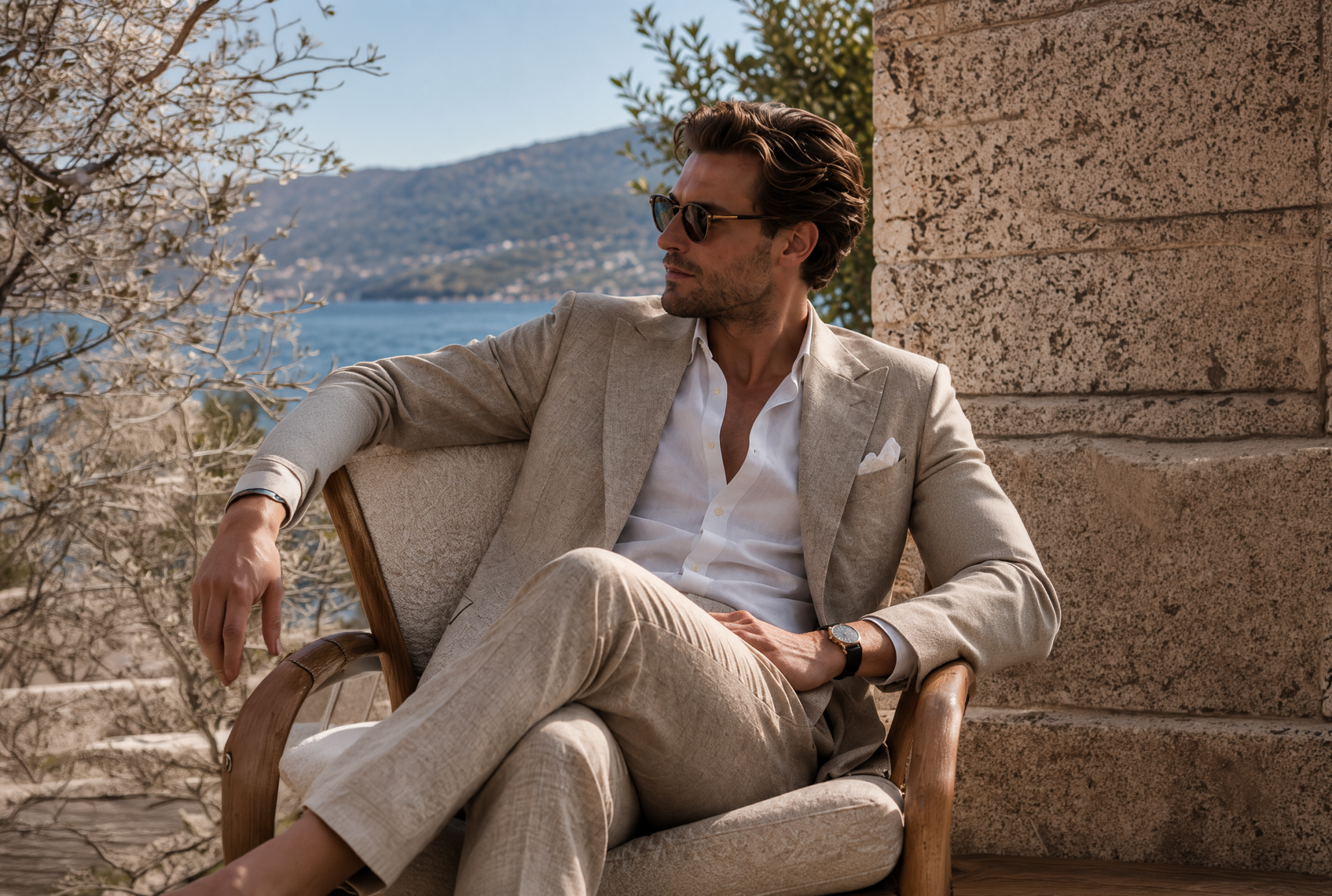
For summer I deliberately choose lighter materials such as linen, silk or suitable blends. These fabrics are comfortable to wear even at higher temperatures and look right for the season.
In summer, many people automatically reach for pure linen, because it’s considered particularly airy. That’s true, but you should know what you’re letting yourself in for. Pure linen creases considerably more than other materials. That’s part of the fabric’s character, but depending on the occasion it can quickly look untidy or slightly unkempt, especially when you wear the suit for many hours.
That’s why, in consultations, I often opt for blends of linen with pure new wool or silk. You keep the lightness, but have considerably more stability in the fabric and look more put together overall. Silk adds a subtle lustre to the fabric and looks elegant. In summer especially, it’s a worthwhile addition, because it combines lightness with a refined look.
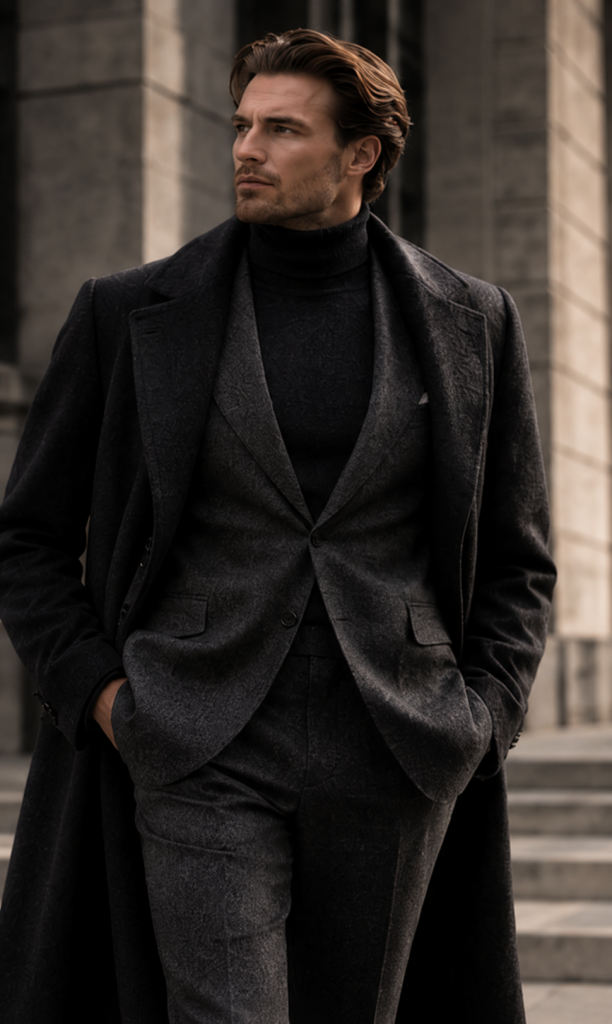
For the colder months I work with fabrics such as flannel. It is softer, somewhat thicker and has a slightly brushed surface that retains warmth while creating a calm, refined look. Many people underestimate what happens when the fabric chosen for winter is too light – the suit thenloses its shape over the course of the day and no longer drapes cleanly.
A slightly heavier cloth such as flannel ensures exactly that the suit stays stable and still looks smart even after several hours.
Many people choose a fabric based on their first impression or on something they’ve seen somewhere. But that doesn’t always suit the occasion or how the suit will be used. That’s exactly why the choice at the start is so decisive: a fabric can look good at first, but not really work in everyday life.
Besides the material itself, the surface also plays a decisive role in the effect of the suit.
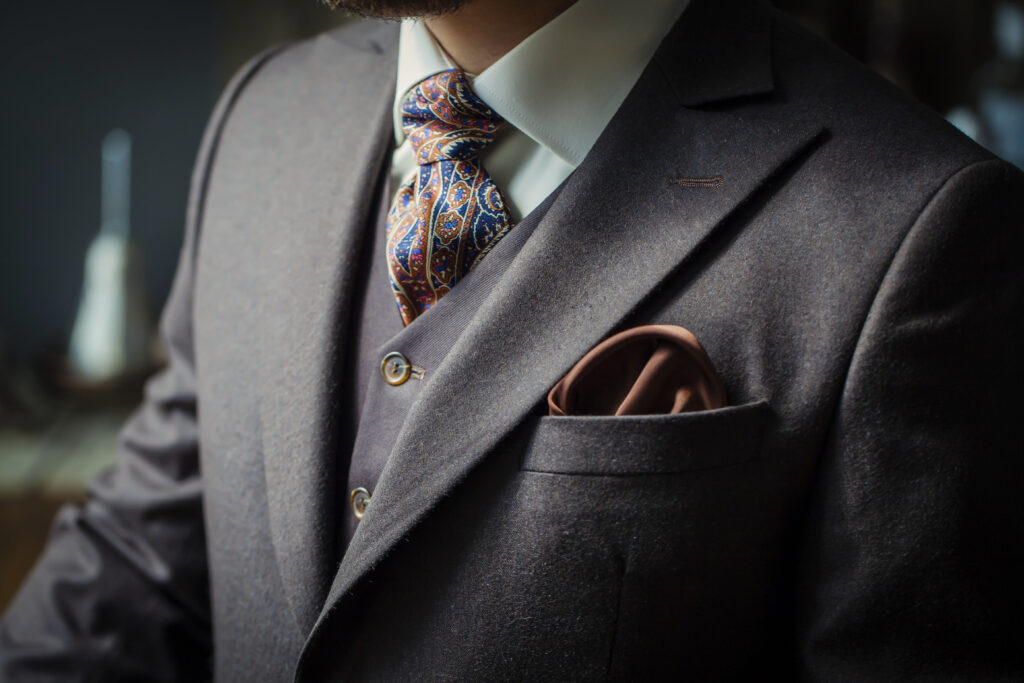
Smooth or textured – how the surface changes the impression you make
Smooth fabrics for business and formal occasions
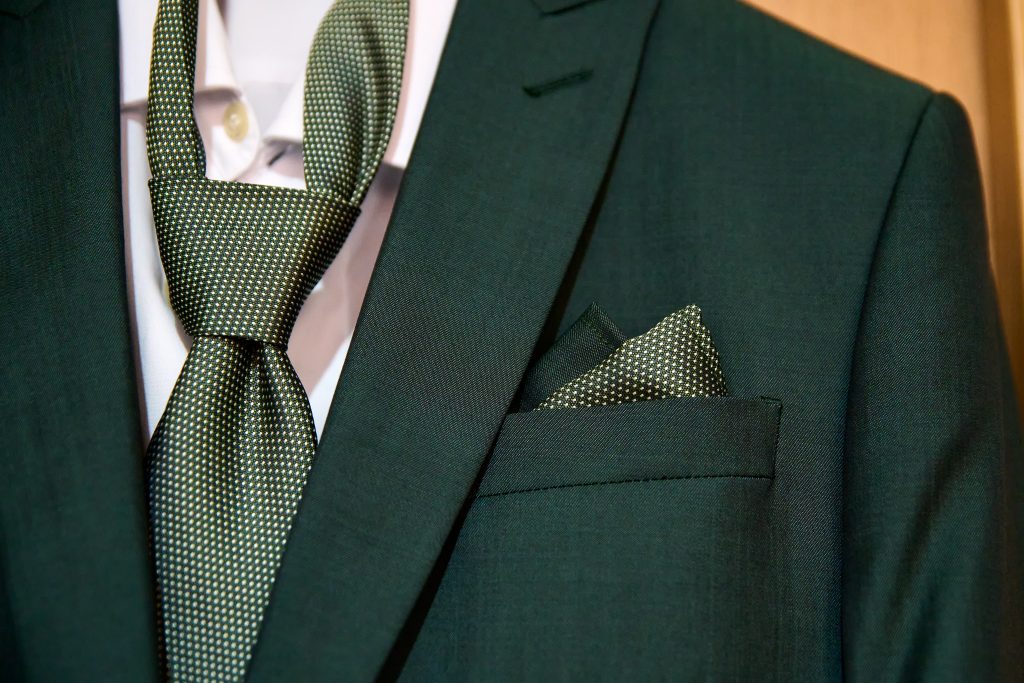
Whether a fabric is smooth or textured changes the entire effect of the suit. For business suits, I mainly rely on smooth fabrics, because they have a clean, calm and well-groomed look. These fabrics suit a professional appearance.
A smooth suit fabric has an even surface with no visible weave pattern or raised texture. This ensures that light is reflected evenly and the suit looks very elegant and formal. That’s exactly why smooth fabrics are the first choice for all formal occasions, where a serious impression matters.
Textured fabrics for smart casual and wedding suits
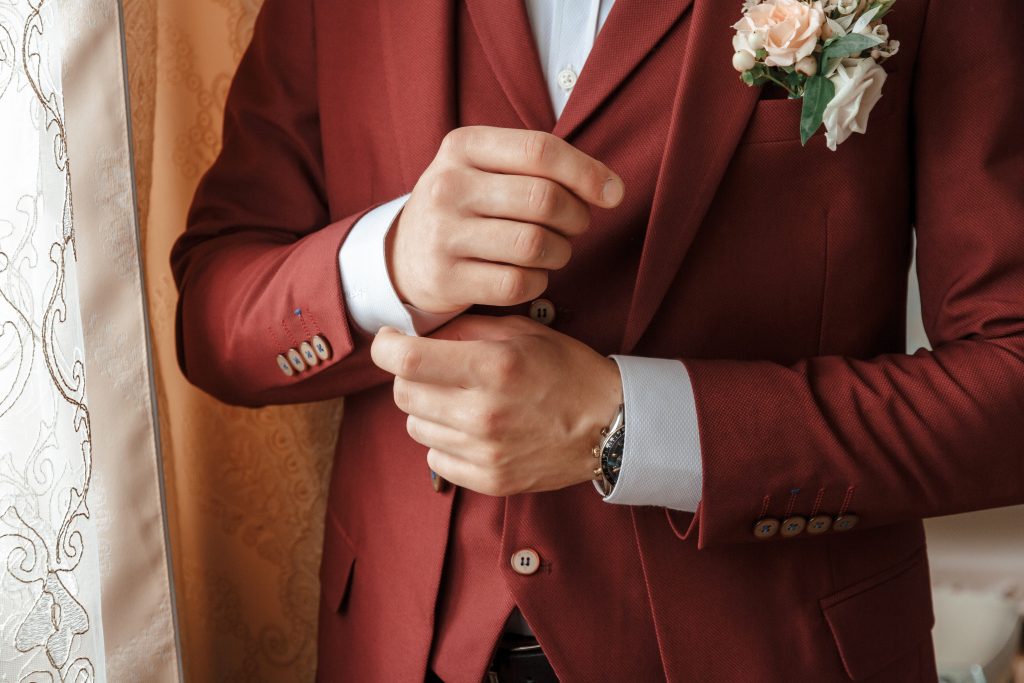
In leisure and smart casual wear I deliberately work with textured fabrics. They bring more depth to the look, appear less formal and are easier to combine. Typical weaves are hopsack or birdseye. They make the surface livelier and ensure that the suit looks more relaxed overall and is easier to combine.
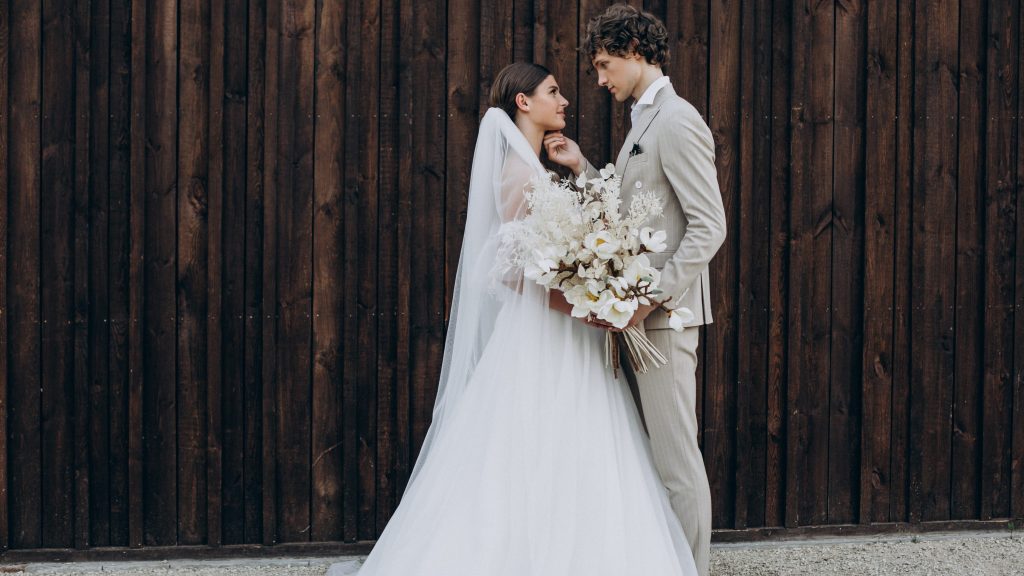
For a wedding suit, textured fabrics are often the better choice, because the groom looks elegant without appearing stiff. Especially when the wedding takes place in a relaxed venue, these suits suit the atmosphere better. The groom looks refined, yet remains relaxed enough for the festive setting.
Textured fabrics have the great advantage that they look considerably livelier than smooth men’s suits. They catch the light differently and have more visual depth thanks to their surface. This makes the suit more interesting without having to resort to striking patterns or colours. That’s why I also like to recommend them for guests who want to appear elegant, but not too stiff at a wedding.
Why texture creates more ways to combine
Texture in the fabric makes an outfit look less severe and offers more scope for combinations – so a jacket or suit can be worn far more flexibly with different shirts, shoes or accessories. A textured suit fabric can be combined with a classic white shirt, but also with a coloured or patterned shirt without any problem.
The groom’s suit has to suit the venue, the season and the style of the celebration. A textured fabric offers exactly this adaptability, without compromising on elegance.
If you’re unsure, it’s worth coordinating this with your wedding planner so that everything fits together harmoniously in the end.
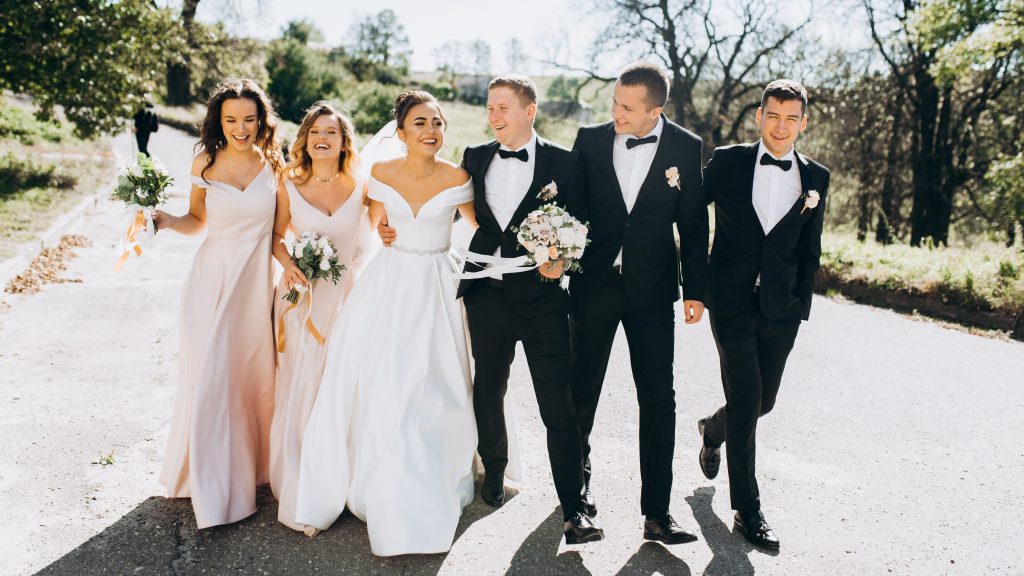
How I choose the right suit fabric with you at our shop
Occasion and season set the direction
I always start our appointment with the occasion – whether the suit is meant for business, leisure or a wedding – because this already results in clear requirements. A business suit needs different properties from a wedding suit.
By contrast, The season plays a decisive role in the choice of fabric, as it determines how heavy or light a fabric should be and which materials are suitable.
Taking wearing habits and the desired effect into account
I always take into account how the suit will be worn: how often, for how long at a time and in what setting. These factors decide whether a robust or a finer fabric is the better choice. Just as important is the desired effect: should the suit be very elegant, or rather sporty and relaxed? This decision influences the type of fabric as well as its texture and surface.
Thinking about type and combinations – so that it all fits together
The wearer’s type is also decisive for me. Not every fabric suits every personality, so I choose materials that suit the wearer’s character.
Finally, I always think about the combination: which shirts, shoes or accessories will be worn – and whether accessories will be worn at all. The choice of fabric has to match, so that the result is a coherent overall look in the end.
Frequently asked questions about suit fabrics
Which fabric is best for a summer wedding suit?
For a summer wedding suit, I recommend light, breathable fabrics. Pure new wool in a lightweight quality works very well, because it regulates temperature while looking elegant. It gets even airier with linen or a linen-wool blend – the latter gives you more stability. A share of silk in the fabric provides a pleasant feel and a subtle lustre that suits a summer wedding well.
What matters is that you feel comfortable all day. Nothing is worse than a suit you sweat in.
Is pure new wool really better than blended fabrics?
In many cases, yes – especially if you value breathability, shape retention and a more natural feel.
Polyester may be easy-care, but it lacks breathability. And it often has that slightly artificial sheen that makes a suit look cheap.
What does Super 150 mean, and do I need it for my wedding?
The Super numbers indicate how fine the wool fibre is. Super 150 therefore means very fine wool that feels particularly soft and has a noble drape. But higher isn’t automatically better. Finer fabrics are more delicate and show wear more quickly. For a wedding suit that you wear once and perhaps occasionally at festive occasions, Super 150 is certainly a good option.
Doesn’t linen crease too much for an elegant appearance?
Linen does crease – that’s part of the material. But that very creased look also has its charm. If you’re unsure about the elegance, I recommend a blend of linen with pure new wool or silk. These combinations give the fabric more stability; it creases less and still stays light and airy.
How do I care for my suit properly depending on the fabric?
Care depends heavily on the material.
- Pure new wool is relatively easy to care for: after wearing, let the suit air out on a good hanger, which is often enough. Only dry-clean when necessary, not after every wear.
- You can do much the same with linen or linen blends, although linen creases more – so iron or steam it in good time.
- Silk is somewhat more delicate and should be treated with care.
As a general rule with a high-quality men’s outfitter: ask for advice on care, because every fabric has its own characteristics. With the right care, your suit will still be in good condition even after years.
Conclusion: the right suit fabric makes the difference
In the end, the fabric decides how your suit works in everyday life, how cleanly it drapes and how long it keeps its shape. Whether you choose a classic wedding suit in pure new wool, a light summer version with linen or an elegant blend with silk depends on your occasion, the season and your personal style.
In my consultations at our shop, I take the time to go through exactly these factors with you – so that in the end you don’t just look good, but feel good too. A well-chosen suit fabric is no minor detail, but the foundation of your appearance.
That’s why my consultations aren’t just about picking any suitable fabric. I show you specifically which materials really work in your situation and which you should avoid.
You feel the differences directly, understand the decision and get a suit that doesn’t just look good in the mirror, but works all day long. That is exactly the difference between a suit that looks good – and one that truly convinces you.